
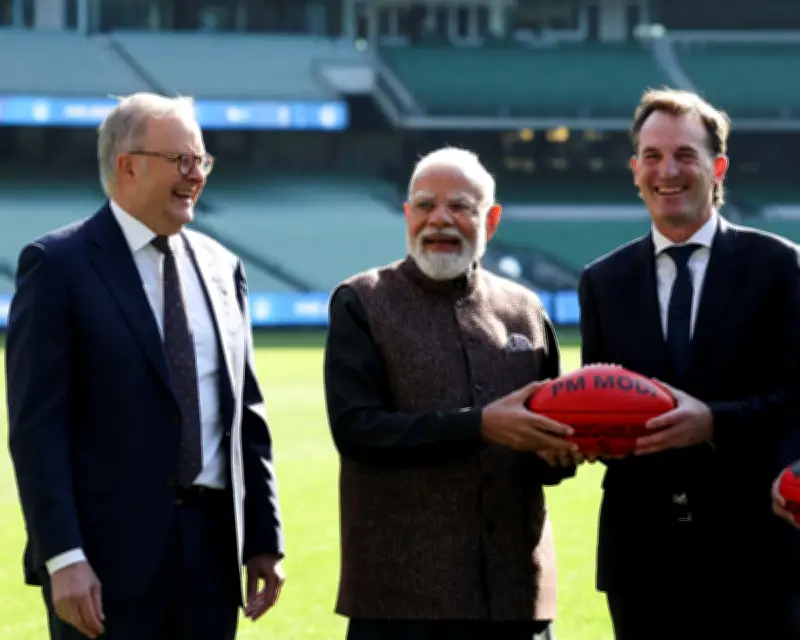
Rana Hussain, a former diversity leader at Cricket Australia and current AFL equity committee member, writes that watching the AFL and Cricket Australia embrace Indian Prime Minister Narendra Modi broke her heart. She argues that while both organizations target the Indian diaspora with multicultural strategies, their celebration of a leader criticized for discrimination against religious minorities sends a contradictory message about belonging.
Sport's symbolic embrace
Last week, AFL chief executive Andrew Dillon and cricket legend Steve Waugh stood alongside Modi at the MCG. The AFL and Cricket Australia used the visit to announce a Big Bash League match in India and ambitions to grow Australian rules football there. Hussain notes that both organizations see India and its diaspora as central to their future growth.
“For most of my life, being Indian, Muslim, Australian and devoted to sport has never felt like a contradiction. Until now,” she writes. Modi, while democratically elected, has faced repeated criticism from Amnesty International and Human Rights Watch over discrimination against religious minorities, crackdowns on dissent, and erosion of democratic freedoms. Australia has also dealt with allegations of Indian government interference on its soil.
Belonging vs. strategy
Hussain, who formerly led diversity, equity and inclusion at Cricket Australia and sits on the AFL’s equity, inclusion and safety committee, says the embrace of Modi risks sending a message that only majority voices are worth engaging. “For minority communities, that isn’t an abstract political point. It’s what it feels like to be overlooked twice – first as a minority in India, then again in Australia.”
She argues that when organizations celebrate diversity but don’t listen to those most affected, trust erodes. “You start to wonder whether you truly belong – or only when your perspective is convenient.” This, she says, partly explains why diverse talent is hard to attract and retain, and why diaspora communities don’t feel connected to Australian sport.
A call for genuine consultation
Hussain emphasizes that she doesn’t expect a veto, but that consultation would have communicated care. “If these organisations wanted another perspective, they could have just picked up the phone. Consultation communicates something. It says: ‘We know this affects you differently and we care.’”
She concludes by questioning whether sporting institutions truly practise the inclusion they preach. “Belonging isn’t something you parade. It’s something people feel. Last week, many of us didn’t.”




