
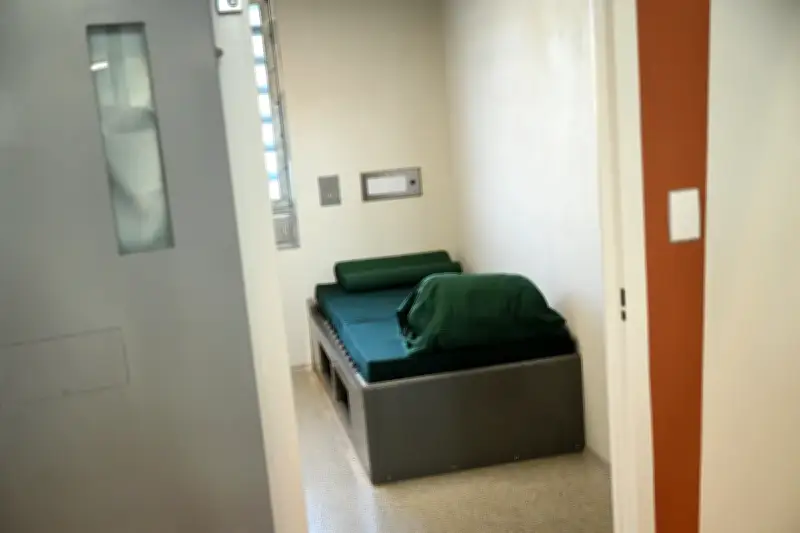
Victoria's First Nations voice to parliament, Gellung Warl, has made its first intervention on government policy under the state's treaty powers, calling for the scrapping of a controversial bill that would allow authorities to deny prisoners their daily hour of open air.
The Labor government's corrections amendment bill 2026, expected to pass parliament this week with Coalition support, would give authorities the ability to deny prisoners their daily outdoor time "subject to operational considerations." During debate in the lower house last month, the government acknowledged the bill was incompatible with the state's Charter of Human Rights and Responsibilities and partly incompatible with its new treaty with First Nations People.
Gellung Warl's First Intervention Under Treaty Powers
Gellung Warl, established as part of the treaty process, exercised its powers under the Statewide Treaty Act for the first time, urging the government to withdraw the bill. In a letter to Corrections Minister Ros Spence, Attorney General Sonya Kilkenny, and Deputy Premier Gabrielle Williams, co-chairs Meriki Onus and Djaran Murray-Jackson said the bill was "inconsistent with the spirit and intent of Statewide Treaty."
"This Bill seeks to deny the right of people in prison to spend one hour each day outside in the open air and sunlight. The vague excuse of 'operational considerations' should not be relied upon to erode the basic rights and conditions of all people in prison," the letter reads. Onus and Murray-Jackson noted the bill would have a "disproportionate impact" on First Peoples, who are "significantly overrepresented" in the correctional system, including on remand.
Government Defends Bill Amid Outcry
The bill has drawn criticism from legal, human rights, and First Nations groups, as well as the Victorian ombudsman, who wrote to leaders of both major parties this month. It also does not adhere to the United Nations' Nelson Mandela rules, which require at least one hour of open air daily for prisoners, weather permitting. Despite this, the government will proceed with debate in the upper house on Thursday.
A government spokesperson defended the bill, stating: "We will always ensure the safety, security, and good order of our prisons and the protection of our staff. These changes are operational decisions to ensure access to open air can continue to be managed safely." Under the Treaty Act, Minister Spence must respond to Gellung Warl's letter within 60 days.
Political Reactions and Legal Context
Victorian Greens leader Ellen Sandell called the bill a "disgrace" if passed without considering Gellung Warl's concerns, saying: "The whole point of treaty was to reset the relationship between the state, the government, and First Peoples in Victoria." Senator Lidia Thorpe accused the government of treating treaty like a "photo opportunity," adding: "Labor celebrated Treaty, took their selfies and filled their socials with how historic it was. But Treaty means nothing if the Government ignores First Peoples when they exercise the powers that Treaty gives them."
The Greens, Legalise Cannabis, Animal Justice Party, and Libertarian MP David Limbrick have said they will oppose the bill. Limbrick remarked: "Surely the government can be tough on crime without violating human rights. Whatever they are thinking, this legislation should be an embarrassment to everyone involved." The bill follows a January ruling by the Victorian supreme court in favor of George Marrogi, a convicted murderer serving a 38-year sentence, who argued his custody conditions were unlawful. Judge Claire Harris found that prison authorities had denied Marrogi his legal right to be "in the open air," with Marrogi citing the Mandela rules. Legal advocates and human rights groups plan to rally against the bill outside parliament on Wednesday.




