
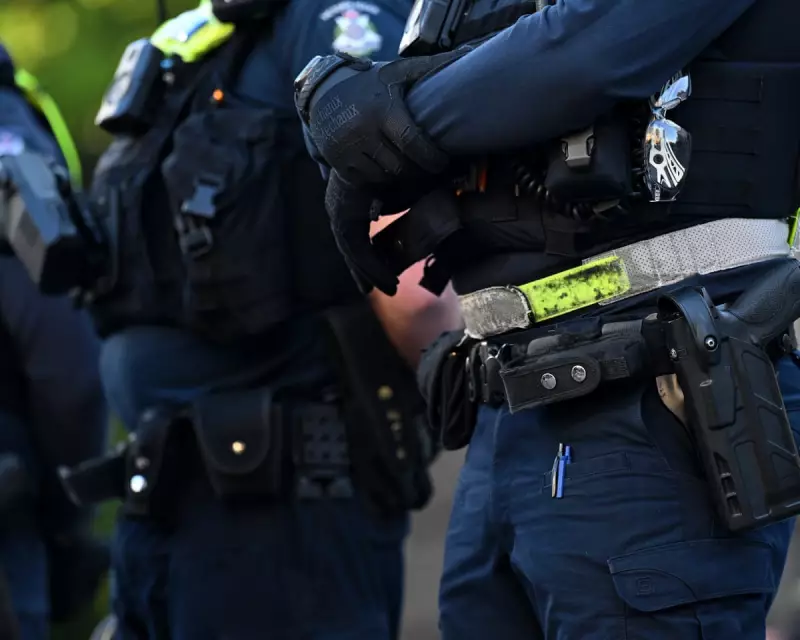
Police in the Australian state of Victoria have been granted significant new authority that allows officers to search children without obtaining a warrant. The legislation, which came into effect on Monday, 2 December 2024, has ignited a fierce debate about civil liberties and the policing of young people.
Details of the New Search Powers
The change is part of the Justice Legislation Amendment (Police and Other Matters) Act 2024. It specifically amends the Control of Weapons Act 1990. Under the new rules, a police officer of or above the rank of sergeant can authorise a search of a person, vehicle, or premises if they reasonably suspect a weapon offence has been, is being, or is about to be committed.
Critically, this authorisation can be given orally and does not require a warrant from a magistrate. The authorisation lasts for 12 hours and applies to individuals aged 14 to 17, as well as adults. The law states that the power is intended for use in specific, time-critical scenarios to prevent serious violence.
Widespread Criticism and Legal Concerns
The expansion of police power has been met with immediate and strong condemnation from legal experts, human rights organisations, and community groups. The Victorian Aboriginal Legal Service (VALS) has been particularly vocal, arguing that the law will disproportionately impact Aboriginal and Torres Strait Islander children and other marginalised youth.
"This is a dangerous expansion of police power that will see more children unnecessarily exposed to the criminal legal system," a VALS spokesperson stated. They emphasised that the law fails to include crucial safeguards, such as requiring police to consider a child's best interests or to attempt contact with a parent or guardian before conducting a search.
Other critics, including the Federation of Community Legal Centres and the Human Rights Law Centre, have echoed these concerns. They warn that the low threshold of "reasonable suspicion" combined with the lack of judicial oversight creates a high risk of misuse and over-policing in certain communities.
Government and Police Justification
The Victorian government and police have defended the legislation as a necessary tool for community safety. A government spokesperson stated that the powers are designed for "high-risk and time-critical" situations, such as intelligence indicating a potential gang fight or a planned knife attack.
Victoria Police have asserted that the powers will be used judiciously and are a proportionate response to the threat of weapon-related violence. They argue that the ability to act swiftly without the delay of applying for a formal warrant could save lives by preventing violent incidents before they occur.
However, the government has acknowledged the concerns and stated that the use of these powers will be subject to review by the Independent Broad-based Anti-corruption Commission (IBAC). The legislation is scheduled for a sunset clause, meaning it will expire and require parliamentary renewal after a set period, though the exact timeframe has not been specified in the initial reports.
The passage of this law marks a significant shift in the balance between policing powers and youth rights in Victoria. As the powers are now active, their application and impact on the ground will be closely watched by advocates, legal bodies, and the communities most likely to be affected.




