
Mass Mobilisation Against Immigration Enforcement Sweeps United States
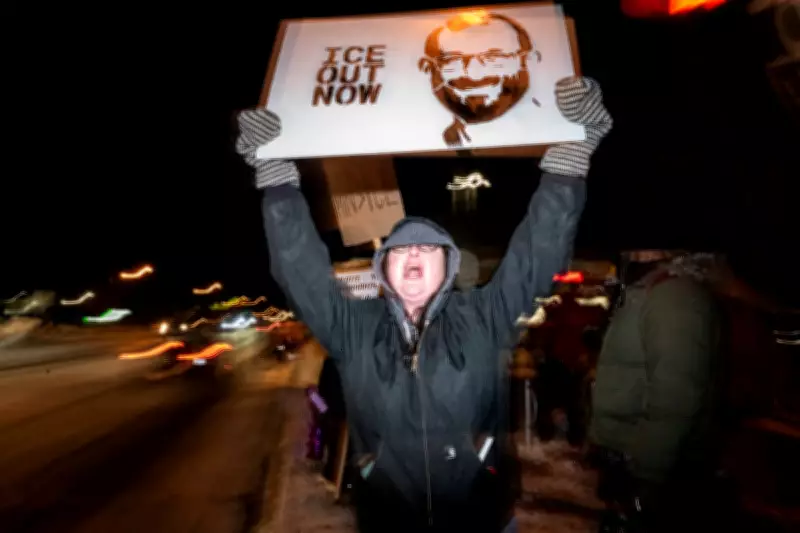
A nationwide wave of protests and industrial action is set to engulf the United States on 30th and 31st January 2026, as grassroots organisers coordinate hundreds of demonstrations against Immigration and Customs Enforcement (ICE). The movement, galvanised by at least eight deaths connected to ICE operations since the start of the year, represents one of the most significant coordinated challenges to federal immigration enforcement in recent memory.
Two Days of Action: From National Shutdown to Coast-to-Coast Demonstrations
The planned actions unfold across two consecutive days with distinct strategic approaches. On Friday 30th January, organisers led by University of Minnesota student groups are calling for a "national shutdown" – urging participants to abstain from work, education, and commerce in what many are describing as a general strike aimed at economic disruption. This "blackout day" represents a dramatic escalation in tactics, seeking to leverage economic pressure against immigration enforcement agencies.
Saturday 31st January will see the "ICE Out of Everywhere National Day of Action," coordinated by the national grassroots organisation 50501. This second phase will involve diverse forms of protest including vigils, demonstrations, and direct actions across all fifty states and Washington DC, creating a truly nationwide expression of dissent against current immigration enforcement practices.
Catalysts for Action: High-Profile Deaths and Growing Public Opposition
The protests have gained momentum following several high-profile incidents that have captured national attention. The killings of Renee Good and Alex Pretti in Minneapolis, captured on video earlier this month, have become focal points for organisers. However, activists emphasise that these represent just the most visible examples of a broader pattern, pointing to cases like 55-year-old Cuban immigrant Geraldo Campos who died in ICE custody in Texas, the detention of five-year-old Liam Ramos in Minnesota, and the New Year's Eve shooting of 43-year-old Keith Porter Jr in Los Angeles.
Recent polling from YouGov indicates shifting public sentiment, with opposition to ICE increasing and more Americans supporting than opposing the agency's abolition. "We are responding to people's outrage," explained Gloriann Sahay, a national coordinator with 50501. "We've seen the Overton window shifting. We're seeing people from typically non-political spectrums get involved in this conversation and say: 'This doesn't feel like America.'"
Strategic Diversity: From Student Walkouts to Corporate Pressure Campaigns
The protests will employ a multifaceted approach to achieving their objectives. Student groups including the Somali Student Association, Black Student Union, and Graduate Labor Union at the University of Minnesota will lead walkouts on Friday, encouraging similar actions at educational institutions nationwide. "Students are always at the heart of movements for justice across the world," the organisations declared in a joint statement.
Saturday's actions will target specific infrastructure supporting immigration enforcement, including protests at ICE detention facilities, field offices, and airports where airlines transport detainees. The campaign also takes aim at political support for ICE, with organisers tracking congressional votes and planning to support primary challengers against lawmakers they describe as "pro-ICE," including several Democratic representatives from Texas, North Carolina, New York, Maine, and Washington.
Beyond Street Protests: Innovative Pressure Campaigns Emerge
The movement extends beyond traditional demonstrations with creative campaigns designed to disrupt the operational infrastructure of immigration enforcement. The "No Housing for ICE" initiative urges hotels to cease providing accommodation to ICE, CBP, and DHS agents, encouraging tactics ranging from phone calls and negative reviews to booking and cancelling reservations. This follows previous successful actions in cities including Los Angeles and Minneapolis where protesters banged pots outside hotels housing agents.
Another initiative, "#DontServeICE," targets local businesses, restaurants, and retailers, seeking to persuade them to refuse service to ICE agents through social media campaigns and consumer boycotts. The campaign also encourages chambers of commerce to adopt non-cooperation pledges. In Washington DC, the organisation Free DC plans protests at all Target locations following ICE's violent detention of employees at a Minneapolis-area store, representing just one corporation facing renewed boycott pressure.
Historical Context and Sustained Campaign Planning
These protests reflect an intensifying national struggle over immigration enforcement that has developed over the past decade, following family separations at the US-Mexico border and reports of human rights violations at detention facilities. In recent years, protests have intensified and spread beyond traditional immigrant rights strongholds to cities like Milwaukee and Oklahoma City, where hundreds have rallied against ICE operations.
Organisers emphasise that the January actions represent not an endpoint but part of a sustained campaign. Following the National Day of Action, 50501 plans to participate in an "Impeach Trump National Day of Lobbying" on 17th February, demonstrating their commitment to continued pressure until their demands are met. "The temperature has drastically changed," observed Sahay. "It has increased from a burning fire to an inferno and I hope that people who have never taken up the call before come out for their neighbors and for the fabric of America."




