
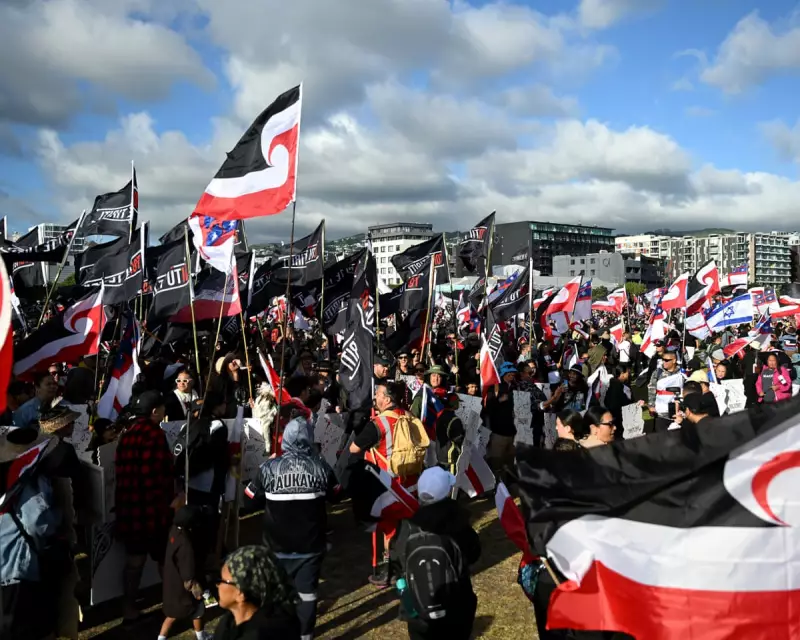
The United Nations has taken the significant step of agreeing to hear an urgent human rights complaint against New Zealand's coalition government, alleging systematic discrimination against Māori people.
Prominent Leader Files Groundbreaking Complaint
Lady Tureiti Moxon, a respected Māori leader, has submitted a formal complaint to the UN's Committee for the Convention on the Elimination of All Forms of Racial Discrimination (CERD). The complaint utilises the committee's early warning and urgent action procedure, reserved for serious and escalating violations of international racial discrimination conventions.
Moxon serves as chair of the national urban iwi authority and chief executive of Te Kōhao Health, a Māori health organisation. Her 42-page document outlines generations of harmful legislation affecting Māori communities and claims the current government has actively dismantled measures designed to address historical injustices.
Government Policies Spark Widespread Opposition
The coalition government, formed by the centre-right National party with minor partners Act and NZ First, has pursued what it describes as an end to race-based policies. Since assuming power in 2023, the administration has implemented sweeping reforms affecting Māori communities.
These changes include limiting the use of Māori language in public services and disestablishing the dedicated Māori Health Authority. The government has also reduced obligations for schools and public services to consider the Treaty of Waitangi, New Zealand's founding document signed between Māori tribes and the British Crown in 1840.
Most controversially, the government allowed the introduction of legislation that sought to radically reinterpret treaty principles, though this bill was subsequently voted down during its second reading.
Historic Protests and Legal Challenges
These policy changes have ignited the largest ever protests over Māori rights in New Zealand's history during 2024. The reforms have also prompted multiple claims to the Waitangi Tribunal, judicial reviews, and nationwide meetings among Māori leaders.
Moxon explained her decision to approach the UN after exhausting domestic options: We're still fighting for the right to be Māori and live as Māori in our own country. These governments make decisions that harm our people, then walk away after their term, leaving trauma behind.
The minister for Māori affairs, Tama Potaka, declined to comment on the specific complaint, stating it would be inappropriate until official details are confirmed. My focus remains on delivering practical results for Māori, he told reporters.
International Scrutiny Intensifies
Next week, the CERD committee will conduct its eight-year review cycle of New Zealand's compliance with racial discrimination elimination commitments. While this regular examination was already scheduled, Moxon's complaint adds urgency to the proceedings.
This marks only the second time the UN has used this particular complaint mechanism for New Zealand since the controversial foreshore and seabed act of 2005, which removed Māori coastal rights.
Moxon plans to travel to Geneva to personally present her case, hoping international pressure will force a change in the government's approach to Indigenous rights.




