
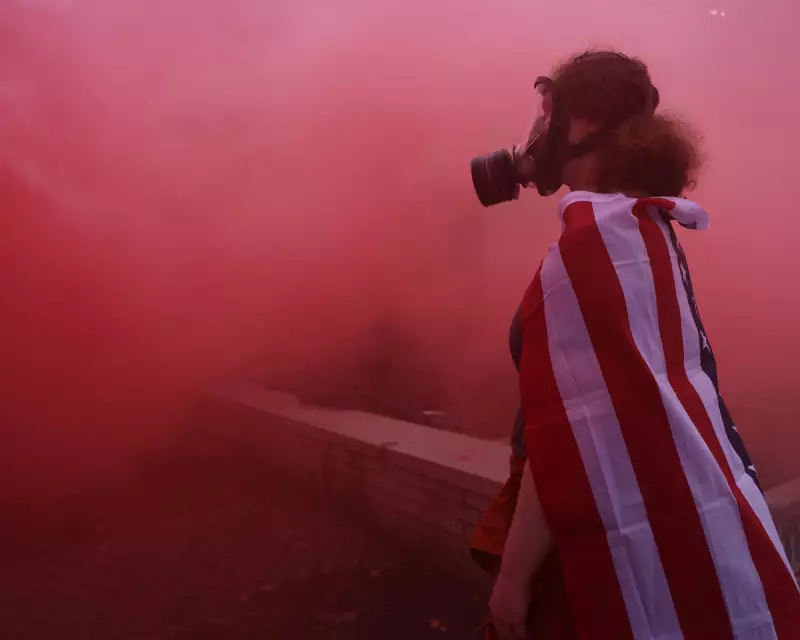
The Openly Repressive Phase of the Trump Presidency
The United States has entered what experts describe as the openly repressive phase of the Trump presidency. The administration has moved beyond verbal attacks on civil society and is now deploying coercive force against civic organisations and their leaders. While these attacks may appear contained for now, research on democratic backsliding suggests they are likely to escalate significantly in the coming months.
The Authoritarian Playbook in Action
The evidence that systematic coercion has begun is abundant. The administration started with brazen assertions of executive power to intimidate universities and law firms. Former FBI director James Comey and New York attorney general Letitia James, who attempted to hold Trump accountable, have both been indicted. The administration has designated 'antifa' – a non-existent organisation – as a 'domestic terror' organisation. National Guard troops and other federal forces have been deployed in cities against the will of governors and mayors, leading to violent confrontations.
This comes in addition to the turbo-charging of ICE, which is now using helicopters and chemical agents to raid communities. US citizens seen as obstructing ICE operations are being detained, marking a significant escalation from campaign promises focused solely on undocumented immigrants.
These developments represent a dire sign for American democracy, which has always been about much more than elections. A healthy democracy protects and promotes civil society – including civic associations, PTAs, business associations and universities – as spaces for public dialogue, policy debate and resisting abuses of power. When the government begins attacking civil society without due process, it is actively rolling back democratic foundations.
The Insecurity Trap: How Repression Escalates
In most cases of democratic backsliding, presidents don't begin with intentions of mass repression. However, they frequently end up creating massive repressive machines. Vladimir Putin in Russia, Hugo Chávez in Venezuela and Recep Tayyip Erdoğan in Turkey provide perfect examples of this pattern.
The cycle typically begins when a leader articulates extreme policy goals designed to overhaul the system completely. These maximalist policies often come packaged with threat inflation – the president exaggerates the magnitude of some domestic danger, whether crime, terrorism, corruption or ideology. This manufactured existential scourge then justifies increasingly authoritarian measures.
As societal rejection grows, the president interprets this resistance as further evidence of the threat they're obsessed with. The response is to boost the security apparatus even further, which begets more societal resistance. The country then enters what experts call an 'insecurity trap,' where the president feels increasingly unsafe and more justified in deploying coercion.
At this stage, a new logic emerges: the president's goal expands from defeating resistance to protecting the security forces themselves. This leads to granting more impunity to security forces and expanding their mandate. A machine designed to generate law and order morphs into an organisation operating under lawlessness.
Resisting Repression: The Path Forward
In the face of these developments, pro-democracy forces must work diligently to remain above ground, avoid fragmentation and mount effective opposition. Both capitulation and extremism must be avoided. When the law firm Paul Weiss capitulated this year, it lost prominent clients and senior talent, while others that stood firm won their legal challenges and gained new business.
More than 700 charitable foundations have joined together to publicly 'unite in advance' of potential attacks on the sector, providing an encouraging example of preemptive solidarity.
Community, labour and advocacy groups must inoculate their members and the communities they represent for what's coming. The administration will likely send more federal troops to more cities to provoke violence. In response, communities need training not just to organise, but to engage in strategic nonviolence – maintaining discipline not to be provoked into violence while bearing witness and taking action.
Powerful examples already exist: In Washington DC, the group Free DC has undertaken brilliant ward-by-ward organising to resist military occupation by training thousands of residents in these methods. In Chicago, educators and parents have organised to accompany children home when federal agents attacked right outside their school. In Portland, protesters have used animal costumes and dance music to mock repressive forces.
Now that state repression has arrived, pro-democracy forces must continue showing courage by speaking out and building the broadest possible coalition – both nationally and in cities and states under threat – to defend institutions and rights. This strong coalition must be complemented by widespread training in strategic nonviolence to effectively resist state provocations.
As one expert noted, 'I am encouraged by the tens of thousands of people who have joined trainings on nonviolent strategic action since the beginning of the year.' Another finds hope in 'the many legal organisations and law firms using the courts to try to defend rights and curb executive branch overreach.'




