
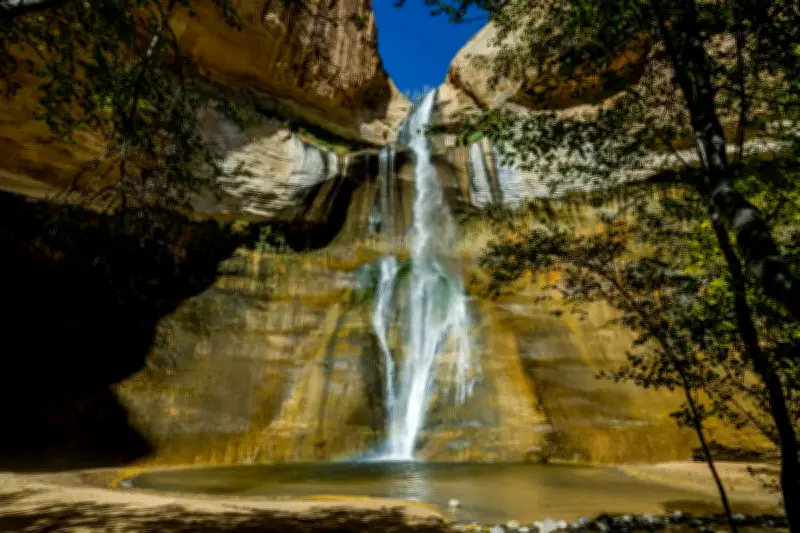
President Donald Trump has approved a sharp reduction in the size of two national monuments in Utah held sacred by many Native Americans, opening the land to corporate developers and the oil and gas industry. The Bears Ears and Grand Staircase-Escalante national monuments will each lose "close to a million and a half acres," Trump said during an executive order signing event on Monday, undoing protections established by former presidents.
What happened
The two monuments in southern Utah feature ancient cliff dwellings, petroglyphs, and scenic canyons, as well as coal and uranium deposits that state officials want made available for development. Trump's order marks the second time he has taken such action; he also shrank the monuments in 2017 during his first term, a move later reversed by the Biden administration. Utah Governor Spencer Cox, a Republican who joined Trump at the signing, said the Antiquities Act requires designations to be "the smallest area possible to protect the antiquities," arguing that "multimillion-acre monuments that are bigger than the state of Delaware certainly do not fit that designation."
Legal and tribal response
Environmental advocates and tribal representatives have criticized the downsizing. Earthjustice, an environmental law firm, pledged to take "legal action to maintain protections for these treasured landscapes." Heidi McIntosh, managing attorney for Earthjustice's Rocky Mountain office, stated: "President Trump's attack on Bears Ears and Grand Staircase-Escalante National Monuments is just as illegal today as it was in 2017. The Antiquities Act authorizes presidents to designate national monuments, not to destroy them. Today's proclamations are a slap to the face of public lands visitors across the country, as well as the local communities and tribes that have worked for years to protect these special places."
Davina Smith-Idjesa, a citizen of the Navajo Nation and co-chair of the Bears Ears Inter-Tribal Coalition, said tribal leaders had braced for a reduction since Trump's reelection. She called the move "heartbreaking" and accused federal officials of sidestepping their legal responsibility to consult with affected tribal nations. "From a Navajo perspective, Bears Ears is not simply a piece of federal public land," she said. "This is a living cultural site that holds our histories, our ceremonies, our traditional foods and medicines and our ancestors' footprints."
Background and impact
The Antiquities Act of 1906 grants presidents power to protect historic, archaeologically significant, or culturally important sites. Grand Staircase-Escalante was established by Bill Clinton in 1996, and Barack Obama created Bears Ears in 2016. Combined, the monuments span more than 3.2 million acres (1.3 million hectares), an area nearly the size of Connecticut. Bears Ears was the first national monument protected at the request of tribal nations; it contains ancestral villages, ceremonial sites, and burial sites, and is jointly managed by tribal nations and federal agencies. Grand Staircase-Escalante holds large coal reserves, while Bears Ears has uranium.
Proponents of the downsizing argue that protective boundaries hinder mining for critical minerals. Trump's policies aim to tap into natural resource wealth on federal lands, which total over 100,000 square miles (260,000 square kilometers), and offshore areas. This has drawn backlash from Democrats and conservationists, who warn of commercial exploitation. Interior Secretary Doug Burgum had said last year that federal officials would review national monument boundaries to expand US energy production.




