
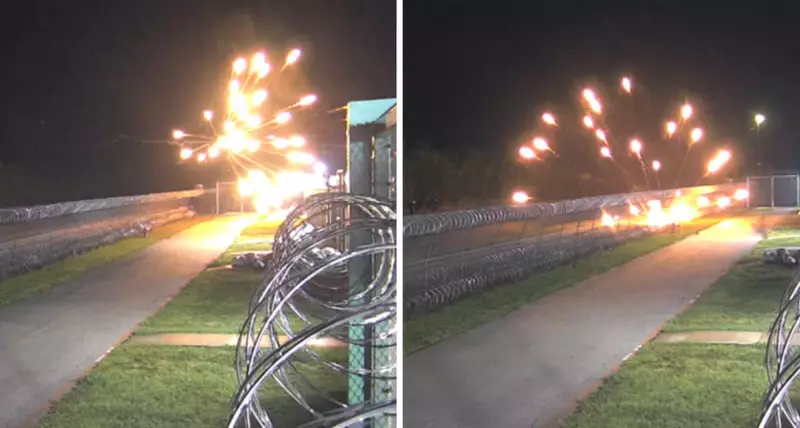
The US Department of Justice (DoJ) has embarked on a landmark and highly contentious prosecution, levelling unprecedented domestic terrorism charges against a group of protesters in Texas, whom it labels a "North Texas antifa cell." This case, stemming from a 4th of July demonstration at an Immigration and Customs Enforcement (ICE) detention centre, has ignited fierce debate over civil liberties and the potential criminalisation of political dissent.
The Night of the Protest and Escalating Charges
On the evening of 4 July, a group of demonstrators gathered at the Prairieland Detention Center in Alvarado, Texas. Their stated aim, according to court documents and family members, was a "noise demonstration" using fireworks to show solidarity with detained immigrants. The situation escalated when local police arrived. Prosecutors allege that one protester, Benjamin Song, yelled "get to the rifles" and opened fire with an AR-15, shooting an Alvarado police officer in the neck. The officer later recovered.
In the immediate aftermath, several individuals were arrested and faced charges including attempted murder of a federal officer. However, the case transformed dramatically months later, following the assassination of commentator Charlie Kirk in September. In a new indictment, the DoJ brought terrorism charges against 18 people, accusing 15 of them of providing material support for terrorism. This marks the first time the US government has filed terrorism charges specifically against individuals associated with the antifascist, or "antifa," ideology.
Constructing a 'Criminal Enterprise'
Legal experts and defence lawyers have raised significant alarm over the prosecution's strategy. The DoJ has sought to frame the disparate group of demonstrators—some of whom met for the first time that night—as an organised "militant enterprise." Prosecutors point to evidence such as left-wing zines, the use of the encrypted messaging app Signal, all-black clothing, and general discussions about firearms to support their claim of a premeditated terror cell.
"It should concern everyone else in the country, because their community, their circles, might be next," said Xavier de Janon of the National Lawyers Guild. "This precedent could result in people facing terrorism charges for doing very simple mainstream activism."
Family members of the accused vehemently dispute this characterisation. Amber Lowrey, sister of defendant Savanna Batten, described her as a non-violent animal lover who was arrested for minor civil disobedience in the past. "I promise you there is no antifa cell," Lowrey stated, suggesting the charges are an effort to "silence dissent, criminalise dissent."
A Legal Precedent and Political Backdrop
The case unfolds against a political backdrop where Trump administration officials, including then-Attorney General Pam Bondi, have publicly vowed a crackdown on left-wing groups, explicitly calling antifa a terrorist organisation. The statute used—providing material support for terrorists—does not legally require prosecutors to prove a link to a formal terrorist group, focusing instead on the intent to assist specific crimes.
Professor Francesca Laguardia, a terrorism law expert, noted the novelty lies "more actively thinking to use the statute at all... allowing for prosecutions of people who are not associated with established terrorist organizations."
Defence arguments counter that preparations like scouting the location and wearing black were for safety, not violence, citing the threat of armed right-wing counter-protesters. They also normalise the use of Signal, an app widely adopted over privacy concerns. Six defendants have already pleaded guilty to the material support charge.
The prosecution's success may hinge on proving the protesters' intent to commit the listed terrorism predicates: attempting to destroy government property with an explosive and attempting to kill a federal employee. As the case proceeds, it is being closely watched as a potential bellwether for the boundaries of protest, terrorism law, and political prosecution in a deeply polarised era.




