
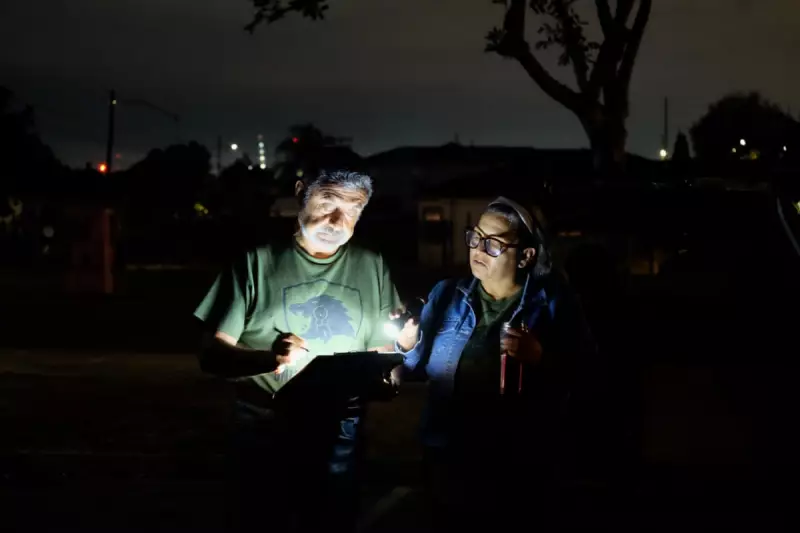
In the pre-dawn darkness of southern San Diego, an unusual patrol is underway. Three educators sip coffee and discuss their classrooms as they drive through quiet residential streets, their eyes scanning for something most people would miss: undercover immigration enforcement vehicles.
The Dawn Patrol Against ICE
These teachers aren't just preparing for another school day—they're members of the Association of Raza Educators, conducting morning surveillance operations to protect their students from Immigration and Customs Enforcement (ICE). During an October patrol, their trained eyes spotted what appeared to be an undercover agent: a grey Dodge Durango with completely tinted windows, a small strip of lights near the front, and a visible steel prisoner partition inside.
High school teacher Marysol Duran immediately activated her walkie-talkie, reporting to other volunteers: "We have identified a potential. He is on 39th and Gamma. We will keep close watch." The vehicle's driver then picked up a handheld radio, confirming their suspicions.
When these activist-educators spot undercover ICE agents, they spring into action—alerting the community through social media, group chats, and sometimes using megaphones to warn residents. Their patrols intentionally focus on areas near half a dozen local schools, where ICE activity has recently intensified.
Students Living in Fear
The need for these patrols became tragically clear when, just two months earlier, at least four parents were arrested or detained by immigration officials near San Diego county schools. In one particularly distressing incident outside a Chula Vista elementary school, an undocumented mother was arrested during morning drop-offs as her children watched helplessly from the car.
ICE's San Diego field office did not respond to multiple requests for comment regarding these arrests or the suspected undercover vehicle spotted by teachers.
Fourteen-year-old Azda and her 19-year-old sister Guadalupe (names changed to protect their identities) understand this fear intimately. While Azda is a US citizen, Guadalupe and their mother are undocumented. Their family has developed an emergency action plan—not for earthquakes or wildfires, but for ICE.
"We have to simplify these big concepts to him," Guadalupe said of explaining deportation to their four-year-old brother. "We just say, like, 'Okay, la migra, they do bad things. They take families—se llevan a las mamás.'"
The language of resistance has even entered the young boy's vocabulary. He sometimes chants around the house: "La chota, la migra. ¿La migra, porque dia?" (Immigration, why are you here?)
Mobilising to Protect Education Rights
Fear among students and parents across southern California has reached unprecedented levels, particularly after the Supreme Court ruled earlier this fall that federal agents can stop and detain residents in Los Angeles simply for speaking Spanish, appearing Latino, or working certain types of jobs.
High school counselor Juan Orozco explains the devastating impact: "We live in a state of fear, [whether you're a] citizen or not a citizen: plumber, professional, mother, grandma, everyone. And we shouldn't live like that."
The statistics validate these concerns. San Diego has seen three times as many ICE arrests in the first half of 2025 compared to all of 2024, according to NBC reports. More than 50% of these arrests involved people with no criminal convictions.
Orozco knows this fear personally. When he was 12 years old in the early 1980s, immigration agents in an unmarked white van threw him into the vehicle and demanded he recite the Pledge of Allegiance before releasing him. "It looked like a kidnapping," he recalled.
Despite the challenges, there are glimmers of hope. In late October, the San Diego City Council voted to move forward with an ordinance requiring federal law enforcement to obtain judicial warrants to access non-public areas of city-controlled property, including inside city-run public schools.
As the morning patrol ended and families began walking children to school, Marysol Duran reflected: "You see the beauty of our community just doing what any other human being would do in the United States: Taking their children to school because they have the right to a free education."
The teachers packed their gear—cameras, walkie-talkies, megaphones—and headed to their real jobs. The school day was about to begin, and their students were waiting.




