
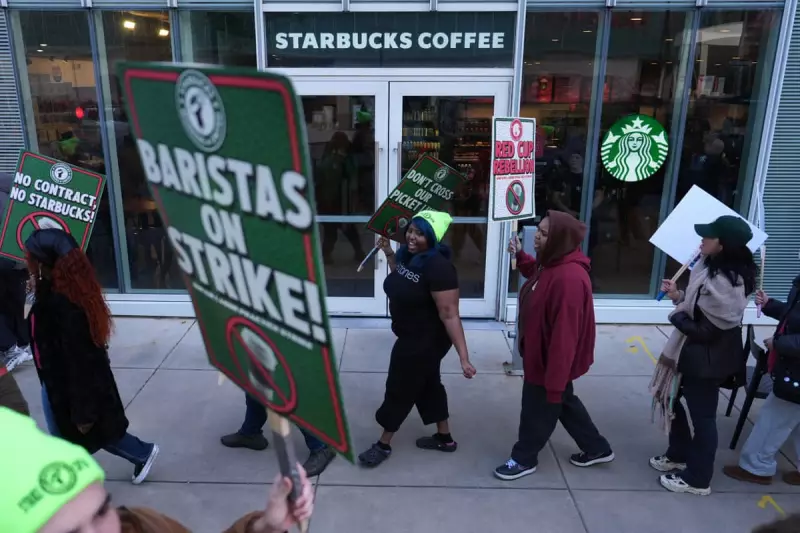
Major Starbucks Strike Disrupts Holiday Season
More than 1,000 unionised Starbucks employees have walked off the job in an unprecedented labour action spanning over 40 American cities. The open-ended strike, which began on 13th November 2025, represents one of the most significant challenges to the global coffee giant in its history.
Workers are picketing outside Starbucks locations from Philadelphia to Pittsburgh, carrying signs with the slogan "No contract, no coffee" and urging customers to avoid the chain during the crucial holiday trading period.
Contract Negotiations Break Down
The dispute centres on failed negotiations for Starbucks' first-ever union contract in the United States. Both the company and Starbucks Workers United, which represents approximately 11,000 baristas across 550 stores, have blamed each other for the collapse of talks.
"I want Starbucks to succeed. My livelihood depends on it," said Dachi Spoltore, a striking barista from Pittsburgh. "We're proud of our work, but we're tired of being treated like we're disposable. This might be a game to Starbucks, but it isn't a game for us."
The union has filed numerous unfair labour practice charges with the National Labor Relations Board, including allegations that Starbucks has failed to bargain in good faith and undermined the union's representative status.
Corporate Response and Political Backing
Starbucks has downplayed the strike's impact, with spokesperson Jaci Anderson stating that more than 99% of coffeehouses remained open during what she described as "the strongest Reusable Red Cup Day in company history."
Anderson expressed disappointment that the union "only represents around 4% of our partners" and claimed Starbucks already offers "the best job in retail," including average compensation exceeding $30 per hour with benefits.
However, the workers have received significant political support. New York City mayor-elect Zohran Mamdani and Seattle mayor-elect Katie Wilson have both publicly endorsed the boycott, with Wilson declaring at a rally: "Baristas are the heart and soul of this company, and they deserve better than empty promises and corporate union busting."
Additionally, 26 US senators and 82 congressional representatives signed letters to current Starbucks CEO Brian Niccol demanding the company reach a contract with the union.
Historical Context and Business Pressures
The current strike follows a wave of unionisation that began in December 2021 when the first Starbucks store in Buffalo, New York voted to unionise. This sparked one of the most prominent labour organising efforts in recent American history.
Starbucks faces significant business challenges, having reported only 1% sales growth in October after seven quarters of decline. The company's shares have fallen 10% this year amid rising coffee prices and softening consumer demand.
The coffee chain has experienced considerable executive turmoil, with former CEO Howard Schultz returning abruptly in 2022 before being succeeded by Laxman Narasimhan and then current CEO Brian Niccol, who has pledged to revive fortunes through job cuts and store closures.
Union representatives warn that 92% of their members voted to authorise what could become "the largest, and longest strike in company history" unless contract negotiations show meaningful progress.




