
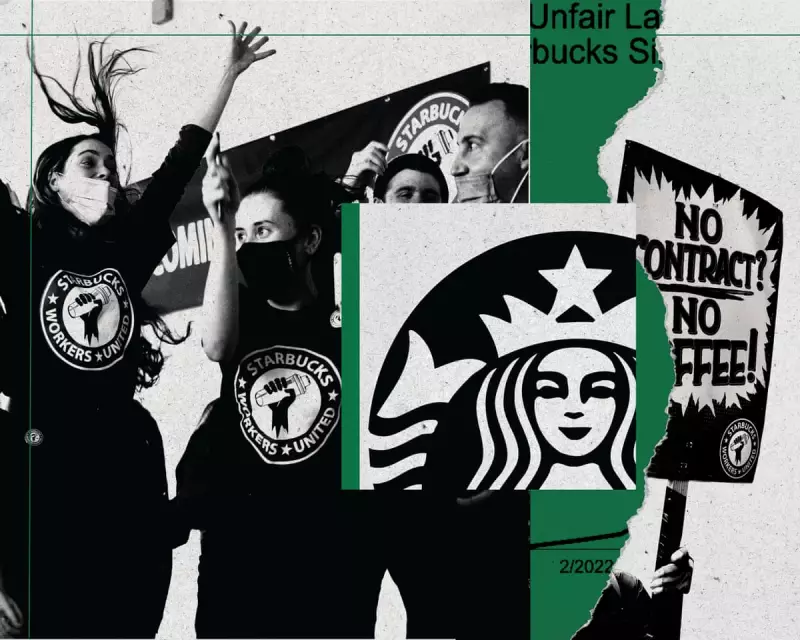
The world's largest coffee chain is facing an unprecedented wave of industrial action, with thousands of its US baristas warning of a historic and escalating strike. The Starbucks Workers United union has vowed to intensify its campaign far beyond the current walkouts unless executives make significant concessions at the bargaining table.
A Four-Year Battle for Recognition
This confrontation has its roots in a landmark event four years ago. In December 2021, workers at a Starbucks store in Buffalo, New York, voted 19-8 to form a union, defying intense corporate resistance. That single vote ignited what Michelle Eisen, a key organiser and now principal spokesperson for the union, describes as a "whirlwind." Since then, mobilising workers have won over 650 union elections, with the union now representing 11,000 baristas across more than 550 stores.
However, nearly 48 months on, not a single one of those stores has secured a first contract with the Seattle-based coffee giant. This delay is nearly three times the 15-month national average for securing a first union contract, a tactic former US deputy secretary of labor Julie Su condemns. "The time to a first contract is used to punish workers for unionizing," Su stated, highlighting how companies use delay "as a weapon."
From 'Partners' to Picket Lines
For decades, Starbucks successfully positioned itself as a progressive employer, dubbing its workers "partners" and offering a suite of benefits. Founder Howard Schultz long maintained the company thrived without a union. Yet, for workers like Michelle Eisen, who started in Buffalo in 2010, the reality began to shift around 2016. She cites eroding benefits, stagnant wages that barely outpaced new hires, and declining staffing levels.
The pandemic became a breaking point. Baristas, deemed essential workers, faced aggressive customers and intense pressure for what they felt was inadequate pay. This discontent fuelled the organising drive in Buffalo. The company's response was immediate and forceful, with top executives, including Schultz, descending on the city to campaign against unionisation. Despite what Eisen calls a "vicious union-busting campaign," the workers prevailed.
CEO Turmoil and Stalled Negotiations
The union's growth triggered executive upheaval. Shortly after the Buffalo victory, CEO Kevin Johnson stepped down, and Howard Schultz returned for a third stint. Schultz openly rejected the union, offering improved pay and benefits exclusively to non-union workers—a move that infuriated organised baristas.
A framework for bargaining in early 2024 offered hope, but it collapsed following the arrival of new CEO Brian Niccol in late 2024. Niccol, the former Chipotle boss launched on a "Back to Starbucks" turnaround plan but, according to the union, allowed bargaining to "stutter to a halt." The union has filed hundreds of unfair labour practice charges, alleging retaliation, including the firing of dozens of union leaders. Starbucks has denied these allegations.
Frustration boiled over on the chain's lucrative "Red Cup Day" in November. Over a thousand workers walked out. A week later, strikes expanded to 2,000 workers across 95 stores. By late November, the action involved approximately 2,500 baristas across 120 stores in 85 cities.
"The company has been stonewalling us," said Diego Franco, a Chicago barista on strike for six years. "I would much rather stand outside in the cold... than know that I’m showing up to work where I’m constantly being disrespected by our CEO."
Corporate Response and Political Pressure
Starbucks has consistently downplayed the strike's impact. A company spokesperson, Jaci Anderson, stated that 99% of its 17,000 US locations remain open and reported record holiday sales. The company maintains it offers "the best job in retail" and is ready to bargain when the union returns to the table.
This stance is increasingly challenged by political figures. Over 100 members of Congress have demanded Starbucks resume good-faith negotiations. Newly elected officials, including New York mayor-elect Zohran Mamdani and Seattle mayor-elect Katie Wilson, have joined picket lines, with Wilson stating, "Baristas are the heart and soul of this company."
With Michelle Eisen declaring workers are "prepared to make this the longest and biggest strike in company history," the pressure on Starbucks is mounting. The core demand remains simple: a fair first contract for the thousands of baristas who, four years on, are still waiting for the company to truly recognise their union.




