
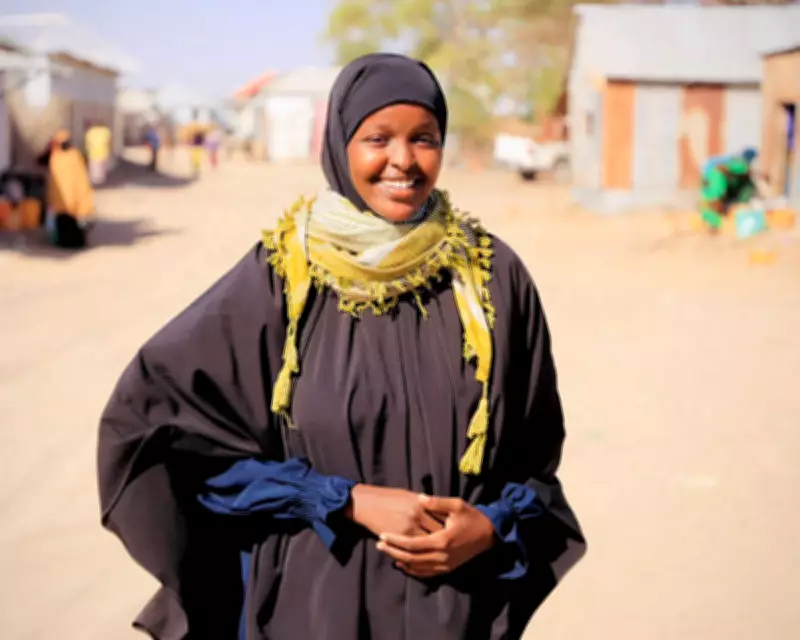
A woman imprisoned in Somalia for participating in peaceful protests has described being tortured by her guards. Sadia Moalim Ali, a 27-year-old rickshaw driver, told the Guardian in an exclusive interview that she was stripped naked by two male guards in a CCTV-monitored room, kicked, beaten with a baton, and left for two days in a small cell without food.
Details of Torture
Ali said: "I was tortured. I was forced to lie face down on the ground, and water was poured on me. I was kicked by guards with boots on. They stood over me and beat me with a baton. I was taken into solitary confinement and kept there for two days. I was deprived of food and basic necessities while I was locked in that cell. I wasn't allowed to leave to go to the toilet." Torture is prohibited under international law and the UN Convention against Torture.
Arrest and Activism
Ali, a nursing graduate who works as a rickshaw driver, was arrested on 12 April for anti-government activism. She used Facebook and TikTok to criticize the federal government, speaking out against corruption, nepotism, forced evictions, youth unemployment, taxation, and high fuel prices. On 14 April, she was transferred to Mogadishu central prison, where she remains. She has not been formally charged and was denied access to a lawyer. She was forced to sign a document she did not understand and then taken to court. Amnesty International reports that police have court permission to hold her for 90 days pending investigation.
Punishment for Speaking Out
In an interview aired on Shabelle Media on 20 April, Ali said she was held without due process and appealed for freedom. She said she was tortured as punishment for that interview: "Before when I spoke to the media, I was punished the same day ... Truly a lot of pain was inflicted on me." The cell where she was kept is known as "cellula della morte" (cell of death), built during Italian rule. Former prisoners say it is used to punish people and for those facing execution. The floor is doused in engine oil and salt, covered in faeces, and measures about two square metres. The stench causes vomiting.
Current Conditions
Ali, the main breadwinner for her extended family including her 11-month-old daughter, now shares a cell with 38 other women. "It is a very difficult life," she said. "No human being deserves to be put in here. It is a place with no ventilation. Even a healthy person gets sick. It is very noisy and very crowded." She struggles to sleep, has kidney problems, and numbness in her hand and foot. She wants to go home and says she will end her activism. "I have endured severe violations and I deeply plead for justice, for my rights and my freedom to be restored by those responsible."
Human Rights Concerns
Dalmar Dhayow of the Coalition of Somali Human Rights Defenders said women in prison routinely face human rights violations: "We know sexual assault or violence is systematically used as a tool to force women [to make false confessions], humiliate and harass them inside prison. We know a lot of cases of women being shackled while they are detained, with their legs and hands bound." Human rights organizations, former government officials, and a Somali MP have called Ali's detention unlawful and demanded her immediate release. Abdirahman Abdishakur, an opposition party leader, posted on X that Ali's detention is "a national disgrace and a damning indictment of President Hassan Sheikh's administration. Her only 'offence' was speaking out against corruption and nepotism within government institutions. That is not a crime; it is a fundamental civic right."
Since 2022, Somali authorities have been accused of a systematic crackdown on human rights, using arbitrary arrests, detention, harassment, threats, and intimidation to silence dissenting voices. The Somali government was approached for comment but did not respond.




