
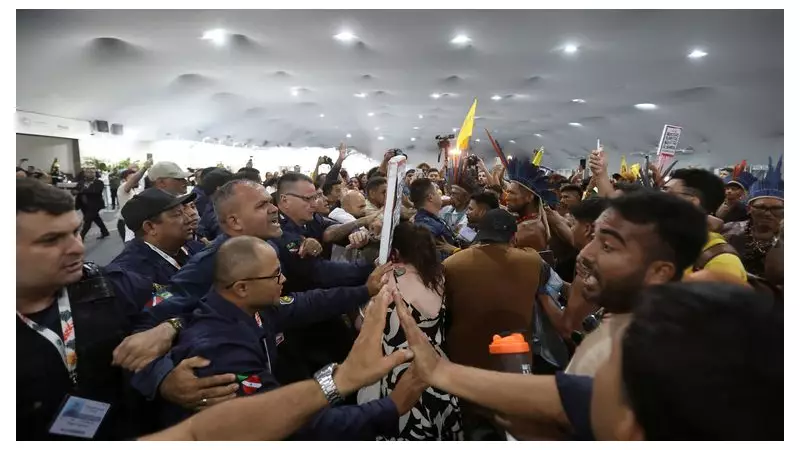
Indigenous Protesters Storm COP30 Venue in Tense Confrontation
Dozens of angry protesters have forced their way into the COP30 climate summit venue in Brazil, resulting in violent clashes with security guards at the entrance. The dramatic incident occurred on Tuesday 11 November 2025 in the Amazon city of Belem, where thousands of international delegates are gathered for the crucial UN climate conference.
Chaos at the Summit Entrance
Shouting protesters demanding access to the UN compound managed to breach security, with many waving flags bearing slogans calling for land rights and carrying signs declaring "our land is not for sale." The confrontation turned physical as security guards pushed back against the advancing crowd and used tables to barricade the entrance in a desperate attempt to regain control.
An indigenous leader from the Tupinamba community near the lower reaches of the Tapajos River expressed the group's frustration to Reuters, highlighting their anger about ongoing development in the forest. "We can't eat money," said Gilmar, who uses only one name, capturing the essence of the protesters' concerns about environmental destruction and land rights.
Security Incident and Injuries Reported
The confrontation resulted in several injuries among security personnel. A Reuters witness observed one security guard being rushed away in a wheelchair while clutching his stomach, while another guard sustained a fresh cut above his eye after being struck in the head by a heavy drumstick thrown from the crowd. Security officials confiscated several batons during the incident.
The protesters, who had been part of a larger group of hundreds marching to the venue, dispersed shortly after the clash. Security guards later allowed delegates to exit the venue, having previously asked them to move back inside until the area was completely secure.
Broader Context of COP30 Controversies
The incident occurs during a particularly sensitive period for global climate action. COP30, which began on 10 November and continues until 21 November, has faced controversy over its location in Belem, situated on the outskirts of the Amazon rainforest. The choice of venue has highlighted ongoing tensions between development interests and environmental conservation in the region.
Brazil's President Luiz Inácio Lula da Silva has positioned Indigenous communities as key players in the COP30 negotiations. Dozens of Indigenous leaders arrived earlier this week by boat to participate in the talks and demand greater influence in how forests are managed, underscoring the critical role these communities play in environmental protection.
The protest and subsequent clashes reflect the growing frustration among Indigenous groups and environmental activists who feel their voices are being marginalised in critical discussions about the future of their ancestral lands and the global climate crisis.




