
New South Wales police are facing intense scrutiny after authorising a neo-Nazi demonstration that took place directly outside the state parliament in Sydney on Saturday. The controversial gathering saw black-clad men displaying antisemitic banners and chanting historical extremist slogans.
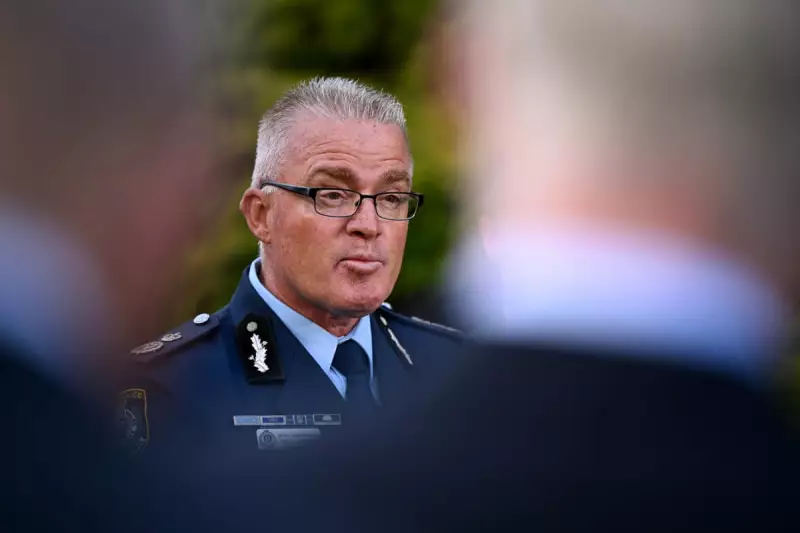
NSW Police Commissioner Mal Lanyon has confirmed that while officers formally approved the protest application, neither he nor Premier Chris Minns had been made aware of the event beforehand. Commissioner Lanyon attributed this significant oversight to a serious breakdown in communication within the police force.
Why Police Couldn't Prevent the Rally
The group behind the protest had submitted a Form 1 notice, which provides legal protection against charges for minor offences like obstructing traffic when conducting public assemblies. Deputy Police Commissioner Peter Thurtell, who acknowledged he was aware of the protest in advance, stated that authorities lacked sufficient legal grounds to oppose the gathering under existing legislation.
Legal experts have highlighted the complex balance police must strike when assessing protest applications. Professor Simon Rice from the University of Sydney explained that while police could potentially reject protests on public safety grounds, they face difficulties when attempting to pre-emptively restrict speech that might become vilifying.
Josh Pallas, Legal Director at Climate Defenders Australia, suggested that recent security warnings could have provided justification for refusal. ASIO chief Mike Burgess had expressed concerns just days earlier about the potential for spontaneous violence from the very group that organised Saturday's demonstration.
Limited Options During the Protest
Once the protest received official approval, police powers to disband the gathering became severely restricted. Despite recent expansions to hate speech laws under section 93ZA of the Crimes Act, legal experts note that the specific language used on banners and in chants likely fell short of meeting the high threshold required for immediate charges.
The protesters displayed a banner reading 'Abolish the Jewish Lobby' and chanted the Hitler Youth phrase 'blood and honour'. Professor Rice indicated that while the language was deeply offensive, it was crafted in a manner that could potentially be defended in court as political commentary rather than direct incitement.
Timothy Roberts of the NSW Council for Civil Liberties expressed frustration that police chose not to utilise existing hate speech legislation, stating: 'If there ever was a time to use these laws, it was over the weekend.'
Calls for Legal Reform and Strategic Response
In response to the incident, Premier Chris Minns has announced a comprehensive review of protest approval processes and is considering introducing new laws to restrict demonstrations near places of worship. He has also referenced potentially adopting German-style legislation that explicitly bans Nazi slogans and symbols.
However, civil liberties advocates and legal experts have expressed reservations about further legislative measures. Greens justice spokesperson Sue Higginson argued that NSW Police already possess extensive powers to manage public gatherings and simply failed to exercise appropriate judgment in this instance.
Counter-terrorism expert Levi West from the Australian National University cautioned against knee-jerk legislative responses, noting that extremist groups typically adapt their tactics to circumvent new restrictions. He emphasised the need for a more strategic approach addressing the underlying social issues driving recruitment to such organisations.
The incident has sparked broader discussions about how democratic societies balance free speech protections with the need to prevent the public promotion of hateful ideologies.




