Thousands March Against ICE in New York City Amid National Demonstrations
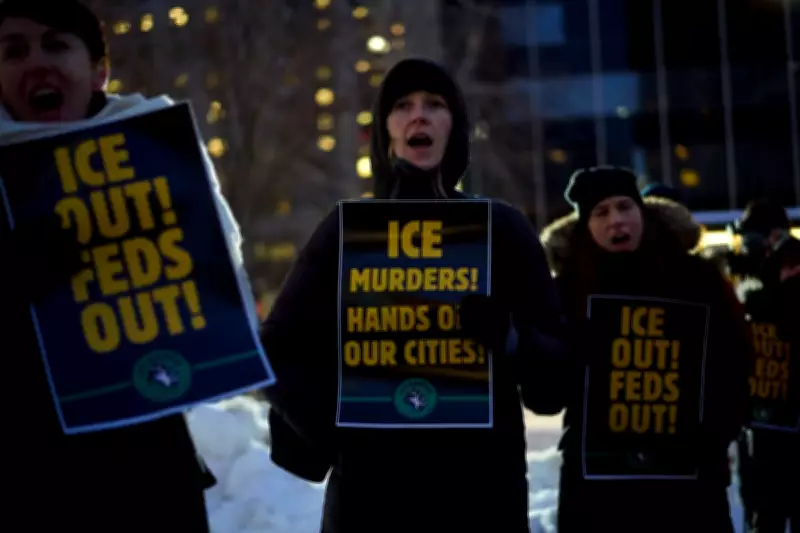
Thousands of protesters gathered in New York City on Friday, braving plunging cold temperatures to participate in a nationwide day of action against Immigration and Customs Enforcement (ICE) and the Trump administration's immigration policies. The demonstration saw participants of all ages marching through Manhattan's ice-covered streets, with many chanting slogans against the agency and expressing solidarity with recent victims of immigration enforcement actions.
Foley Square Rally Sparks City-Wide March
The protest began at Foley Square in Lower Manhattan, where crowds assembled despite freezing conditions. Demonstrators wore thick coats, hats, and gloves as they listened to speeches before marching north through the city. The atmosphere was charged with emotion as protesters chanted "Abolish ICE!" and "No ICE, no KKK, no fascist USA!" throughout the event.
Spanish-language chants also echoed through the streets, including "Chinga la migra," a colloquial expression against immigration enforcement. The protest formed part of a coordinated national action advocating for "no work, no school, no shopping" to oppose what organizers described as the administration's brutal immigration crackdowns.
Political Figures and Students Lead Demonstrations
Among those participating was Brad Lander, a former New York City comptroller and congressional candidate who had recently spent time in Minneapolis. Lander spoke about the killings of Alex Pretti and Renee Nicole Good, two 37-year-old US citizens shot by federal agents in January, saying Minneapolis residents were "heartbroken - and they are enraged."
Student participation was particularly notable, with young people leading many of the chants. John Eddy, a student from Las Vegas, explained that he and others had taken the full day off from classes to participate. "We're students - we took the full day off of school," Eddy stated. "We haven't been to any classes at all. We are out here."
Personal Connections to Minneapolis Events
Several protesters had direct connections to recent events in Minneapolis. Abdou Seye, who had just arrived from the city where his family is based, expressed strong sentiments against ICE. "Really it's 'Fuck ICE,'" Seye said. "You have to do what you have to do." He continued with a powerful statement about solidarity: "The thing is, if it's them today, it's us tomorrow, so we have to keep going. We have to keep this up."
Seye described witnessing aggressive confrontations between officials and demonstrators in Minneapolis, noting that his mother had been trapped near city hall for nearly two days due to authorities' tactics. This personal experience fueled his determination to participate in the New York protests.
Wider National Context and Solidarity
The New York demonstration occurred alongside similar protests across the United States, with organizers calling for federal immigration agents to leave Minneapolis after a nearly month-long operation there. Protest leaders, many from the University of Minnesota, emphasized economic pressure through work stoppages and consumer boycotts as strategies to demand accountability and reform.
Julia Parris from Brooklyn, who had participated in Black Lives Matter protests following George Floyd's murder, expressed her disgust with current administration policies. "I am disgusted," Parris said. "There are no strong enough words to describe how I feel about this administration. We are fed up."
Community Support and Traffic Disruptions
As protesters marched through New York City streets, stalling traffic in some areas, they received visible support from bystanders and motorists. People in their cars began honking in solidarity with the marchers, and at one point, a man blasted music from his car stereo while sitting on top of his vehicle, waving and smiling at the demonstrators.
The protests highlighted growing concerns about immigration enforcement tactics, with organizers noting that besides Pretti and Good, immigration agents under the Trump administration's command have killed Keith Porter in Los Angeles and Silverio Villegas González in Illinois. These incidents have fueled nationwide calls for reform and accountability within immigration enforcement agencies.