
Community Gathers in Grief and Solidarity on Nicollet Avenue
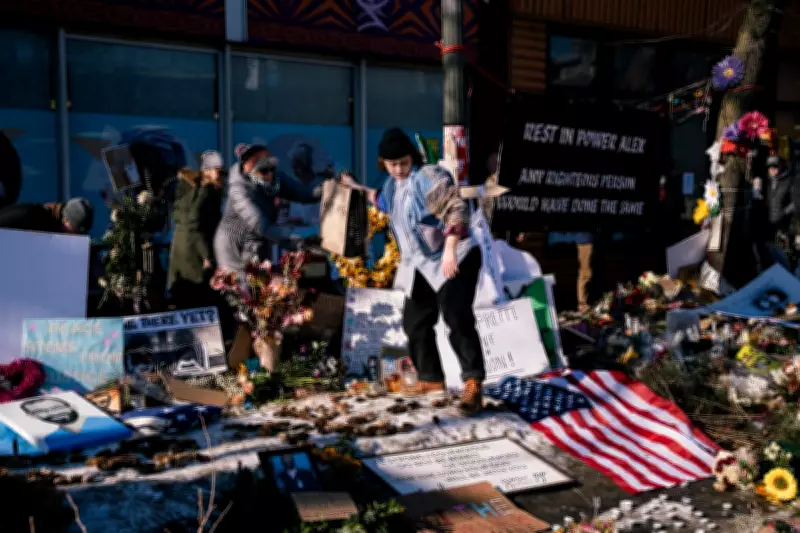
A profound sense of loss has settled over a stretch of Nicollet Avenue in Minneapolis, Minnesota, where a memorial for Alex Pretti stands as a poignant reminder of tragedy. The site, located between 26th and 27th streets in the Whittier neighbourhood, has become a focal point for communal mourning and resilience following Pretti's killing by federal agents.
A Neighbourhood Transformed
Orange stakes and caution tape now cordon off the spot where Pretti was gunned down, creating what residents describe as a visible scar on the block. Aldona Martinka, a healthcare worker and decade-long resident, reflects on the change, stating, "It's almost like a loss of innocence for a part of the neighbourhood that was just pure joy before." Known locally as "Eat Street" for its diverse culinary offerings, the corridor has seen restaurants and businesses transform into gathering spaces for mourners.
Daily, neighbours arrive to refresh the memorial—rearranging handwritten cards, replacing flowers, and sprinkling salt to prevent ice formation. Each evening, the block illuminates with candlelight, while the air carries the mixed fragrance of dozens of candles, ranging from prayer lights to nostalgic scents retrieved from closets.
Performances and Vigils of Remembrance
The memorial has hosted nightly dedications, becoming a stage for community expression. On Monday, Brass Solidarity—a band formed in response to George Floyd's murder—performed a powerful rendition of Stand by Me, with crowds joining in song. Tuesday featured Kalpulli Yaocenoxtli, a Mexica-Nahua cultural group from St Paul, performing traditional dances. Wednesday saw hundreds gather for a vigil organised by Pretti's fellow nurses.
Aisha Chughtai, a local city council member, observes, "Even throughout the day, you'll find people here who start singing." Chughtai was at home when news of Pretti's death broke, prompting her to rush outside to bear witness and assist neighbours affected by chemical irritants deployed by federal agents.
Escalating Tensions and Community Response
The killing occurred amidst weeks of heightened tension, with federal agents conducting arrests in the neighbourhood. Chughtai describes witnessing legal residents and refugees being violently detained, leading many to avoid going outside for fear of profiling. "Every day, I go through waves of grief and anger," she admits, highlighting efforts to connect immigrant families with legal aid and advocate for eviction moratoriums.
Following Pretti's death, the Trump administration demoted border patrol commander Gregory Bovino, whom Chughtai credits community pressure for removing. However, she cautions, "This cruelty did not start with Greg Bovino and it certainly will not end with him." Subsequent incidents, including violent arrests and mace deployment against bystanders, have reinforced this sentiment.
Businesses as Sanctuaries
Local establishments have played crucial roles as refuges. My Huong Kitchen, owned by Tracy Wong, became a makeshift emergency centre where medics treated injuries and washed chemical irritants from eyes. Wong, described as "the neighbourhood auntie," distributed egg rolls and provided comfort. Similarly, Prodigal Public House, Copper Hen Cakery & Kitchen, and Glam Doll Donuts opened their doors to affected residents.
Jeff Cowmeadow, proprietor of Prodigal Public House, reflects on the neighbourhood's character: "People come to this neighbourhood for happiness: We have the art institute, ethnic restaurants, massage, thrift store, record store." The recent events have starkly contrasted this identity.
Enduring Impact and Community Resilience
For Martinka, the corner will forever evoke this traumatic period. "I will never be able to walk by this corner again without thinking about this really horrible time for our neighbourhood and our city," she says. Yet, amidst the grief, there is a powerful demonstration of unity. Martinka notes, "The way that our community comes together in crisis—it's a coming together, not a hunkering down."
As the memorial continues to draw visitors, offering pho, handwarmers, and solidarity, it stands as a testament to both the pain inflicted and the resilience forged in Minneapolis's Whittier neighbourhood.




