
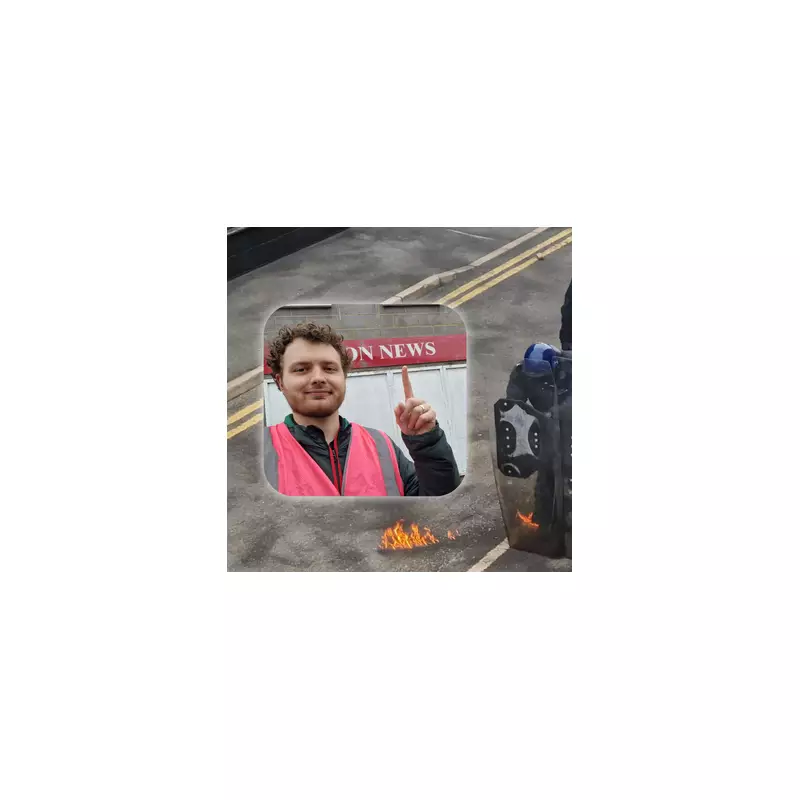
Amid the screaming-burning chaos of the August 2024 riots, Brian Spencer stood akimbo, hips proud, leg cocked and bouncing with confidence as he faced a dozen shielded police officers. Then the bricks started flying - first to the back of his head, then directly to his testicles, with only a few millimetres of paint-stained cotton tracksuit bottoms for protection.
A Lesson in Consequences
One year later, at the Metropolitan Police Specialist Training Centre in Gravesend, Kent, public order instructor PC Tom Wright pauses the 16-second video of Spencer's calamity. The room falls silent as his deadpan eyes scan the journalists present. "If nothing is done here," he declares gravely, "The consequences could be catastrophic."
What many might have initially found amusing - the absurd theatrical timing of Spencer swiveling in pain - becomes a serious training lesson about the two-kilo brick that struck his head seconds before the groin shot. These "wayward missiles," as Merseyside Police termed them, demonstrate the split-second decisions officers must make in the heat of riots to protect life and property, prevent crime, and maintain the King's peace - sometimes 24 hours into a single shift.
From Classroom to Combat Zone
The visit began at Gravesend station where Sergeant Freddie Mills, dressed in black coveralls with subtle Met Police branding, greeted National Union of Journalists members. The initiative aimed to improve media relations with the UK's largest police force. We had cameras and pens. They had bricks and bombs.
The training facility resembles a block of cold lard with windows, where protein-loaded officers with thick biceps, tattoos and buzz cuts prepare for organised violence. The Met previously trained in Hounslow, but locals tired of the shouting, swearing and banging - except for a curry-house owner who happily funded his holidays with the Met's enormous calorie quota.
Inside the classroom, Sgt Mills and PC Wright transform from unsparing men into geeks with extraordinary legal powers. They discuss:
- Nuances of protest law at major sites like Parliament
- Crowd science and academic research influencing police tactics
- Real-time communication strategies with protesters
- Press officers working alongside Gold Commanders to counter misinformation on social media
"In one type of crowd, there are many different types of belief system," explains Sgt Mills, "But people are influenced by what they see."
Facing the Flames and Fury
Outside, in a fictional town resembling a Call of Duty version of a dying English coastal resort, the real training begins. Officers casually lob petrol bombs at trainees clad in riot gear, helmets and shields of varying sizes.
Another instructor, armed with a wheelbarrow full of wooden blocks, takes a more frenzied approach. "There's definitely an art to it," PC Wright tells us gleefully. "Some of my colleagues down here would have been absolutely phenomenal NFL quarterbacks."
The wooden block thrower becomes increasingly menacing, his eyes dilating whenever an officer leaves daylight between shield and helmet. They occasionally use real bricks, but sessions are shorter to reduce injuries. Sgt Mills, a former medic, points out treatment zones.
One particularly relentless petrol bomber, built like a Judoon from Doctor Who, demonstrates that throwing Molotov cocktails requires skill. Some bounce along the ground, extinguishing their newspaper fuses before reaching officers. When they do ignite, they leave impressive trails of fiery black smoke, forcing officers into frantic stomping and running from the flames.
"Get back," the officers scream. "What are you gonna do?" the petrol bomber retorts.
Sgt Mills reveals that officers carry mini fire extinguishers partly because of self-immolation risks from demonstrators - a clear sign to leave if accidentally caught in a protest. His advice for civilians stuck in riots: remove football shirts and wear natural fibres that don't turn into napalm when burning.
Building Professional Understanding
The visit aimed to develop mutual professional understanding between journalists and police. During lunch discussions about unusual fishcake flavours and other matters, an important point emerged from an NUJ organiser: journalists should not attend protests as both activists and reporters.
With activists and streamers without accreditation muddying journalistic waters, the commitment to impartiality by bona fide press members must be firmer than ever. As Sgt Mills would say, everyone in a crowd has their own belief system, but professionals cannot let emotion cloud their judgement.
The day revealed the meticulous planning and intense preparation behind public order policing in London, where bigger crowds and limited space make the jobs of officers like Sgt Mills and PC Wright increasingly vital for public safety.




