
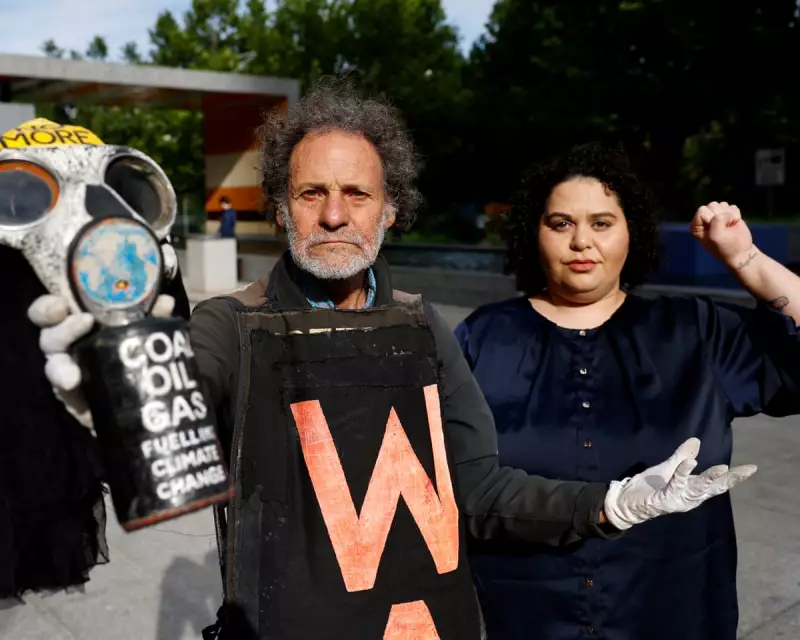
A legal battle with significant implications for protest rights has been launched in the Australian state of Victoria, challenging controversial new police powers to stop and search people without suspicion in Melbourne's central business district.
Greedozer Organiser Takes Government to Court
The challenge is being spearheaded by Meriki Onus, a prominent Indigenous activist and organiser of the Greedozer bloc within Melbourne's annual Invasion Day rally on January 26th. Onus, represented by the Human Rights Law Centre, filed the case in the Victorian Supreme Court on Monday, December 8th, 2025.
The lawsuit targets the ‘Designated Area Search Power’ regulations, enacted by the Victorian government in late November 2025. These rules grant police the authority to stop and search any individual within a defined zone covering much of the CBD, including key landmarks like Flinders Street Station and Federation Square, without requiring any reasonable suspicion of wrongdoing.
Onus argues that these sweeping powers directly threaten the right to peaceful assembly, a cornerstone of democratic society. "These laws are designed to intimidate and deter people from protesting," she stated. Her legal team contends the regulations are disproportionate and unlawfully infringe upon fundamental rights protected by Victoria's Charter of Human Rights and Responsibilities.
The Genesis of the 'Greedozer' Bloc and Government Response
The Greedozer bloc, co-founded by Onus, emerged as a distinct faction within the broader Invasion Day rally, which calls for the date of Australia's national day to be changed from January 26th. The bloc's name and activism focus on criticising corporate and state exploitation of Indigenous lands and resources.
The Victorian government, led by Premier Jacinta Allan, has defended the search zone laws as a necessary public safety measure. A government spokesperson cited the need for "appropriate powers to keep the community safe" during major events. The regulations are currently active and are scheduled to remain in force until at least January 29th, 2026, covering the upcoming Invasion Day protests.
However, critics, including legal experts and civil liberty groups, warn that such pre-emptive, suspicionless search powers set a dangerous precedent. They fear it could normalise the erosion of civil liberties under the broad guise of maintaining public order.
Broader Implications for Protest and Policing
The outcome of this legal challenge will be closely watched, not only in Australia but by observers in the UK and other democracies. It touches on the perennial tension between state security and individual freedoms, particularly the right to dissent.
If the court strikes down the regulations, it would be a major victory for activist groups and a clear check on executive power. A ruling in favour of the government, however, could embolden other jurisdictions to implement similar measures during periods of anticipated civil unrest or large-scale public demonstrations.
The case also highlights the evolving tactics of protest policing. The move from reacting to specific threats to establishing wide-area, pre-emptive control zones represents a significant shift in how authorities manage public assembly. For activists like Meriki Onus, the fight in the Supreme Court is as crucial as the protest on the streets, challenging the legal framework that seeks to constrain their voice.
The Victorian Supreme Court is expected to hear the case on an urgent basis, given the imminent date of the planned Invasion Day rally. The decision could therefore arrive swiftly, determining the landscape in which thousands gather to express their political views in the heart of Melbourne.




