Ukrainian Leader Delivers Blunt Assessment of European Inaction at Davos Summit
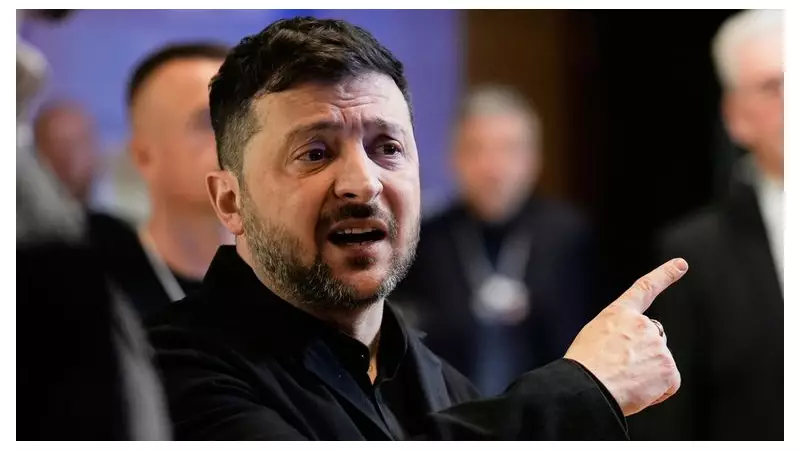
Ukrainian President Volodymyr Zelenskyy has launched a blistering critique of his European allies, comparing their collective approach to global challenges to being trapped in a perpetual "Groundhog Day" scenario of endless discussion without meaningful action. Speaking at the World Economic Forum in Davos, the wartime leader did not mince words about what he perceives as Europe's failure to establish itself as a unified global force.
Europe as a "Fragmented Kaleidoscope"
In his address following a face-to-face meeting with US President Donald Trump, Zelenskyy characterised Europe as "a beautiful but fragmented kaleidoscope of small and middle powers" that repeatedly discusses necessary actions without implementing them. He argued this approach leaves European nations scrambling to respond to world events rather than proactively shaping their collective destiny from a position of strength.
The Ukrainian president expressed particular frustration that Europe appears "lost" when America's focus shifts elsewhere, noting that instead of taking leadership in defending global freedom, European leaders waste energy trying to convince President Trump to change his approach - an effort he described as fundamentally futile.
Peace Talks and Diplomatic Developments
Zelenskyy's remarks came ahead of what he termed the "first trilateral meeting" between Ukraine, the United States, and Russia, scheduled to take place in the United Arab Emirates. While initially described as technical-level discussions, the Ukrainian delegation has since been upgraded to include top officials including lead negotiator Rustem Umerov and Zelenskyy's chief of staff Kyrylo Budanov.
This escalation in representation suggests the meeting may have taken on greater significance than originally anticipated, potentially reflecting developments during Zelenskyy's discussions with President Trump. However, Moscow has yet to confirm Russian participation, creating uncertainty about whether the talks will proceed as planned.
Specific Criticisms of European Responses
Zelenskyy enumerated several areas where he believes European allies have failed to demonstrate sufficient resolve:
- The Greenland crisis initiated by President Trump, which diverted alliance attention from Russia's war in Ukraine
- European inaction during Iran's violent suppression of protests earlier this month
- Continued weakness in responding to Russia's full-scale invasion of Ukraine, now approaching its fifth year
- Failure to establish a special tribunal to try Vladimir Putin for war crimes, despite Trump's swift action against Venezuela's former president
The Ukrainian leader posed pointed questions about European priorities, asking: "What's missing - time or political will? Too often in Europe, something else is always more urgent than justice."
Call for European Military Unity
Reiterating a proposal first made a year ago, Zelenskyy called for European nations to create a united armed forces to defend their continent, rather than relying on what he characterised as an increasingly unpredictable United States within the NATO framework. This suggestion has previously faced resistance from countries including the United Kingdom, which views close cooperation with US forces as central to its security planning.
The Ukrainian president warned that global events - from Trump's social media communications to Putin's military actions - are developing faster than Europe's current structures can effectively manage. He urged European leaders to transform from reactive entities into proactive forces capable of defining the future, stating: "We should not accept that Europe is just a salad of small and middle powers seasoned with enemies of Europe. When united, we are truly invincible."
Zelenskyy's Davos address represents one of his most comprehensive and direct critiques of European foreign policy since Russia's invasion began, highlighting growing frustration with what he perceives as a dangerous gap between European rhetoric and substantive action on the world stage.