
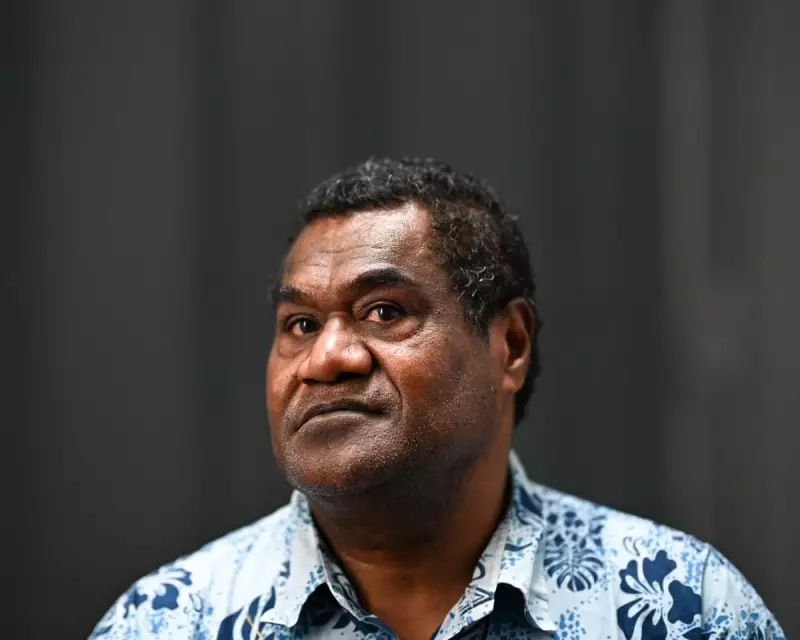
Kanak Leader Stranded in France Despite Cleared Charges
Christian Tein, a prominent Indigenous Kanak leader from New Caledonia, has accused the French government of intentionally obstructing his return home by delaying the re-issuance of his passport. This comes despite a Paris appeals court clearing him to return to the French Pacific territory in October after most charges against him were dropped.
The pro-independence activist was arrested in June 2024 over allegations that he instigated deadly protests that erupted in May 2024. The unrest claimed fourteen lives, mostly Kanak people, representing the worst violence the islands had witnessed since the independence protests of the 1980s.
From Solitary Confinement to Political Limbo
Following his arrest, Tein was transported 10,600 miles to mainland France on a private chartered plane and held in incarceration until June of this year. He described his experience of spending a year in solitary confinement as "very, very hard," adding that "psychologically, you never come out of this kind of situation unscathed."
Tein, who now resides in Alsace in north-eastern France, remains under formal investigation for conspiracy and organised robbery, allegations he continues to deny. His legal team has pointed out the irony that the same administration that rapidly issued him a temporary passport before his imprisonment is now delaying the processing of his new application.
"It's been a while since I submitted my passport application," Tein stated during an interview in Montpellier. "But we can see that [the French government] are deliberately dragging it out."
Background to the Unrest
The deadly protests that led to Tein's arrest erupted in May 2024 after President Emmanuel Macron attempted to change voting laws that would have allowed thousands of mostly white French residents who had lived on the islands for ten or more years to vote. The Kanak population, comprising approximately 41% of New Caledonia's residents, argued this move would permanently undermine their hopes for independence.
Paris defended the proposed measure as necessary for improving democracy, but the resulting violence prompted Macron to declare a state of emergency, temporarily close borders, and deploy thousands of military police to the territory.
At the time of his arrest, Tein led the Field Action Coordination Cell, a pro-independence movement that had organised peaceful protests against the electoral law changes. His detention, along with six other Kanak activists, sparked renewed demonstrations across the islands.
Legal Developments and Continuing Struggle
Magistrates who questioned Tein concluded there was no evidence that he was preparing an armed uprising against the New Caledonian government - the same government that had employed him before his imprisonment forced his resignation.
Johann Bihr of the International Prison Observatory noted that "many in New Caledonia saw it as a 'deportation', like that of so many others in colonial history."
Macron eventually abandoned the planned voting law changes and announced the Bougival accord in July, granting the territory more sovereignty while maintaining French control. Although some Kanak pro-independence figures signed the agreement, Tein - who was elected president of the Kanak National and Socialist Liberation Front while in prison - was not among them.
"We reject Bougival, but I need to be at the table to discuss the future of the country," Tein stated, referencing his inability to return home.
Allegations of Mistreatment
Concerns have been raised about the treatment of other Kanak independence activists detained alongside Tein. Guillaume Vama, a 31-year-old Kanak agroforestry expert, described his arrest as resembling an abduction by loyalists. He reported being handcuffed for 96 hours, struck on the knee by gendarmes, and receiving no medical treatment for the injury while imprisoned.
"I felt completely dehumanised, treated like an animal," Vama said of his transfer to France. "To me, it was a clear message that the [French] state had no limits."
Urko Aiartza, co-president of the European Association of Lawyers for Democracy & World Human Rights, suggested that the delay in issuing Tein's passport "may amount to an unlawful restriction on his right to freedom of movement."
Tein, who had never visited mainland France before his imprisonment, remarked: "I always refused because I said I would come when my country was independent." When asked about his plans if he returns to New Caledonia, the 57-year-old leader affirmed: "I don't think I have the right to pass this problem on to future generations. [Independence] is our only ambition."




