Federal Judge Evaluates Force Restrictions Following Portland ICE Protest Teargassing
A United States district judge is currently deliberating on the potential imposition of a temporary restraining order that would place significant restrictions on federal officers' use of force during protest situations. This judicial consideration follows a series of contentious demonstrations in Portland, Oregon, where Immigration and Customs Enforcement (ICE) agents deployed teargas, pepper balls, and rubber bullets against crowds that included children and elderly participants.
Weekend Demonstrations Spark Legal Scrutiny
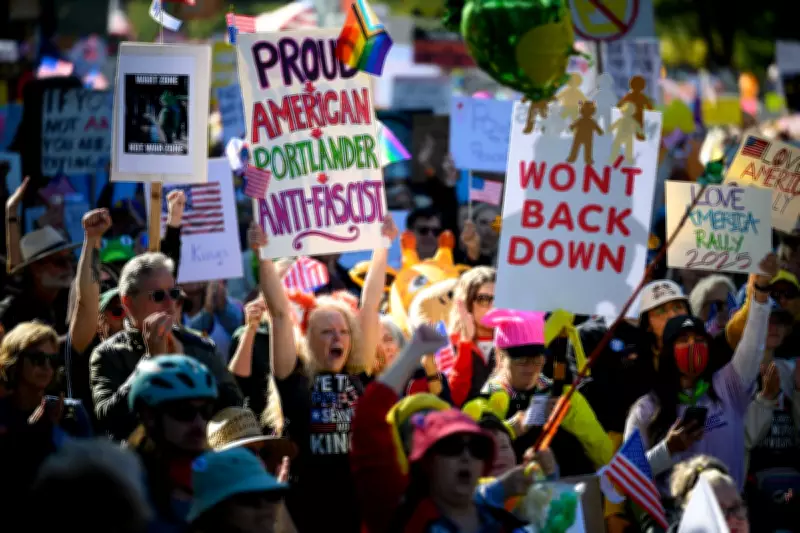
The immediate catalyst for this legal action was a weekend of protests centred around an ICE facility in Portland's South Waterfront district. Thousands of demonstrators gathered on Saturday as part of the "No Kings" protest movement, with Portland Mayor Keith Wilson characterising the assembly as predominantly peaceful. He emphasised that most participants "violated no laws, made no threat and posed no danger" to federal personnel stationed at the location.
Despite this characterisation, federal agents responded with chemical munitions that affected numerous protesters. Attorney Matthew Borden described the scene during a subsequent court hearing, stating: "They're teargassing children. They're teargassing elderly people. They're teargassing families." Witness accounts submitted to the court detailed chaotic scenes of parents attempting to protect children in strollers while chemical agents filled the air.

Legal Context and Historical Precedents
This hearing forms part of an ongoing class-action lawsuit initially filed in November by the American Civil Liberties Union of Oregon. The legal action targets the Trump administration's approach to protest management, alleging "retaliatory violence" has become "a sustained feature" of federal officers' activities at the Portland ICE building.
The use of teargas in Portland protests has generated concern for several years. During the 2020 George Floyd protests, investigations revealed that downtown Portland experienced teargas concentrations exceeding fifty times the level considered "immediately dangerous to life or health" by federal regulators. This historical context informs current judicial considerations about appropriate force limitations.
Detailed Accounts of Force Deployment
Legal filings submitted over the weekend included multiple witness declarations describing the federal response. One protester recounted seeing "what looked like two guys with rocket launchers" beginning to douse the crowd with gas from approximately 100 yards distance. Another declaration noted that agents continued deploying teargas even as people attempted to retreat from the area.
The filings specifically described federal officers emerging from the ICE building to deploy flash bangs and detonate "large volumes of tear gas" both toward the front and rear of the gathering crowd. One teargas canister reportedly broke an apartment window during the incident, highlighting the potential for collateral damage.
Political Reactions and Broader Context
Portland's mayor responded forcefully to the weekend events, publicly urging ICE agents to leave the city entirely. In an official statement, he asserted that through "your use of violence and the trampling of the Constitution, you have lost all legitimacy and replaced it with shame."
The Portland protests form part of a wider national response to Trump administration immigration policies and specific incidents involving federal agents. The demonstrations reference the killings of two US citizens, Renee Good and Alex Pretti, by federal agents in Minneapolis, connecting local Portland actions to broader national concerns about federal law enforcement practices.
Judicial Timeline and Potential Outcomes
US District Judge Michael H Simon has indicated he will issue a ruling on the temporary restraining order request by Tuesday. This decision could establish immediate limitations on federal agents' conduct during protest situations in Portland while the broader class-action lawsuit continues through the legal system.

The outcome of this judicial consideration may set important precedents regarding the appropriate use of force by federal officers during civil demonstrations, particularly when those gatherings include vulnerable populations such as children, elderly individuals, and families exercising their constitutional rights to assembly and protest.