
Multimedia journalist Lisa Favazzo has provided a first-hand account of being searched by Victoria police officers without a warrant, just days after reporting on the force's newly expanded powers.
A scripted encounter at Flinders Street station
The incident occurred on Sunday while Favazzo was covering the 'Put Australia First' rally in Melbourne's Central Business District. The area had been declared a 'designated area' for six months only hours before the protest began.
Standing alone inside Flinders Street station with her video equipment, two female officers approached her. They asked if she was aware they could search her without a warrant. "Oh yes, I certainly do," Favazzo replied, having recently produced a video report on the very powers being invoked.
Under these regulations, police and Protective Service Officers (PSOs) can randomly stop and search anyone within a designated zone without requiring a warrant or reasonable grounds. Human rights and legal groups have criticised the measures as a 'vast overreach' of police authority.
The search unfolds amid a damp protest
Favazzo described the officers as reciting a script, continuing their explanation even after she interjected to say she understood the process. After handing her camera gear to one officer, she lifted her arms while the other used a metal detector from her armpits to her thighs.
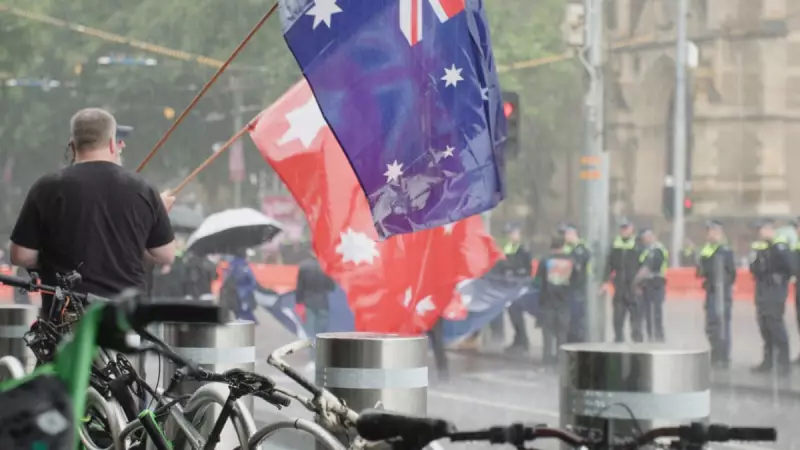
At the time, approximately 200 protesters, many wearing soggy Australian flags, huddled under cover outside the station. Police presence was substantial, with around 700 officers reported to be in attendance. The atmosphere was charged, with offensive music blaring and a known neo-Nazi spotted on the crowd's edge.
When asked if she was with the protesters, Favazzo identified herself as media. The search concluded abruptly after her colleague, Stephanie Convery, returned and presented their Guardian Australia credentials.
Questions over targeting and a single find
The journalist, a white woman, reflected on the inherent power dynamics and how such a random street search could become hostile or confronting for others. She noted her attire—a Busselton Jetty cap and a purple Kurumi lanyard—offered no indication of protest affiliation, leading her to question what criteria officers were using to select individuals for searches.
Victoria police reported that the warrantless searches conducted that day resulted in the discovery of a single knuckle duster. However, they did not disclose how many searches were performed to locate this item.
The encounter ended with officers handing Favazzo a print-out explaining the search powers and repeating a warning to "be careful" before walking away. For the journalist, the experience was mainly awkward, but it highlighted the real-world application of controversial powers she had recently scrutinised in her reporting.




