
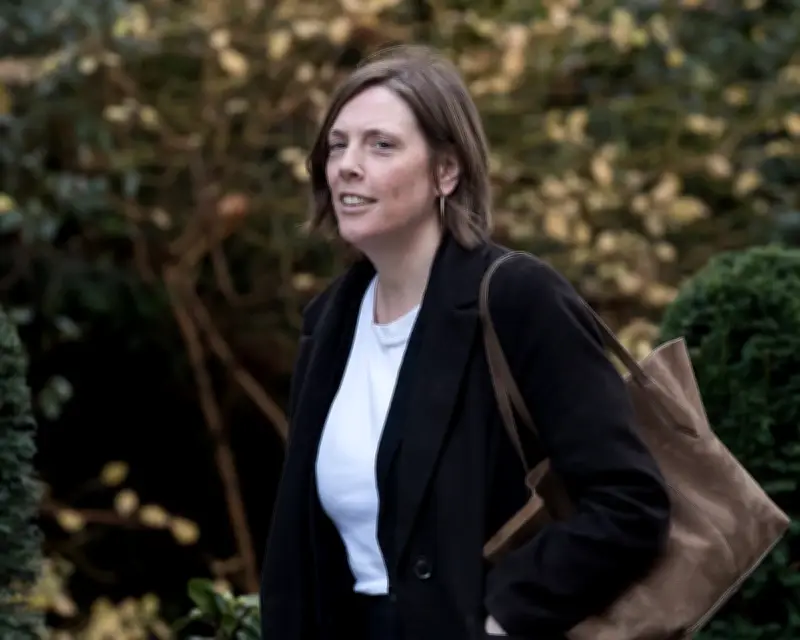
Labour MP Jess Phillips has revealed she received more than 600 rape threats in a single night, highlighting the escalating climate of abuse faced by parliamentarians. The MP for Birmingham Yardley said she has received so many death threats that she must remind herself not to become blasé. In 2019, a man forced his way into her office, and a white supremacist sent her a picture of her murdered friend Jo Cox with the message: "I will have you dealt with."
Daily Reality of Threats
Phillips described the threats as a daily reality. "This is not academic to me; it is something I face every day," she said. "You learn to cope with it, but it does cause terrible anxiety. For me, I feel guilty about the people who work for me, my kids, my family."
Her comments come as the security of MPs has been thrust into the spotlight following the death of Ann Widdecombe, with counter-terrorism police taking over the investigation. Parliamentarians have spoken out about the impact of threats on their lives. Nigel Farage revealed he receives more than 300 threats a month, with Reform UK recording 1,577 threats against him since February. Trade minister Chris Bryant said he has received countless death threats.
Rising Violence and Fear
In the Commons, Conservative MP Bernard Jenkin stated that MPs are "more likely to meet a violent death than a member of His Majesty's armed forces or a member of the British police forces." Former victims' minister Alex Davies-Jones said threats are a weekly occurrence for most MPs she knows. "It changes how you live your life. You're constantly on alert and always looking out for danger," she said. "I think it's definitely got more severe. It feels like increasingly some members of the public feel they can openly harass and be quite aggressive."
Another male MP said he now avoids pubs after being aggressively cornered while having a drink with his wife. "Someone just launched at me over Gaza, saying that I had taken part in a genocide," they said. "It's just not a reasonable discussion, it's just an attack."
Statistics Show Escalation
The fear is not hypothetical. In the last decade, two MPs have been murdered: Jo Cox by a far-right extremist in 2016 and Conservative MP David Amess by an Islamic State sympathiser in 2021. MPs reported 4,064 crimes to the Metropolitan police's parliamentary liaison team between 2019 and 2025, with alleged offences rising from 364 in 2019 to 976 in 2025. Death threats reported in 2025 numbered 50, up from 31 the previous year. Data shows female MPs and those from minority backgrounds are disproportionately targeted.
The threats also deter people, particularly women and people of colour, from entering politics. Treasury chief secretary Lucy Rigby told BBC Breakfast that threats had "made her think twice" about standing for parliament. "There is just this increasing climate of abuse and intimidation, including via social media, and in the very worst cases extreme violence," she said.
Security Measures and Concerns
According to multiple MPs, prospective prime minister Andy Burnham has been shocked by the security required for MPs. "I think he's been really shocked by the kind of security we have to have," said one Labour MP. "I think it's very different now than when he was last here, and very different from being the mayor of Manchester."
Multiple measures have been taken to keep MPs safe, described as an "obsession" for House of Commons Speaker Lindsay Hoyle. In April, then security minister Dan Jarvis announced a new national democracy protection unit offering specialist support to police forces. "The volume, breadth and tempo of threats against elected representatives is unprecedented," he said.
Security is visibly tight in Westminster, with armed police patrolling the parliamentary estate. Since 2015, MPs have a single point of contact at their local police force under Operation Bridger, and many have panic buttons, bomb-proof letterboxes, and toughened glass.
Addressing the Root Cause
Phillips acknowledged that protection for MPs has improved but stressed the need to tackle threats at their source. "Everybody who's ever attacked me has read a load of untrue stuff online that they had been fed by their algorithm," she said. "We need to have a very serious conversation about the algorithmic curated content and, actually, we members of parliament need to take responsibility for our own behaviours and our own rhetoric as well."




