
Iran's ruling establishment is confronting its most severe crisis in decades, as widespread public unrest combines with a shattered economy and a humiliating military defeat to expose the regime's vulnerabilities like never before.
A Perfect Storm of Grievances
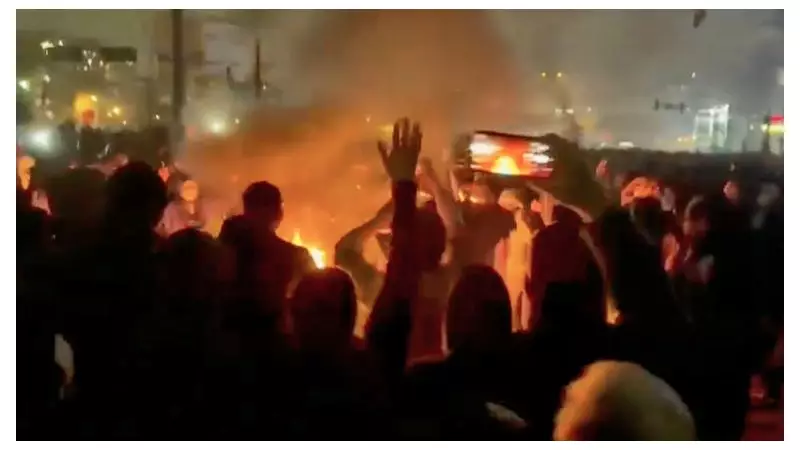
The current wave of protests, which began in the market districts of Tehran last month, has a distinct and dangerous character for the government. It was triggered by the Iranian rial plunging to a record low, causing sharp increases in the price of food and essentials. This economic pain has galvanised Iran's crucial merchant class, turning a traditionally cautious segment of society against the authorities and striking at the foundations of the state's power.
Increasingly desperate citizens from poorer backgrounds have joined the demonstrations, creating a broad coalition of discontent. Unlike previous uprisings, there are no signs the economic pressures will ease, and the government has few tools left to offer meaningful relief to its suffering population.
A Shattered Social Contract
Compounding the regime's troubles is the profound humiliation suffered during the recent 12-day war with Israel. The conflict represented the most significant attack on Iran since its revolution and revealed a catastrophic failure in the state's most sacred duty: protecting its people.
For decades, the ayatollahs have pledged to defend Iran against what they term the 'great satan', America, and the 'little satan', Israel. Billions have been sent abroad to fund proxy militias like Hezbollah, Hamas, and the Houthis to form a defensive ring. Yet, Israeli warplanes operated with impunity in Iranian airspace, with the US later joining the attacks. Scores of Iranian commanders were killed, and key parts of its nuclear programme were destroyed.
This military debacle has led many Iranians to question where all the money sent to foreign proxies has gone, and why it did not prevent such a direct and damaging assault on the homeland.
Evolution or Revolution?
Conventional analysis long suggested that change in Iran was more likely to come from within the system—through gradual evolution and internal reform—than from a sudden revolutionary overthrow. However, there is no indication such reform is forthcoming.
The Supreme Leader, Ayatollah Ali Khamenei, is acutely aware that reform has historically accelerated the collapse of other authoritarian regimes, not saved them. The unravelling of the Soviet Union following Mikhail Gorbachev's reforms serves as a stark example. Yet, Khamenei has offered no alternative solution, leaving the government strategically adrift.
On the ground in Iran, there is a palpable sense that the 1979 revolution has run its course and that its ageing rulers have lost their legitimacy. Young people, in particular, express a fervent desire to see the old men of the revolution removed from their lives. Now, hundreds of thousands are risking their lives and liberty on the streets to demand change. The pivotal question remains: if enough people protest for long enough, they may ultimately achieve their goal.




