
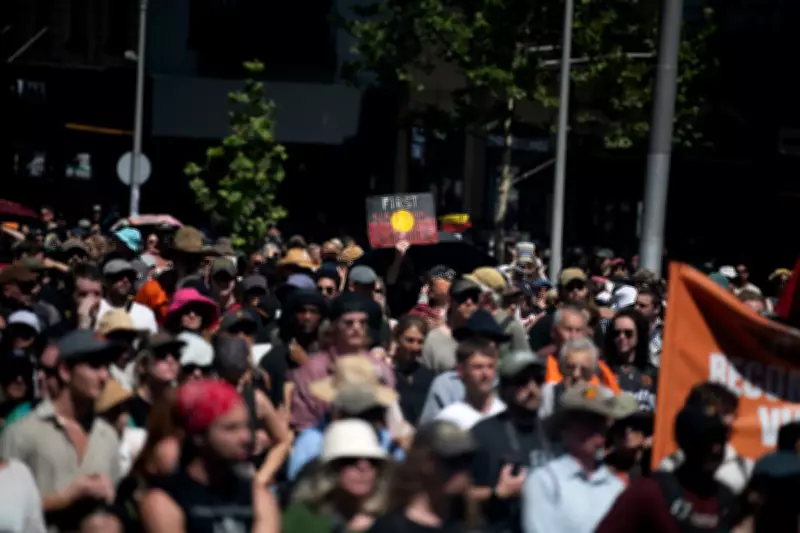
Indigenous Survival Strike Confronts Hate Crimes on Invasion Day
A significant Indigenous-led survival strike has brought renewed attention to the persistent hate crimes and systemic injustices faced by First Nations communities across the country. This powerful movement, coinciding with Invasion Day, serves as a stark reminder of the ongoing struggles for recognition, justice, and equality that Indigenous people continue to endure in the face of historical and contemporary oppression.
Rising Hate Crimes and Systemic Injustices
Recent reports indicate a troubling increase in hate crimes targeting Indigenous individuals, with incidents ranging from verbal abuse and vandalism to physical assaults. These acts of violence are often rooted in deep-seated prejudices and a lack of understanding about Indigenous cultures and histories. The survival strike aims to shed light on these injustices, calling for greater awareness and action to protect Indigenous rights and safety.
Systemic issues, such as disparities in healthcare, education, and employment, further exacerbate the challenges faced by First Nations communities. Many Indigenous people report feeling marginalised and excluded from mainstream society, leading to higher rates of poverty, mental health issues, and social isolation. The strike emphasises the need for comprehensive policy reforms to address these inequities and promote genuine reconciliation.
The Role of Invasion Day in the Movement
Invasion Day, traditionally marked as a national holiday, has become a focal point for Indigenous activism and protest. For many First Nations people, this day represents the beginning of colonisation and the subsequent loss of land, culture, and lives. The survival strike uses this occasion to challenge the celebratory narratives often associated with the day, instead highlighting the ongoing impacts of colonisation and the resilience of Indigenous communities.
Activists involved in the strike argue that true progress requires acknowledging the painful history of Invasion Day and its legacy. They call for a shift towards more inclusive commemorations that honour Indigenous perspectives and contributions, rather than perpetuating harmful stereotypes or ignoring past atrocities.
Community Responses and Calls for Change
The survival strike has garnered widespread support from various sectors, including non-Indigenous allies, human rights organisations, and some political figures. Public demonstrations, educational workshops, and online campaigns have amplified the message, urging governments and institutions to take concrete steps towards justice. Key demands include:
- Strengthening hate crime legislation to better protect Indigenous people.
- Increasing funding for Indigenous-led community services and support programmes.
- Implementing truth-telling initiatives to educate the public about colonial history.
- Promoting Indigenous representation in decision-making processes at all levels.
Despite some opposition from conservative groups who view the strike as divisive, many participants emphasise that the movement is about building a more equitable and respectful society for all. They stress that addressing hate crimes and systemic injustices is not only a moral imperative but also essential for national unity and social cohesion.
Looking Ahead: Challenges and Opportunities
As the survival strike continues to gain momentum, it faces challenges such as political resistance, media misrepresentation, and burnout among activists. However, the growing public awareness and solidarity offer hope for meaningful change. Future efforts may focus on sustaining the movement through ongoing advocacy, coalition-building, and leveraging legal avenues to advance Indigenous rights.
In conclusion, the Indigenous survival strike on Invasion Day serves as a powerful catalyst for confronting hate crimes and systemic injustices. By centring Indigenous voices and experiences, it pushes for a future where First Nations people can thrive without fear of discrimination or violence, paving the way for a more just and inclusive society.




