
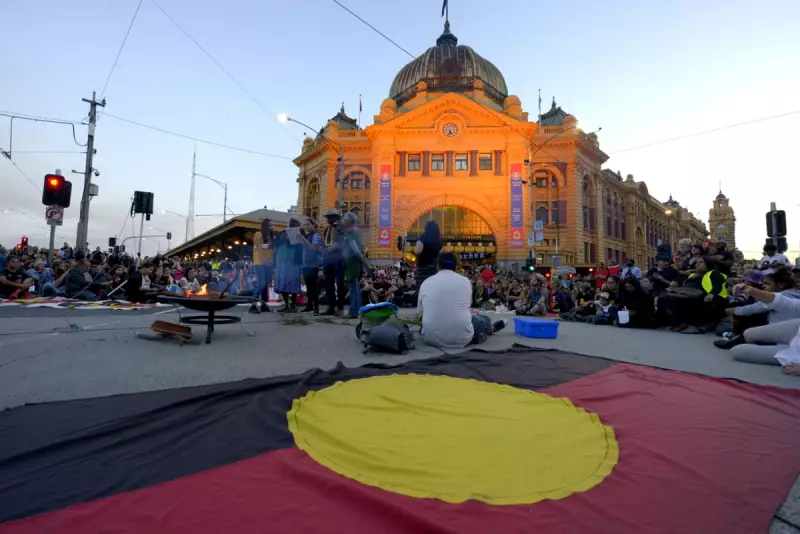
In a landmark move for Indigenous rights in Australia, the Wurundjeri Woi-wurrung people have formally lodged a native title claim for Melbourne and its surrounding areas. This significant legal step, filed last week, represents the latest chapter in a struggle for land recognition that began over four decades ago.
The Victorian Premier, Jacinta Allan, has described the claim as a "positive step" forward. The eleven members behind the claim have been quick to reassure Melbourne's residents that the action will not affect the rights of private property owners in the city. Despite these assurances, some right-wing commentators have provocatively likened the claim to "apartheid," suggesting it will foster racial division.
The Roots of Native Title: From Mabo to Melbourne
The story of native title in Australia traces back forty-four years to a lecture hall at James Cook University. It was there that Eddie Mabo, a Torres Strait Islander who usually worked on campus as a gardener, explained his people's hereditary system of land ownership. His presentation sparked a conversation with a young lawyer, Greg McIntyre, which ultimately led to a historic test case.
More than a decade later, in 1992, the High Court of Australia delivered its momentous Mabo decision. It recognised that Mabo and other Murray Islanders held ownership of their land before colonisation, a right the court defined as native title. This ruling overturned the legal fiction of terra nullius—the doctrine that Australia was a "land belonging to no one" when the British arrived.
Today, more than 30 years after the Mabo decision, almost 45% of Australia's land mass is covered by some form of native title agreement with First Nations peoples.
What Native Title Is and Isn't
Native title is the legal recognition that Aboriginal and Torres Strait Islander peoples have rights to use and occupy land according to their traditional laws and customs, predating British colonisation. In practice, it often grants traditional owners the right to access crown land for hunting, gathering, and holding ceremonies. It can also involve co-managing national parks and a right to be consulted on land-use decisions.
However, it is crucial to understand what native title does not grant. It is not a freehold title; the land cannot be sold or built upon without further negotiation. It is only available on crown land, and any other form of title, apart from pastoral leases, extinguishes the potential for a claim.
Jamie Lowe, CEO of the National Native Title Council, notes that there are now roughly 290 prescribed body corporates across the country managing these rights. The process of making a claim is arduous, requiring communities to prove an unbroken cultural connection to the land since before colonisation, a burden of proof that can involve revisiting historical trauma.
Precedent in the Cities: Lessons from Adelaide and Perth
There is only one precedent for a native title determination over a major Australian city. In 2018, the Kaurna people were recognised as the custodial holders over Adelaide.
Mitzi Nam, Chairperson of the Kaurna Yerta Aboriginal Corporation, described the victory as "bittersweet," given that the metropolitan area is already fully developed. Her people's work now involves being consulted on developments to protect culturally significant sites. For instance, when a burial ground was discovered at a housing development site in 2023, negotiations ensured a block of land was set aside as a safe resting place for ancestral remains.
In Perth, a claim by the Noongar people was resolved through a settlement agreement rather than a pure native title determination, granting similar rights through legislation. Greg McIntyre, the lawyer who worked with Mabo, notes that among Perth's non-Indigenous citizens, the recognition "hasn't ultimately been terribly controversial" because it did not impact private property.
What a Successful Claim Would Mean for Melbourne
If the Wurundjeri Woi-wurrung claim is successful, it would formally recognise their rights to access, use, and protect crown land in and around Melbourne in line with their laws and customs. The claim area could include parts of the Dandenong Ranges, Bunyip State Park, Wombat State Forest, and Lerderderg State Park.
Critically, the claim does not affect private homes, businesses, or public infrastructure. The group hopes to negotiate a transfer of management or involvement in the administration of certain parks and conservation areas. The native title process is known to be lengthy, often taking several years, and sometimes decades, to resolve.
McIntyre points out that if the claim is unsuccessful, the group could launch a compensation claim for activities that have damaged their ability to apply for native title, though such compensation only covers acts after 1975.




