
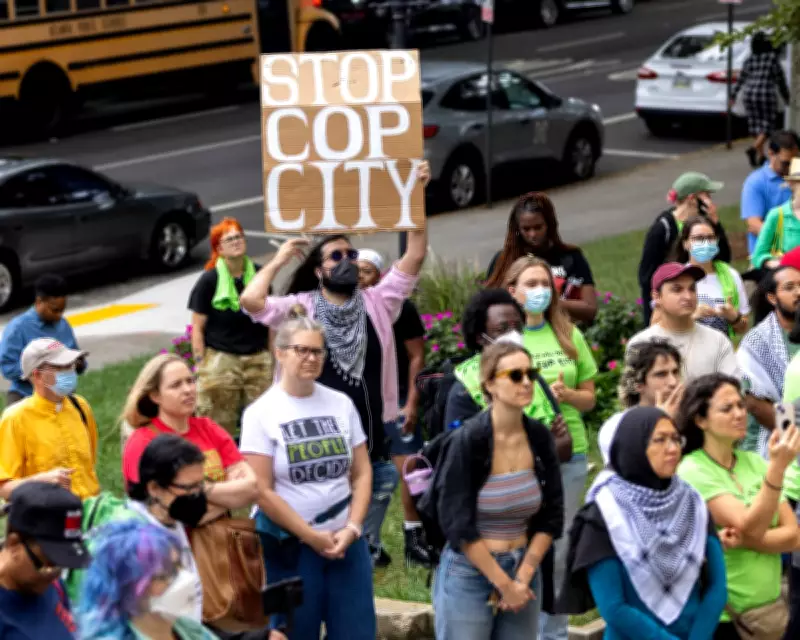
Georgia Appeals Dismissal of RICO Charges in Cop City Protest Case
The state of Georgia has launched an appeal against a judge's dismissal of criminal conspiracy charges involving 61 individuals connected to opposition against the Atlanta police training facility known as Cop City. This move extends a high-profile legal battle that could influence criminal conspiracy and domestic terrorism prosecutions across the United States, setting a significant precedent for how protest movements are treated under the law.
Legal Proceedings and Constitutional Challenges
In late December, Fulton County Superior Court Judge Kevin Farmer formally dismissed the RICO (Racketeer Influenced and Corrupt Organizations Act) charges on procedural grounds. This law, originally designed to combat organized crime like the mafia, has been applied in what is considered the largest case in US history against a protest or social movement. Simultaneously, defendant Francis Carroll filed a petition with Georgia's Supreme Court, arguing that the domestic terrorism charges in the case violate the state's constitution due to being overly broad and vague, and were passed unconstitutionally.
Attorney Michael Schwartz, representing Carroll, emphasized that prosecutors nationwide are closely monitoring this case. He stated that if Georgia's domestic terrorism statute is ruled unconstitutional, it could deter similar prosecutions elsewhere and influence state legislatures considering comparable legislation. However, these appeals are expected to take months, if not years, to resolve, leaving the defendants in a state of legal uncertainty.
Implications for Protest Movements and Legal Precedents
The Cop City case has drawn attention for its potential to reshape legal approaches to protests. Opposition to the $109 million training center, which opened last spring, stems from concerns over police militarization and environmental impact, particularly the clearing of forests amid climate crises. Atlanta police defend the center as necessary for "world-class" training and officer recruitment.
Elizabeth Taxel, a clinical professor at the University of Georgia School of Law, warned that vague criminal laws like those in this case increase the risk of selective enforcement and state power to target political adversaries. Social movement historian Dan Berger noted that while failed prosecutions, such as the Chicago 7 case, set precedents, governments may continue using similar methods. He highlighted that the Stop Cop City movement's broad concerns—including environment, racism, policing, and democracy—mean any outcome here will resonate beyond Atlanta, signaling to activists everywhere.
Ongoing Legal Limbo and Defendant Impact
Despite the dismissal of RICO charges, the 61 defendants remain in legal limbo due to the state's appeal and Carroll's Supreme Court petition. Attorney General Chris Carr, who is also running for governor, referenced property destruction during protests, asserting Georgia's stance against domestic terrorism. However, defense attorneys and experts argue that existing charges like arson already cover such acts, making the domestic terrorism allegations unnecessary.
The case has also highlighted personal hardships for defendants, including the seizure of possessions like birth certificates and diaries for over three years. Following media coverage, some items were returned, but hundreds of motions from other defendants remain unheard by Judge Farmer, complicating the legal process further.
As the appeals proceed, this case continues to underscore the tensions between protest rights and state prosecution, with potential long-term effects on social movements and legal frameworks across the country.




