
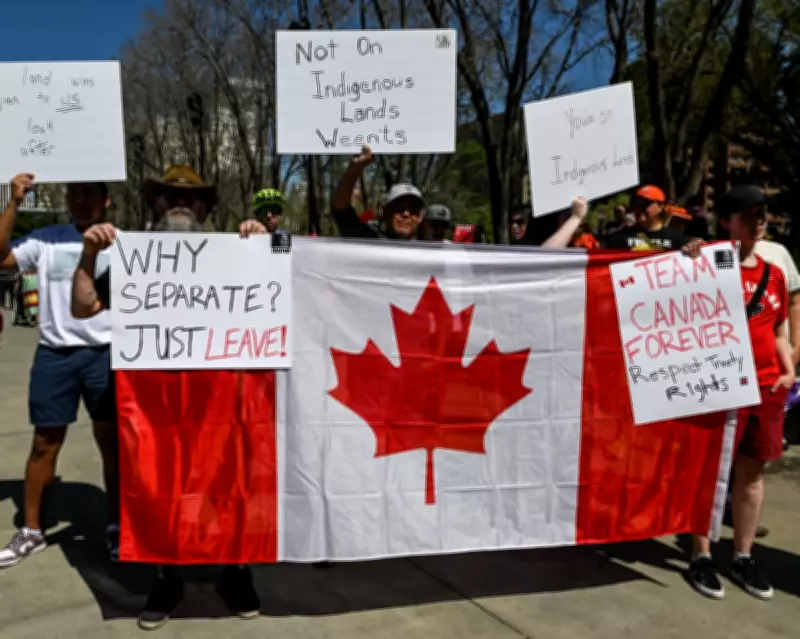
First Nations Protesters Rally Against Alberta Independence Movement in Edmonton
First Nations demonstrators and their allies gathered outside the Alberta legislature in Edmonton on 3 May 2025 to voice strong opposition to the Rally for Alberta Independence. The protest comes amid revelations of secret meetings between Alberta separatists and US officials, which have been branded as treasonous by some Canadian politicians and raised significant national security concerns.
Treason Accusations Over Secret US Meetings
The protest movement has gained momentum following reports that unelected members of Alberta's nascent independence movement have held covert meetings with officials from the Trump administration. British Columbia Premier David Eby has described these actions using the strong term "treason," stating that seeking foreign assistance to break up Canada represents a fundamental betrayal of national sovereignty.
Professor André Lecours from the University of Ottawa notes that while separatist movements worldwide often engage in "proto-diplomacy" by courting sympathetic foreign governments, the Alberta situation differs significantly from Quebec's historical independence efforts. "What makes this movement so different is that none of these people associated with Alberta's push for independence are democratically elected," Lecours explained. "They don't hold any public office and have no formal democratic legitimacy."
Historical Context and Current Realities
The current Alberta independence movement contrasts sharply with Quebec's long-standing separatist efforts. While Quebec has seen five premiers campaign and win elections on explicit independence platforms, Alberta has no pro-independence parties holding seats in its legislative assembly. Support for separation remains relatively low in Alberta, with recent polls indicating only about 18% of Albertans favour leaving Canada.
Prominent Alberta politicians including former prime minister Stephen Harper and two former Alberta premiers have rejected independence, instead advocating for national unity. Even current Premier Danielle Smith has come out against separation, though her call for "a strong and sovereign Alberta within a united Canada" has drawn criticism for potentially confusing the issue.
US Involvement and Sovereignty Concerns
The involvement of US officials has escalated concerns about foreign interference in Canadian domestic affairs. Unlike France's official policy of neutrality during Quebec's independence movement, the Trump administration has shown apparent sympathy toward Alberta separatists. US Treasury Secretary Scott Bessent has publicly commented on Albertans' independent nature and rumours of a potential referendum.
More alarmingly, lawyer Jeffrey Rath, part of the delegation that met secretly with state department officials, has expressed interest in petitioning for Alberta to gain US statehood. This comes against a backdrop of Donald Trump's previous threats to annex Canada, creating what Professor Lecours describes as "a growing sense of unease among senior officials in Ottawa that the US could use secession movements as a political wedge."
Legal Framework and Democratic Process
Canada's legal system permits groups to advocate for provincial independence, and Alberta's pro-independence campaign has been working to collect nearly 178,000 signatures by May to advance their cause. However, the movement's lack of elected representation and its engagement with a foreign government increasingly hostile to Canadian sovereignty have prompted questions about its democratic legitimacy and potential threat to national security.
As First Nations protesters continue their opposition in Edmonton, the broader debate about Alberta's future within Canada has taken on new urgency. The combination of domestic protest, foreign involvement, and historical parallels with Quebec's independence movement creates a complex political landscape that will likely shape Canadian unity debates for years to come.




