
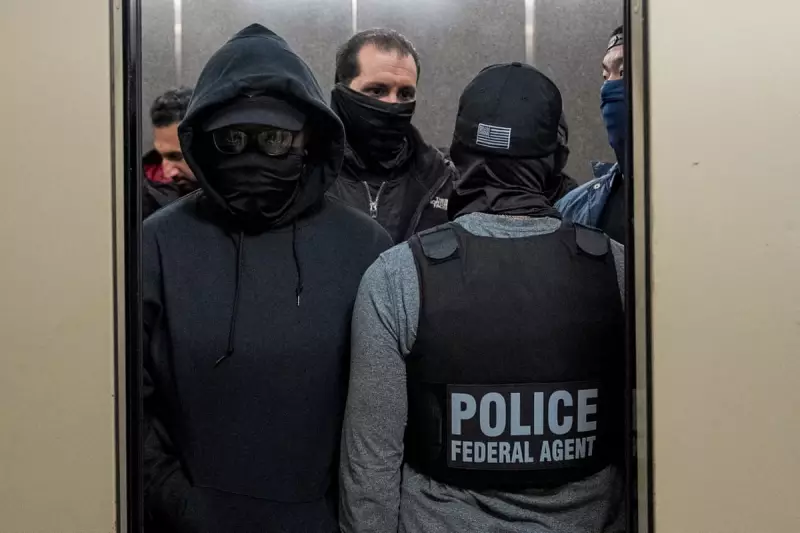
FBI Infiltrates Private Activist Communications
In a significant revelation that has alarmed civil liberties advocates, the Federal Bureau of Investigation conducted surveillance on a private Signal group chat used by immigrants' rights activists in New York. According to law enforcement records obtained by the Guardian, the FBI monitored conversations within a "courtwatch" Signal group that coordinates volunteer activists observing public proceedings at three federal immigration courts in Manhattan.
The surveillance came to light through a "joint situational information report" dated 28 August 2025, prepared by the FBI and the New York Police Department. This document, distributed to law enforcement agencies across the United States, characterized the court watchers as "anarchist violent extremist actors" despite their nonviolent monitoring activities.
How the Surveillance Operation Unfolded
The FBI report, prepared by its New York division, indicates that in late May 2025, an individual participated in a debrief session via a Signal call within the courtwatch group. The discussions focused on improving activities near federal facilities in New York City, specifically addressing three immigration court locations: 26 Federal Plaza, 201 Varick Street, and 290 Broadway.
According to the FBI's summary, conversations included instructions on documenting law enforcement activities through photos and videos of officers' badges, faces, names, license plates, and vehicles. The report also noted discussions about gaining access to federal courtrooms, with members being advised which floors to visit and what to tell officials, such as stating: "I'm due at a 9:30 hearing."
What remains particularly concerning to privacy experts is the method of access to the encrypted platform. Signal is renowned for its end-to-end encryption, typically making messages inaccessible to law enforcement unless they are directly included in the chat, receive copies from a participant, or obtain access to an unlocked phone belonging to a group member.
The FBI described their information source as a "sensitive source with excellent access" but provided no further details about how they infiltrated the private communications.
Broader Context and Official Responses
This surveillance occurred against a backdrop of increased Immigration and Customs Enforcement activity in immigration courts. Under a directive issued the day after Donald Trump took office in January 2025, ICE agents regained authority to arrest immigrants at court proceedings—a practice that had been restricted during the Biden administration over concerns about interfering with the fair administration of justice.
Recent investigations have revealed that immigration courts across the United States have been dismissing immigrants' cases at their hearings, enabling federal agents to then arrest them in courthouse hallways. The Associated Press has described these operations as "deportation traps" set up by the Department of Homeland Security.
When confronted with detailed questions about the surveillance operation, the FBI declined to comment. The Department of Homeland Security also refused comment, directing inquiries back to the FBI. An NYPD spokesperson distanced the department from the report, stating it was "not an NYPD document."
Notably, the FBI memorandum provided no evidence to support its characterization of courtwatch participants as "anarchist violent extremists" and offered no specifics about alleged calls for violence.
Civil Liberties Concerns and Historical Parallels
Brad Lander, New York City's comptroller who was himself arrested by ICE in June while accompanying an immigrant to court, strongly condemned the FBI's actions. "The FBI surveillance tactic is ripped straight out of the J Edgar Hoover playbook," Lander stated, referencing the former FBI director notorious for spying on activists.
Lander emphasized that "observing immigration court hearings is a legal and non-violent act" and that the purpose of courtwatch initiatives is to provide transparency and ensure due process protections.
Dr Ryan Shapiro, executive director of Property of the People—the government transparency non-profit that obtained the records through public requests—added: "Basic civic participation is not a terrorist threat. The FBI treating it like one is yet another example of the Trump regime's profound contempt for even the most rudimentary of democratic freedoms."
Spencer Reynolds, a civil liberties advocate and former senior intelligence counsel with DHS, reviewed the FBI document and noted disturbing patterns. He highlighted how the US government appears to be criminalizing free speech activities, citing Tom Homan's statement that "know your rights" trainings could be considered impeding law enforcement, along with Trump's executive order designating "antifa" as a domestic terrorist organization.
Reynolds drew parallels to the FBI's historical surveillance of the civil rights movement in the 1960s and Muslim communities after 9/11, warning that such operations "can lead to conflicts among activists and increasing distrust" and pose significant risks of chilling protected private discussions.
The lack of significant oversight for this type of FBI surveillance and limited guardrails to prevent rights abuses further compound concerns about the potential erosion of constitutional protections in the current political climate.




