
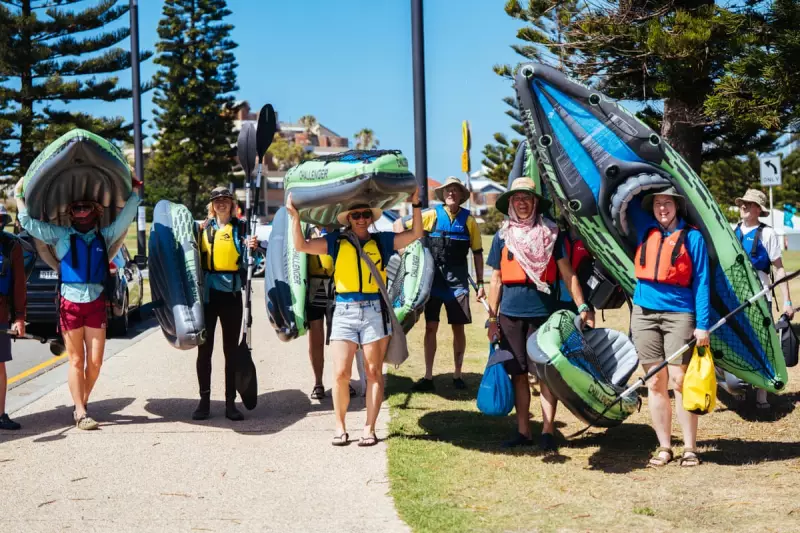
Thousands of climate activists have descended upon Newcastle, Australia, for what has become an annual standoff between environmental protesters and police at the world's largest coal port.
The Rising Tide Protestival
Beginning on Friday 28th November 2025, hundreds of campaigners established camp at Foreshore Park in preparation for the Rising Tide people's blockade of Newcastle Harbour. Organisers anticipate numbers will swell to 7,000 participants over the weekend, transforming the event into what they describe as a national gathering for Australians frustrated by government inaction on climate change.
The unique protest combines serious environmental activism with festival elements, earning it the nickname 'protestival'. Alongside the main harbour blockade, the event features a Saturday night waterfront concert, workshops and panel discussions, creating a community atmosphere for those who might otherwise feel powerless against the climate crisis.
Confrontation and Consequences
Protesters joining the flotilla of kayaks and sailboats face breaching an exclusion zone imposed by the New South Wales state government covering most of the harbour until 7am Monday. Police have warned they will take a zero-tolerance approach to anyone entering the restricted waters.
NSW Police Minister Yasmin Catley issued a stark warning, stating that breaching the exclusion zone represents a deliberate decision to endanger lives. She emphasised that unlawful activity would result in immediate enforcement action, including arrest and genuine risks to personal safety.
The stakes are high for participants. During last year's blockade, 173 protesters were arrested, with 133 charged. While four were subsequently found not guilty, court proceedings continue for the remaining 129 individuals.
Demands and Motivations
Organisers have outlined three key demands driving the protest movement. They are calling for an immediate end to new coal developments, a fair transition plan for workers and communities affected by moving away from fossil fuels, and a 78% tax on fossil fuel export profits - a figure influenced by Norway's approach to taxing its oil and gas sector.
Alexa Stuart, a 22-year-old organiser who has been campaigning for climate action since she was 15, explained the protesters' motivations. People are terrified about climate impacts and angry that our government isn't doing more while continuing to approve new coal and gas projects, she stated.
The intergenerational nature of the protest was highlighted by 85-year-old great-grandmother June Norman, who has travelled from Queensland's Sunshine Coast for the blockade three years running. I'm here because I have grandchildren and great-grandchildren and I'm really concerned about their future, she explained. I think I've grown up during Australia's best years - what am I leaving for them?
Stuart criticised both state and federal governments, accusing them of failing to act on climate science while focusing on silencing peaceful protesters. The Albanese government recently passed new environment laws that included no measures to limit new coal and gas projects, further fuelling activists' determination.
As the standoff continues through the weekend, the world's largest coal port becomes the stage for a dramatic confrontation between environmental activism and state authority, with participants willing to risk arrest to draw attention to what they see as catastrophic government failure on climate policy.




