
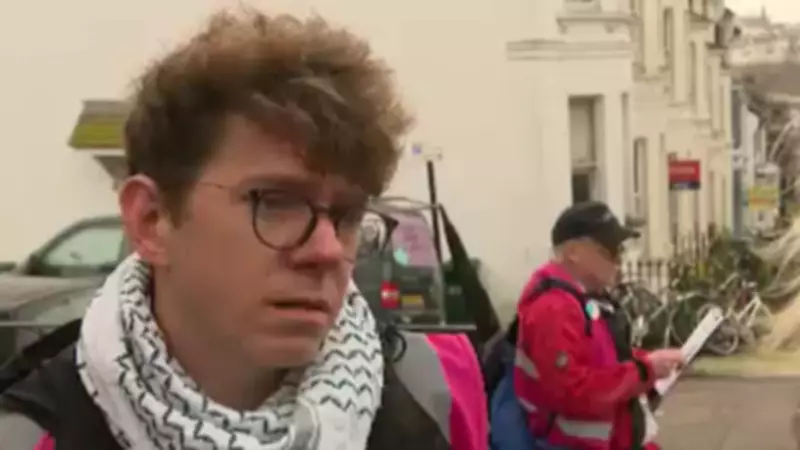
In the coastal city of Brighton, a grassroots initiative has emerged where volunteers are actively canvassing neighbourhoods, knocking on doors to encourage residents to stop purchasing Israeli goods. This campaign, which organisers describe as an effort to establish an "apartheid-free zone" in Brighton and Hove, aims to express solidarity with the Palestinian people. However, the movement has ignited a fierce debate, with many in Brighton's Jewish community warning that such actions could inadvertently fuel antisemitism and create a hostile environment.
Tensions Rise in a City Known for Inclusivity
Brighton, often celebrated for its progressive and inclusive ethos, is now grappling with complex tensions as volunteers distribute leaflets and engage residents in conversations about boycotting Israeli products. Seymour, one of the campaign organisers who prefers not to disclose his full name, emphasises that the initiative is rooted in anti-Zionist principles rather than antisemitism. He explains to groups of volunteers that they should be prepared for challenging questions, advising them to treat inquiries about racism as honest concerns. "People might genuinely ask us if we're antisemitic or racist," Seymour notes during a briefing session in the city centre. "I know that can be a shocking question to get if you're motivated by anti-racism. But treat it as an honest question."
Jewish Community Voices Alarm Over Targeted Campaigns
Vicky Bhogal, a representative from the organisation Jewish and Proud, has been monitoring the campaign closely after seeing its promotion online. She expresses deep distress over the door-to-door efforts, arguing that they specifically target Jews who support Israel. "It makes me feel sick to my stomach," Bhogal states. "Because I feel that it's a targeted campaign to turn the people of Brighton against Jews who support Israel. They know they can get away with this. They know they can go door to door, eliciting support." She further asserts that any campaign against Israel inherently impacts British Jews, describing anti-Zionism as the modern face of antisemitism.
Fiona Sharpe, the community liaison for the Sussex Jewish Representative Council, echoes these concerns, highlighting a growing sense of insecurity among Jewish residents. "I think there is an underlying feeling that this country and this city is dealing with an underlying sense of antisemitism and mistrust unlike anything I have ever experienced," Sharpe explains. She observes that Jews are increasingly pressured to disavow support for Israel, which she views as an unfair demand on their identity. "I'm a British Jew. I don't need to justify my existence and my place in my city to anybody," she adds, noting that antisemitism appears to permeate all segments of British society.
Cultural and Social Repercussions in Brighton
The controversy extends beyond political activism into the cultural sphere, as evidenced by the experiences of local musician Josh Breslaw. As the drummer for the band Oi Va Voi, Breslaw faced cancellations of gigs in Brighton after refusing to sign a declaration that their performance would not be political. He describes this as a form of anti-Jewish racism, criticising what he perceives as a "loyalty test" within the music industry. "I've never heard of anyone doing anything like that before," Breslaw remarks. "If you refuse to say what they want you to say - regardless of your beliefs - then you're on the outside. The right kind of Jews will be allowed to perform."
This incident underscores broader anxieties about freedom of expression and the potential for boycotts to marginalise Jewish artists and communities. Organiser Seymour defends the campaign's methods, comparing them to standard political canvassing by parties like the Conservatives or Labour. "It might be uncomfortable," he acknowledges regarding residents' reactions. "But it's only a one-on-one conversation. We're very polite at the door. Whatever someone's background is, we treat them like anyone else."
Broader Implications for UK Society
The situation in Brighton reflects wider national concerns about antisemitism in the UK, with reports indicating a rise in incidents and a pervasive sense of mistrust. Sharpe emphasises that no part of British society remains untouched by this issue, stating, "There is no part of British society that is not marred and scarred by antisemitism." As volunteers continue their door-knocking efforts, the debate intensifies, raising critical questions about the boundaries between political activism, solidarity movements, and the potential for discrimination.
Ultimately, the campaign in Brighton serves as a microcosm of larger societal tensions, highlighting the delicate balance between advocating for human rights and avoiding actions that may harm minority communities. With both sides firmly entrenched in their positions, the city faces an ongoing challenge to uphold its reputation for inclusivity while navigating these deeply divisive issues.




