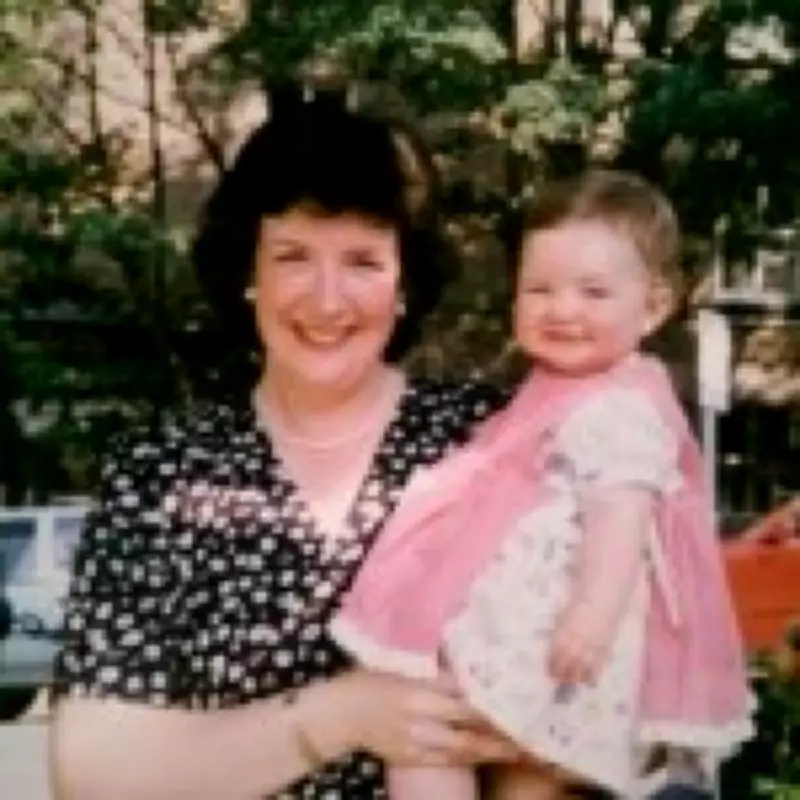
A Daughter's Journey Through Early-Onset Alzheimer's
For Laura Starkie, a mother in her fifties from Heywood, Lancashire, the first unsettling signs of cognitive decline appeared in seemingly mundane moments. Her daughter, Jenny Molloy, recalls discovering shoes placed in the salad and other unusual behaviours that hinted at deeper issues.
The Gradual Unravelling
Initially dismissed as menopausal brain fog by her GP, Laura's symptoms progressed to more concerning patterns. 'She'd go to make a cup of tea or coffee and she'd pour the water in the canister with the tea bags, rather than in the cup,' Jenny explains. 'I didn't think anything of it at the time – but that was a clear sign that something wasn't right.'
Other peculiar discoveries followed:
- A block of cheese with a whole bite taken out
- Half-eaten yoghurts left in the refrigerator
- Increasing errors in her checkout job at Asda
These behaviours were completely out of character for the formerly meticulous woman who had worked at the Post Office and prided herself on mathematical precision in her retail work.
The Devastating Diagnosis
After occupational health involvement at Asda and a second medical opinion, Laura underwent a brain scan and memory clinic assessment. At just 54 years old, she received the life-altering diagnosis of early-onset Alzheimer's disease, the most common form of dementia affecting people under 65.
Jenny was only 17 at the time, with her sister Barbara just 14. 'My dad sat me down and told me and we both had a cry,' remembers Jenny, now a 34-year-old business consultant from Rawtenstall. The timing felt particularly cruel as she was studying psychology at college, covering dementia in her coursework.
Family Dynamics Transformed
Laura initially resisted her diagnosis, becoming angry when the word 'dementia' was mentioned. The Alzheimer's Society sent a representative to support the family, but Laura would leave the room during discussions about her condition.
As the disease progressed, a painful role reversal occurred. Jenny and Barbara gradually assumed caregiving responsibilities for their mother. When Jenny was 21, their father left the family home, accelerating Laura's decline and forcing the sisters to make difficult life choices.
Jenny abandoned her university plans, opting instead for a full-time apprenticeship while Barbara navigated her GCSEs and A-levels. Extended family provided what support they could, but the daughters managed household finances, mortgage payments using their mother's pensions and benefits, and ensured Laura was never left alone for extended periods.
The Heartbreaking Decision
Laura's personality underwent significant changes as the Alzheimer's advanced. 'She would get aggressive. Not physically, but nasty to my sister if she was asking her to get dressed or brush her teeth,' Jenny recalls. 'She'd swear at her, which was tough as I had never seen my mum like that before.'
The situation reached a crisis point when Laura learned to let herself out of the house, wandering the streets unsupervised. When she became doubly incontinent at 58, Jenny knew she and her sister could no longer provide adequate care at home.
The difficult decision was made to place Laura in residential care. The family home was sold, with Jenny moving in with her boyfriend (now husband) and Barbara relocating to live with an aunt and uncle.
Finding Light in Darkness
While the residential care Laura received was 'amazing' according to Jenny, the emotional toll was immense. 'Leaving my mum on her own that first day was just horrendous,' she confesses. 'I felt so guilty. It was the worst feeling in the world.'
Over subsequent years, Laura lost her ability to speak and became bedridden. 'The last stages of Alzheimer's and dementia are something I wouldn't wish on anybody,' says Jenny. Laura passed away in February 2023 at age 65 after years of hospital visits and infections.
Despite the profound challenges, Jenny cherishes moments of connection that persisted through the illness. 'We would sit and watch The X Factor on Saturday nights and mum's legs would be jigging about to the music,' she remembers. 'It's those little things you have to hold on to, remember and look back on. Those glimmers of joy.'
Legacy and Advocacy
Alzheimer's not only claimed Jenny's mother but also transformed what should have been carefree young adult years into periods of intense responsibility and worry. 'I'd give anything to have my mum now that I have my own children,' Jenny reflects, noting that her mother missed significant family milestones including her sister's wedding and grandchildren's births.
Today, Jenny and Barbara participate in regular fundraising walks for the Alzheimer's Society, where they've connected with other young carers facing similar challenges. Their story highlights the particular difficulties faced by families dealing with early-onset dementia and the vital support networks needed for those in caring roles.