
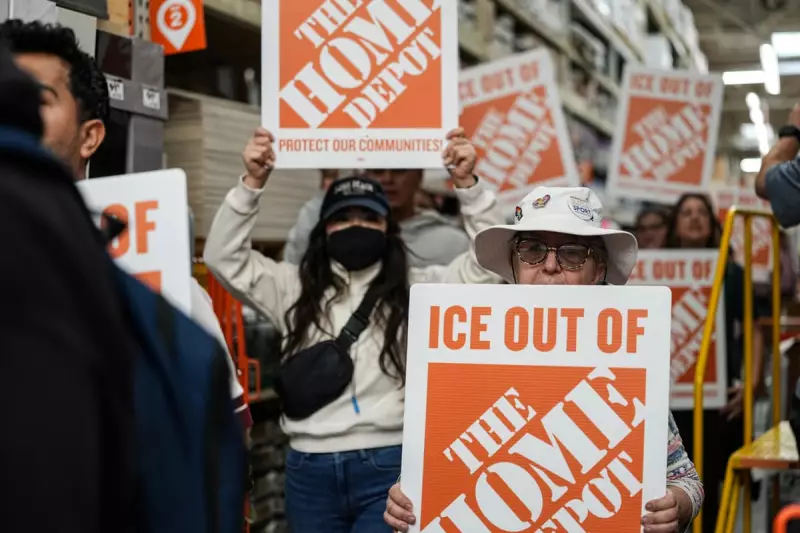
As millions of Britons prepare for Black Friday deals, a powerful consumer movement is gathering momentum across the Atlantic. The We Ain't Buying It campaign is urging Americans to redirect their spending away from corporate giants and towards local businesses this Thanksgiving weekend, in a bold protest against the Trump administration's policies.
The Corporate Targets and Their Controversies
Organisers have singled out three major corporations for the Black Friday boycott. Amazon faces scrutiny for its donations to Trump's inaugural fund and benefiting from significant corporate tax cuts. Home Depot is targeted due to reports that Immigration and Customs Enforcement (ICE) has specifically chosen their properties for immigration arrests, though the company denies involvement in these operations.
Target joins the list following its controversial decision to scale back Diversity, Equity and Inclusion (DEI) objectives. The retail giant has already felt the impact of consumer activism, reporting a 1.5% decline in net sales and a 2.2% drop in store foot traffic in its most recent earnings. The company has since announced its CEO's departure and implemented its first major layoffs in ten years.
A Strategic Approach to Economic Resistance
LaTosha Brown, co-founder of Black Voters Matter, emphasised the campaign's broader significance. "We are reclaiming our power. We are redirecting our spending. And we are resisting this rise to authoritarianism," she stated. The movement has gained substantial support, with over 80 organisations including labour unions now participating.
The campaign outlines a structured approach to the holiday weekend:
- Thanksgiving: Focus on family time rather than shopping
- Black Friday: Complete boycott of major retailers, with exceptions for local businesses
- Saturday: Continued support for community shops
- Sunday: Mutual aid activities
- Cyber Monday: Digital shutdown with no online purchases
Measuring the Impact of Consumer Activism
Experts suggest that while such boycotts may not dramatically reduce corporate sales, their real power lies in raising awareness. Professor Nien-hê Hsieh of Harvard Business School explained: "They're effective not so much because they actually reduce sales that much. But it's really about calling attention and putting the company in the spotlight."
The campaign represents part of a broader strategy against the Trump administration, connecting with other movements including the recent No Kings protests. Hunter Dunn of organising group 50501 described it as "one piece of a larger puzzle" in the resistance effort.
Historical examples show that sustained consumer activism can drive change, from the anti-apartheid movements of the 1980s to anti-sweatshop campaigns against Nike. However, success typically requires long-term commitment and the ability to engage beyond core activists to include mainstream consumers willing to make sacrifices for their principles.
As Black Friday approaches, the We Ain't Buying It campaign demonstrates how consumer choices are becoming increasingly politicised, with spending decisions serving as statements about values and governance.




