
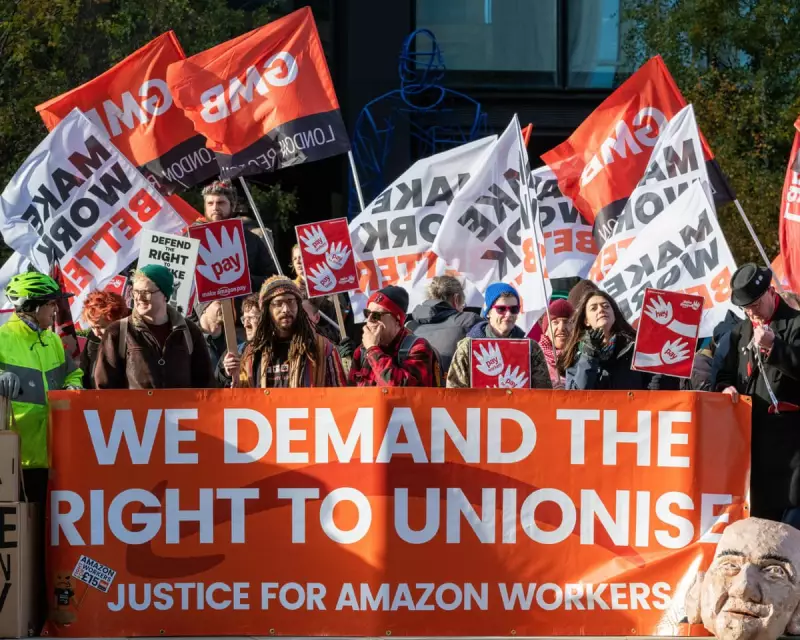
On 24 November 2023, a significant protest unfolded outside Amazon's UK headquarters in London. The demonstration, part of the global Make Amazon Pay campaign, highlights a growing confrontation not just with a corporate employer, but with what former Greek finance minister Yanis Varoufakis identifies as a new economic system: technofeudalism.
From Capitalism to Cloud Serfdom
Varoufakis contends that Amazon is the prime example of a shift away from traditional capitalism. In the old model, firms competed in markets and survived on profit. Today, the most powerful entities, like Amazon, have exited the marketplace to become its landlords. They own the essential digital infrastructure—the cloud—upon which everyone else must depend to trade, work, and communicate.
At the heart of this system is Amazon Web Services (AWS), the cloud computing platform that supports a vast array of businesses. From tech firms like Uber to major sectors like banking, healthcare, and public administration, countless organisations are embedded within AWS. The cost of switching is so high that these firms effectively become vassals, surrendering their customers' data to their cloud lord.
The Mechanics of Technofeudal Control
Amazon's power is not abstract; it manifests in tangible, often invasive, ways. Inside its warehouses, workers are subjected to intense algorithmic surveillance. Handheld scanners and other devices track their every movement, with algorithms measuring productivity and behaviour minute-by-minute. Amazon disputes claims of excessive surveillance, stating it is necessary for safety and efficiency.
Consumers, too, are unwitting participants. Every click, scroll, and purchase on Amazon's platform trains its algorithms, effectively making users work for free to enhance the company's predictive and manipulative power. Sellers on the platform can be charged up to 40% of the sale price, a cut Varoufakis defines as a form of digital rent.
Perhaps most alarmingly, governments themselves are becoming serfs. Key UK ministerial departments, including the Home Office, HMRC, and the Ministry of Justice, run their data and communications on Amazon servers. This dependency extends into the realms of warfare and surveillance, with Amazon's technology being used by US immigration enforcement (ICE) and through its direct involvement in Project Nimbus, a cloud contract with the Israeli state.
A Unified Resistance Emerges
In response to this sprawling influence, the Make Amazon Pay campaign has grown into a formidable coalition. What began as a fight for workers' rights now unites unions, climate campaigners, tax justice groups, and digital rights advocates. Their integrated demands include decent wages, safe workplaces, climate action, tax justice, and an end to Amazon's entanglement with military and surveillance operations.
This cross-border solidarity uses the very tools of cloud capital to coordinate a planetary-scale resistance. The campaign offers a hopeful glimpse of the alliances needed to challenge our new technofeudal overlords, marking a crucial beginning in the fight for a more equitable digital future.




