
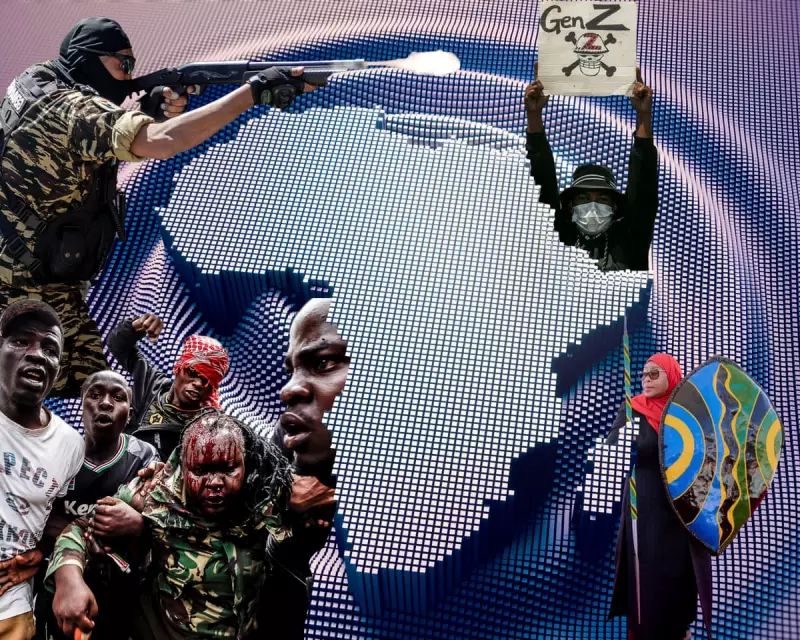
A wave of popular protests led by younger generations has swept across Africa in recent weeks, challenging long-standing political systems and demanding fundamental changes. From Kenya to Madagascar, Cameroon to Tanzania, citizens are taking to the streets to voice their discontent with the status quo.
The Generational Divide Widens
Protesters are overwhelmingly from younger generations, particularly Generation Z, who are paying a high price for their activism. In Tanzania, anger erupted after an election that excluded opposition candidates from the ballot, leading to a deadly crackdown by security forces. Reports indicate staggering death tolls, with estimates exceeding 1,000 people killed.
In Kenya, scores have been killed and hundreds detained during rolling protests over the past eighteen months. These demonstrations were initially triggered by economic policies and police brutality. For both Tanzania and Kenya, the protests and government responses have shattered long periods of stability, suggesting not sudden explosions but rather built-up tensions resulting in violent clashes between the public and their governments.
Africa's Ageing Leadership
The protesters' complaints focus on universal issues and basic rights - the rising cost of living, power and water outages, lack of political freedoms, and rigged elections. These frustrations reveal a growing gap between people and power, particularly evident when considering Africa's ageing leadership.
Last week, Cameroon's Paul Biya, 92, was sworn in for his eighth consecutive term following violence in a contested election. He represents the world's oldest president leading a country in the world's youngest continent. During his campaign, rumours circulated about his frailty, culminating in the bizarre appearance of a walking effigy of him and his wife on the campaign trail.
Several African leaders are now over the age of 80, and the absence of term limits remains a significant problem. Even newer leaders are manipulating systems to guarantee long tenure. Ivory Coast's Alassane Ouattara, 83, recently began his fourth presidential term, demonstrating how entrenched power structures resist change.
Mixed Outcomes Across Nations
Despite the pattern of suppression and election upheaval, some countries maintain stable democracies including Ghana, Namibia and Botswana. In certain instances, protests have achieved significant breakthroughs.
In Kenya, President William Ruto initially set police on protesters objecting to a finance bill with high tax hikes, declaring that violence and anarchy would not be tolerated. Within days, he performed a stunning about-face, withdrawing the bill and conceding that the people had spoken.
Madagascar witnessed even more dramatic changes. Protests that began in late September against utility scarcity quickly expanded into an outright uprising. Just over two weeks later, the president had fled, and the military sided with protesters, leading to widespread celebration. As one 17-year-old told the Guardian: It was them who gave us the victory.
However, clouds are gathering over these apparent victories. Ruto remains deeply unpopular, and sporadic protests continue. In Madagascar, the transitional military government already faces accusations of non-transparent appointments, raising concerns about revolution hijack - a pattern seen in Sudan's tragic trajectory.
Entrenched Systems Resist Change
The situation in Sudan serves as a cautionary tale. The 2019 revolution that toppled President Omar al-Bashir after almost 30 years of rule represented a colossal moment of hope. However, the revolution was midwived by military forces and then fully reversed through a military coup against civilians, leading the country to a devastating war between armed parties.
Despite the frustration, energy and promise of younger generations desperate for change - many ready to put their lives on the line - they face not just individual leaders but entire embedded institutions, oligarchies and patronage networks. Behind every leader stands an army reluctant to cede power to civilians, or a business class with much to lose from dismantling corrupt political arrangements.
Every government at odds with its people represents a complex web of arrangements that benefit just enough people to make change undesirable. This includes members of parliament with lucrative sidelines in import and export, or industrialists who have negotiated favourable tax deals.
The fact that some African countries remain open to backsliding has unexpectedly come into view. Regardless of positive trends in transformation appetite and demographics, the fundamental problem lies in the system rather than individual politicians. What is becoming increasingly clear is that we are entering an era where the contradictions between ordinary people and those holding power have become too sharp for the status quo to remain tenable any longer.




