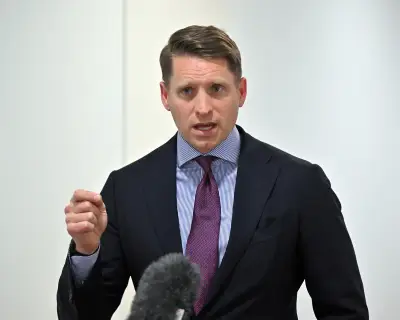
Iranian flights to and from Yemen are an unacceptable violation of the country's sovereignty, according to Abdullah al-Alimi, vice-president of Yemen's Saudi-backed, UN-recognised government. In an interview, al-Alimi stated that the planes carried equipment for the Houthi movement, which he described as having transformed from a domestic threat into a regional and international danger to global security and the economy.
Background of the Incident
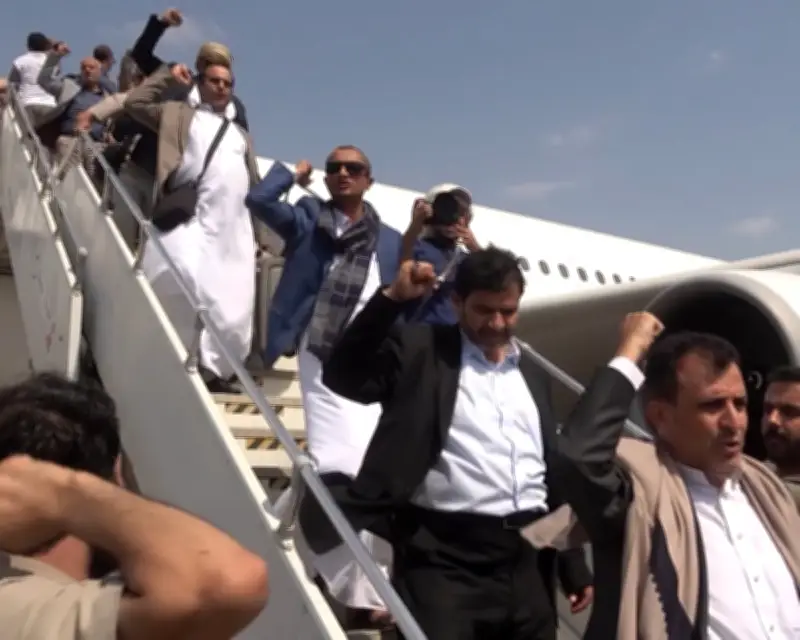
The remarks came after Yemeni government planes, supported by Saudi Arabia, bombed the Houthi-controlled Sana'a airport in protest against Iranian efforts to send a plane carrying a Houthi delegation returning from the funeral of Iranian supreme leader Ali Khamenei. The delegation's plane eventually landed at Hodeidah airport, a Houthi-controlled Red Sea port. In response, the Houthis fired missiles at Saudi Arabia, breaking a four-year truce in the conflict between Saudi Arabia and the Iran-aligned group. An emergency UN Security Council session heard calls for de-escalation from both sides.
Houthi Position
The head of the Houthi national delegation defended the group's actions, stating: "Defending oneself, the homeland and the people is a religious, national, moral and humanitarian duty, and a legitimate right affirmed by Islamic law and international law. The aggressor is the real wrongdoer."

Yemen's Civil War Context
Yemen has experienced intermittent civil war since 2015, when the Houthis seized control of Sana'a, forcing the recognized government to relocate to Aden with Saudi support. Al-Alimi, a long-time political figure, holds a critical role in the government. He asserted that the Houthis are now weaker than they have been in years, partly due to the weakening of their supporter Iran. "It is realistic that we can end their coup and restore the state and its institutions, contribute to the security and stability of the region and the world, secure the waterways and protect the global economy," he said.
Accusations Against Iran
Al-Alimi accused Iran of using the funeral as a cover to send equipment and experts to the Houthis. He noted that repeated negotiations with the Houthis had achieved nothing, but a strategic change has occurred: "They are no longer an internal threat but have become a regional and international threat because of their threats to the waterways in the Red Sea and Bab al-Mandab strait. Any understanding with the Houthis must be based on recognition of the need for the state to hold a monopoly over weapons and for the legitimate government to restore the institutions of the state."
Government's Stance
Al-Alimi said the government would "continue to brandish the sword of peace until the very last moment," but added: "We are ready if the Houthis impose war." He highlighted that Houthi targeting of oil export facilities has severely pressured the government's budget, including its ability to pay civil servants' salaries. "Without Saudi support, the government would not have been able to meet its salary obligations," he stated. The threat to oil exports also makes it nearly impossible to attract international investors, leading his government to "need security."
Regional Dynamics
Yemen has faced civil war and proxy warfare from outside powers for over a decade. The Saudi-led coalition intervened in 2015 against the Houthis, triggering one of the world's worst humanitarian crises. Violence escalated late last year after the Southern Transitional Council (STC), a separatist movement backed by the United Arab Emirates, swept through southern territory, fracturing the coalition. Al-Alimi claimed that after the STC's failure to establish its own state, there is now greater cohesion within the presidential leadership council. He stressed that many former STC members remain within state structures, from the council through the government and governorates. He defended reliance on Saudi support, citing a 1,200km shared border, deep historical and cultural ties, and a common destiny.