The United States military has a long history of dropping propaganda leaflets in psychological operations (psyops), but a new exhibit in Brooklyn questions whether these efforts are effective or merely self-serving. The exhibit, titled Office of War Information (OWI), is hosted at Pioneer Works and curated by Khajistan, a digital archive that preserves forgotten media from the Indus to the Maghreb.
Historical Context of Psyops Leaflets
Since World War I, the US has used leaflets to erode enemy morale. In 1918, over 3 million leaflets were dropped behind German lines, allegedly contributing to unit cohesion breakdown. During World War II, the Office of War Information coordinated similar efforts, and leafleting continued in every major US conflict since.
However, internal documents reveal a more complicated picture. A declassified 1971 US Air Force report on Vietnam found that leaflets often violated basic rules of persuasion, lacking credibility. Prisoners of war reportedly used leaflets as toilet paper, cigarette rolling paper, or souvenirs, undermining their intended purpose.

The Gulf War and Beyond
Despite these findings, the military persisted. In the Gulf War, the US produced 29 million leaflets, claiming they persuaded 44% of Iraqi soldiers to desert. Yet the American public rarely sees these materials, which speak in the name of the people but remain hidden from them.
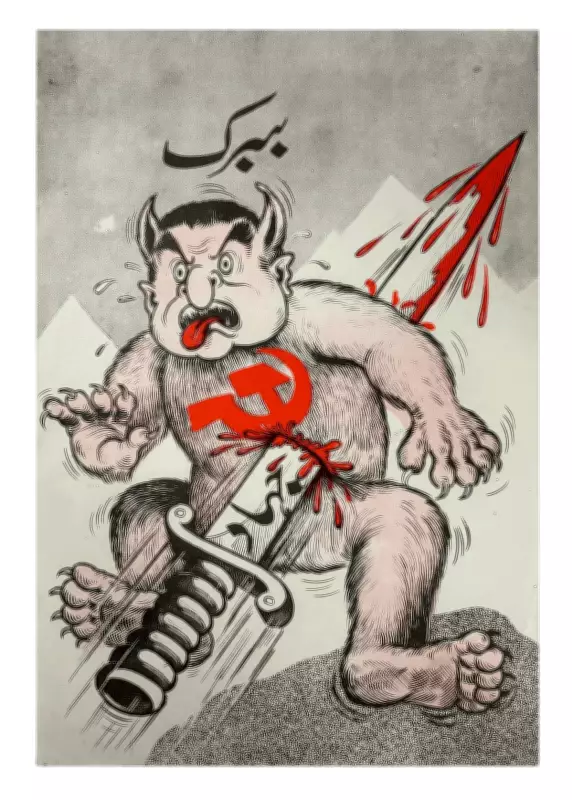
Saad Khan, founder of Khajistan, began collecting these leaflets because he comes from a war-torn region. The archive started as an Instagram account in 2016 and now includes rare items like The Alphabet of Jihad, a USAID-funded literacy project from the 1980s that used anti-Soviet imagery.
Exhibit Highlights
The OWI exhibit recreates a wood-paneled office with propaganda posters supporting Afghan mujahideen, a TV playing Friends and Everybody Loves Raymond, and thousands of replica leaflets strewn across the floor. Visitors can scan leaflet numbers to view translations and details. Patterns emerge: leaflets dropped on Japan eerily resemble modern threats, while Iraqi leaflets contain more text than Afghan ones, reflecting literacy differences.
Khan notes that dehumanization is central to these operations. The leaflets are often racist and assume that dropping paper can change minds. He argues that the real purpose is to provide cover for military actions, allowing officials to claim warnings were given before bombings.
The exhibit runs from May 9 to August 9, 2026, at Pioneer Works in Brooklyn. It does not definitively answer whether psyops work, but it forces visitors to confront the uncomfortable truths behind these wartime messages.