The former US president Donald Trump has sparked outrage and bafflement by pledging to pardon a convicted Latin American drug trafficker, while simultaneously escalating a military-led 'war on drugs' against another. The move has led analysts to condemn US counter-narcotics strategy as riddled with hypocrisy and politically motivated double standards.
The Pardon and the Prosecution: A Tale of Two Presidents
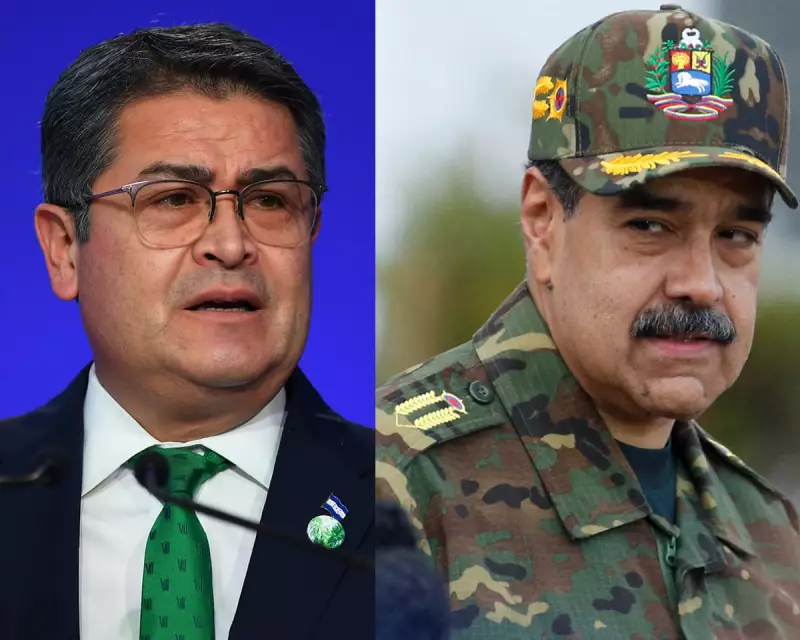
Last week, Trump vowed to grant clemency to Juan Orlando Hernández, the former president of Honduras. Known by his initials JOH, Hernández was sentenced to 45 years in prison in July 2024 by a Manhattan federal court for turning his nation into a 'cocaine superhighway to the United States'. US prosecutors detailed how he conspired with notorious cartel bosses, accepted bribes, and allegedly boasted about stuffing drugs 'right up the noses of the gringos'.
In stark contrast, Trump's administration has aggressively pursued Venezuela's authoritarian leader, Nicolás Maduro. Accusing him of being a 'narco-terrorist', the US has offered a $50 million bounty for his capture and deployed a significant military presence to the Caribbean coast off Venezuela. This campaign has included 'kinetic strikes' destroying alleged narcotics boats since September.

'A Charade Based on Lies and Hypocrisy'
Experts and former officials have lambasted the glaring contradiction. Mike Vigil, former DEA chief for international operations, called Trump's entire counter-drug effort a 'charade'. 'It's based on lies, it's based on hypocrisy,' Vigil stated. 'He is giving a pardon to Juan Orlando Hernández and then going after Nicolás Maduro.'
Vigil emphasised the strength of the evidence against Hernández, who he said was a 'big fish' responsible for moving billions of dollars worth of cocaine. He also questioned the impact of Trump's boat-destroying strategy, noting it had killed around 80 people and destroyed 20 vessels, often poor fishermen, with minimal effect on US-bound drug flows.
Trump defended his position, telling reporters the people of Honduras believed Hernández was 'set up' and it was a 'terrible thing'. He dismissed the conviction as a 'Biden set up', a claim Vigil and others firmly reject given the overwhelming trial evidence.
Political Ideology Over Consistent Policy
Analysts argue the differing treatment exposes a lack of coherent strategy, driven instead by political alignment. Orlando Pérez, a Latin America expert, said the approach is 'all ad hoc and based on political considerations.'
'One [Hernández] is a right-wing supporter of the US – and the other [Maduro] is not,' Pérez explained. 'It is ideological. It is political. It is self-interested in terms of advancing an ideological agenda – and it has nothing to do with effective anti-drug policies.'
Furthermore, doubts persist about the US allegations against Maduro. While not 'a saint' and indicted in the US in 2020, experts like Vigil question the existence of the so-called 'Cartel of the Suns', calling such claims 'nonsense' and noting Venezuela lacks the infrastructure of a traditional cartel.
The case of Hernández's brother, Juan Antonio 'Tony' Hernández, sentenced to life in 2021 for accepting a $1 million bribe from 'El Chapo' Guzmán to support JOH's campaign, further cements the former president's deep ties to the narcotics trade. Ioan Grillo, an author on Latin American cartels, called Trump's pardon pledge 'jaw-dropping' and 'crazy', fundamentally undermining any tough-on-drugs rhetoric.
This episode reveals a US drug policy where justice appears contingent not on the scale of criminality, but on the political allegiance of the accused, leaving the credibility of its 'war on drugs' in tatters.