Trump's 'Board of Peace' Gold Logo Draws UN Comparison at Davos Forum
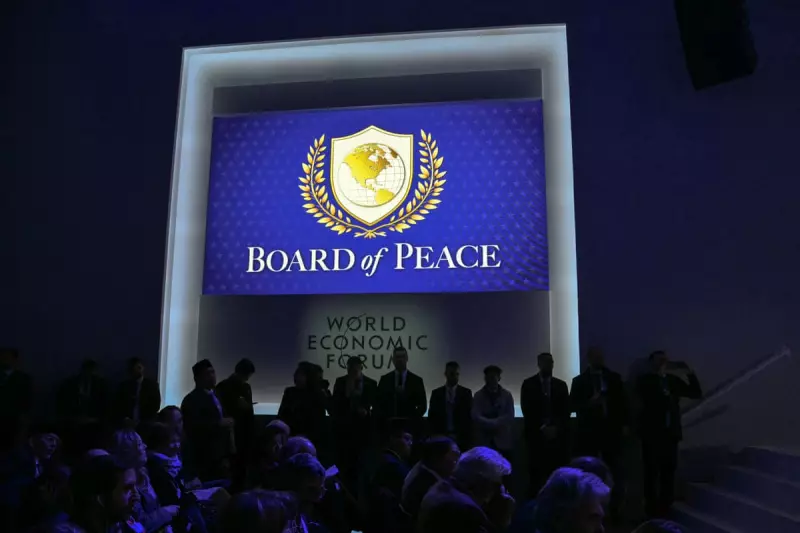
The World Economic Forum's annual meeting in Davos has become the stage for a new diplomatic controversy, as onlookers and critics alike have noted the striking resemblance between Donald Trump's newly launched "board of peace" logo and the emblem of the United Nations. Unveiled on 22 January 2026, the gold logo features a globe flanked by olive branches, mirroring the UN's iconic design but with a distinctly Trumpian twist.
European Backlash Over Logo Similarities and Global Ambitions
European nations have voiced strong objections to the initiative, with several countries declaring they will not join the board. Concerns have been raised that this move could potentially sideline or even replace the United Nations in international conflict resolution. The board, which was initially endorsed by the UN Security Council in November with a focus on brokering a Gaza ceasefire, has since been repositioned by Trump as a global body tasked with resolving a wide array of international disputes.
Speaking at the Davos event, Trump suggested that the "board of peace" would collaborate with the UN to address global conflicts. However, he also outlined a vision where the board, once fully formed, could operate with significant autonomy. "Once this board is completely formed, we can do pretty much whatever we want to do, and we'll do it in conjunction with the United Nations," the US president stated.

Design Details Highlight US-Centric Focus and Gold Aesthetic
The logo's design has sparked particular interest for its deviations from the UN emblem. While both logos incorporate a globe with olive branches, Trump's version depicts only North America and parts of South America, such as Venezuela, rather than a full world map. This geographical focus aligns with Trump's efforts to assert US influence in regions like Venezuela.
Moreover, the colour scheme marks a stark departure: the UN's neutral blue is replaced by a bright gold, a choice consistent with Trump's personal aesthetic preferences. This gold theme extends beyond the logo, reflecting a broader pattern in Trump's style and governance.
Trump's Golden Touch Extends from Decor to Diplomacy
The president's affinity for gold is well-documented, having recently renovated the Oval Office with gold trimming, trophies, vases, and even personalised coasters. White House press secretary Karoline Leavitt described it as a "golden office for the golden age," emphasising that the gold was of the highest quality and personally funded by Trump.
This obsession transcends mere decor, influencing various aspects of his administration. In June, the Trump Organization introduced a gold smartphone and mobile service, followed by a $1m "gold card" visa for wealthy foreigners in December. International gifts have also leaned into this theme, with reports of a "golden pager" from Israel's prime minister and a gold-based gift from Apple's CEO.
Notably, in November, a group of Swiss billionaires presented Trump with a gold Rolex desk clock and a $130,000 engraved gold bar, after which he agreed to reduce tariffs on Switzerland from 39% to 15%, highlighting how his golden preferences can intersect with diplomatic decisions.
Membership Fees and Global Implications
The "board of peace" requires countries to pay a hefty $1bn in cash to become permanent members, a stipulation that has added to the scepticism surrounding its intentions. As the initiative unfolds, it represents a significant effort by the Trump administration to reshape the postwar global order, potentially challenging established institutions like the UN.
With its gold logo serving as a symbol of this ambitious venture, the board's future and its impact on international diplomacy remain closely watched by observers worldwide.