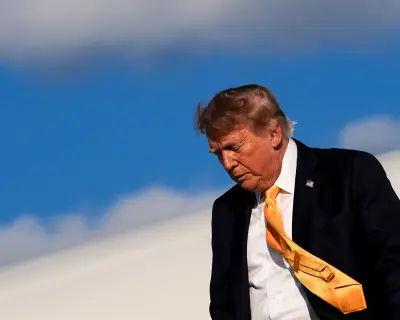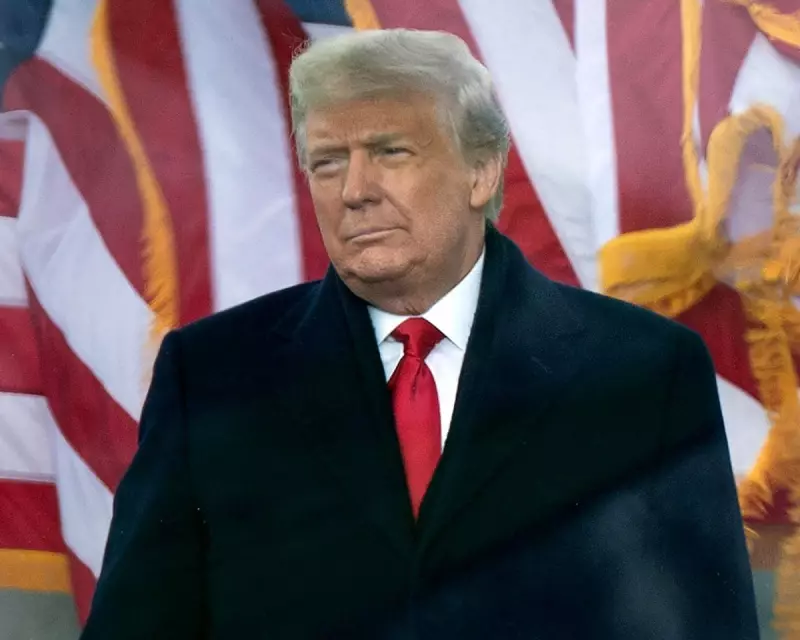
Former US President Donald Trump has launched a legal offensive against the BBC, threatening to sue the British broadcaster for a staggering $1 billion over a documentary that featured an edited version of his speech during the Capitol Hill insurrection.
The Legal Battle Ground
Trump's legal team has formally notified the BBC of his intention to file proceedings in Florida if the corporation fails to issue a full retraction and apology for the Panorama episode broadcast on 28 October last year. The programme contained what the BBC has since acknowledged was a misleading edit of Trump's address on 6 January 2021.
While the one-year deadline for filing a defamation claim in London has expired, Florida's two-year statute of limitations keeps the option open. The case could proceed in American courts because BBC content remains accessible in the US through BBC.com and the BBC Select streaming service.

The $1 Billion Question: Realistic or Rhetorical?
The eye-watering $1 billion figure raises eyebrows among legal experts. In the UK, the highest defamation award ever made by a court stands at approximately £1.5 million. American courts have seen larger sums, notably the $1.4 billion ordered against Alex Jones for his false claims about the Sandy Hook school shooting.
However, legal analysts note this case represents an extreme outlier. The next highest US payout involved Fox News settling with Dominion Voting Systems for $787.5 million over election fraud allegations.
Trump has form for making extravagant legal demands, including:
- $10-20 billion from CBS News for allegedly doctoring a Kamala Harris interview
- $15 billion against the New York Times for "false and defamatory content"
- $10 billion libel claim against the Wall Street Journal over Jeffrey Epstein links
Legal Hurdles and the "Actual Malice" Standard
American defamation law presents significant obstacles for public figures like Trump. Unlike ordinary citizens, prominent individuals must prove "actual malice" - meaning the broadcaster either knew the information was false or acted with reckless disregard for the truth.
Trump's lawyer has already referenced this higher standard in their letter to the BBC, alleging "the actual malice behind the decision to publish the wrongful content."
If the case reaches court, BBC lawyers would likely argue that the documentary presented multiple perspectives, including pro-Trump voices. They might also question whether the polarising former president genuinely suffered reputational damage, given that public opinion about his role in the Capitol riot appears largely settled.
George Freeman, executive director of the Media Law Resource Center in New York, offered a sceptical assessment: "The $1bn figure is totally meaningless. Trump has a long record of unsuccessful libel suits - and an even longer record of letters like the one you received that don't end up as lawsuits at all. They're just there to threaten and to scare media he doesn't like."
Potential Outcomes and Settlement Scenarios
The BBC has indicated it will respond to Trump's threat "in due course." The corporation has already offered some form of apology and retraction, though likely falling short of Trump's demands.
Legal observers note that media organisations sometimes settle even weak claims for commercial reasons. Paramount paid Trump $16 million to resolve a case against CBS News, despite many experts considering the claim baseless. This settlement was widely viewed as strategic, ensuring smooth approval of Paramount's merger with Skydance Media.
In another precedent, ABC News and anchor George Stephanopoulos agreed to pay $15 million to settle Trump's lawsuit over inaccurate reporting about the E Jean Carroll case.
As the legal standoff continues, the case highlights the complex interplay between media freedom, political reputation, and the substantial differences between British and American defamation law.