Identical Signatures Spark Questions Over Trump Pardons
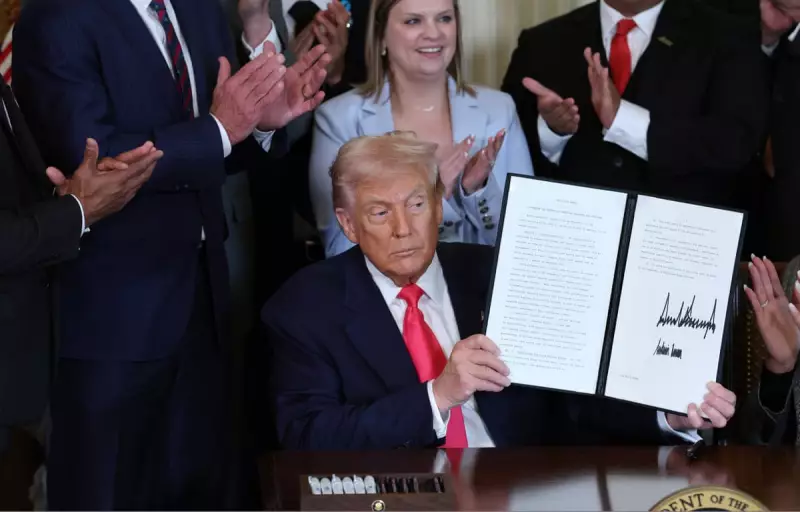
The Trump administration's recent clemency drive has come under intense scrutiny after the Justice Department was forced to replace online pardon documents bearing strikingly similar copies of the president's signature. The controversy emerged when seven pardons posted on the department's website appeared to feature virtually identical signatures, despite being issued to different individuals on 7 November 2025.
White House Blames Technical Glitch
Administration officials have attributed the unusual signature similarities to what they describe as technical errors and staffing issues. Chad Gilmartin, a Justice Department spokesperson, stated that the website was updated after a technical error where one signature President Trump personally signed was mistakenly uploaded multiple times due to staffing issues caused by the Democrat shutdown.
White House spokesperson Abigail Jackson reinforced this position in an email, asserting that Trump signed each pardon by hand as he does with all clemency orders. She redirected criticism toward Joe Biden, suggesting media should instead investigate what she called Biden's countless autopenned pardons.

Expert Analysis Contradicts Official Explanation
Handwriting experts have cast doubt on the administration's technical error explanation. Thomas Vastrick, a Florida-based handwriting expert and president of the American Society of Questioned Document Examiners, told the Associated Press that a basic axiom of handwriting identification science is that no two signatures bear the exact same design features in every aspect.
The seven individuals who received pardons included several high-profile figures:
- Darryl Strawberry, former New York Mets player convicted in the 1990s of tax evasion and drug charges
- Glen Casada, disgraced former Republican speaker of the Tennessee house sentenced to three years in prison in September
- Michael McMahon, former New York police sergeant sentenced to 18 months for his role in what a federal judge called a campaign of transnational repression
Broader Political Context of Pardon Controversy
The signature questions emerge against a backdrop of heightened political tension surrounding executive clemency. The Trump administration has conducted a sustained campaign to undermine the validity of pardons issued by President Joe Biden, many of which were signed by autopen. Trump has previously claimed that Biden was not aware of the signatures on orders and pardons bearing his name.
Legal experts note that the use of an autopen has no bearing on the validity of pardons. Frank Bowman, a legal historian and professor emeritus at the University of Missouri School of Law, explained that the key to pardon validity is whether the president intended to grant the pardon. He characterized any re-signing as an obvious, and rather silly, effort to avoid comparison to Biden.
The controversy has drawn reaction from Congress, with Dave Min, a California Democrat on the House oversight committee, calling for an investigation and deploying Republican arguments previously used against Biden. Meanwhile, Republicans have distinguished between potential electronic signature use by Trump, which they characterize as legitimate, and Biden's use of the autopen.