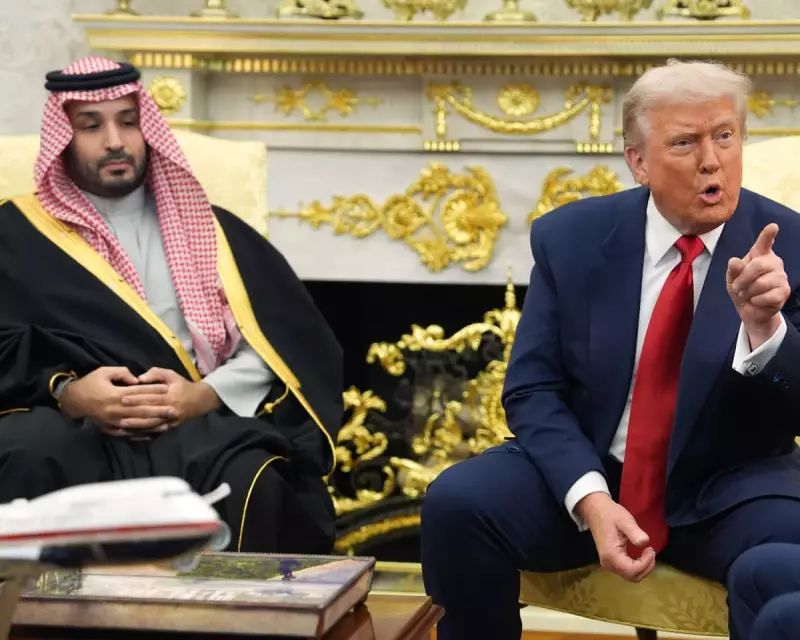
The political reconciliation between former President Donald Trump and Saudi Crown Prince Mohammed bin Salman marks a significant moment in US-Saudi relations, seven years after the CIA concluded MBS ordered journalist Jamal Khashoggi's brutal assassination.
The Khashoggi Warning Ignored
On 16 November 2018, the CIA announced its conclusion that Mohammed bin Salman had directly ordered Khashoggi's murder at the Saudi consulate in Istanbul. The Washington Post columnist had been kidnapped and allegedly dismembered by Saudi operatives just weeks earlier.
Karen Attiah, Khashoggi's editor at the Washington Post's global opinion section, recalls collapsing onto her couch upon receiving the news alert, repeatedly uttering 'alhumdulilah' - Arabic for 'praise be to God' - despite not being Muslim herself.

Khashoggi's relationship with the Washington Post began in September 2017 when Attiah invited him to write after he'd been silenced by Saudi authorities for a year. His crime? Publishing an op-ed warning about Donald Trump's rise during the 2016 election campaign.
The Business of Reconciliation
The Trump-MBS relationship has deep financial roots. As Trump remarked in 2015: 'I get along great with all of them; they buy apartments from me. They spend $40m, $50m. Am I supposed to dislike them? I like them very much!'
This financial entanglement extended to Trump's inner circle. Former son-in-law Jared Kushner's equity firm received $2 billion from Saudi Arabia's private equity firm last year, after Kushner had advised MBS on how to 'weather the storm' following Khashoggi's murder.
The Trump administration worked extensively to rehabilitate Saudi Arabia's image post-assassination, prioritising business relationships over human rights concerns.
The Saudification of American Media
Khashoggi's legacy faces systematic erosion within the very institution that gave him platform. The Washington Post has:
- Dismantled the global opinion section where Khashoggi published
- Allowed the Jamal Khashoggi fellowship for writers opposing authoritarian regimes to fade away
- Implemented harsh red lines on publishing under owner Jeff Bezos's directive to focus only on 'free markets' and 'personal liberties'
Attiah notes that the Washington Post editorial board failed to mention Khashoggi ahead of MBS's current Washington visit, mirroring the censorship practices Khashoggi himself described from his time editing in Saudi Arabia.
The pattern extends beyond media. Saudi Arabia's substantial investments in Western cultural spaces - from LIV golf tournaments to Newcastle United football club - represent what observers term 'sportswashing', while tourism campaigns pay influencers substantial sums to present curated versions of Saudi life.
Khashoggi frequently warned about the hollow nature of these glossy presentations, noting the poverty and discontent hidden behind royal glamour and promises of futuristic cities.
As Trump and MBS reunite in Washington, the reconciliation underscores a troubling reality: the principles Khashoggi died defending face increasing threat not only in authoritarian states but within Western democracies themselves.