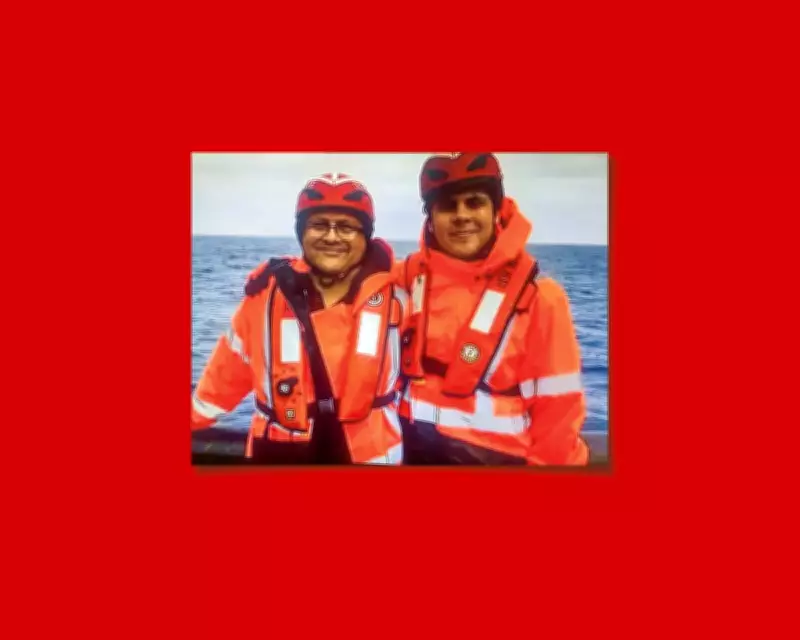
Christine Dawood found herself trapped on the Polar Prince, waiting for signs that the Titan submersible carrying her husband Shahzada and son Suleman would surface. In her first detailed interview, she recounts the harrowing four days before the US Coast Guard confirmed the catastrophic implosion.
The Last Goodbye
On 18 June 2023, Shahzada Dawood, 48, and his 19-year-old son Suleman boarded the Titan submersible alongside OceanGate CEO Stockton Rush, British businessman Hamish Harding, and French diver Paul-Henri Nargeolet. The vessel aimed to dive to the Titanic wreck, 2.5 miles below the North Atlantic surface. Dawood watched from the Polar Prince as her family departed. 'I waved. And that was it. They got into a dinghy and sped off,' she recalls.
Suleman carried a Rubik's Cube, hoping to set a record for solving it at the deepest depth. Shahzada, known for his clumsiness, wobbled slightly as he descended the stairs. The family had been excited about the adventure, viewing it as a unique bonding opportunity.

The Agonizing Wait
At around 11am, Dawood heard the words: 'They've lost communications.' The OceanGate crew reassured her it was not unusual. But as hours passed, the sub did not return. By 6.30pm, the Titan was declared officially missing. Dawood describes the moment as 'an avalanche' she saw coming.
'I told myself they were stuck,' she says. 'But I was worried. Suleman is not ... well, both my men, they're not very good at being in the dark.' She avoided news and the oxygen countdown, relying on crew briefings that maintained hope. Crew members organized jamming sessions and movies, but Dawood found them inappropriate. 'Watching Wayne's World while they are trapped in the dark did not sit well with me.'
The Devastating News
On 22 June, a remotely operated vehicle from the Horizon Arctic discovered the Titan's tail cone on the seabed. The US Coast Guard announced a 'catastrophic event.' The submersible had imploded 500 metres above the wreck, killing all five men instantly.
'My first thought was, thank God,' Dawood admits. 'Knowing they didn't suffer has been so important. They're gone, but the way they went does somehow make it easier.'
Grief and Healing
Dawood, a trained psychologist, has since written a book titled 'Ninety-Six Hours' to tell her story. She has learned to give grief attention, visiting Suleman's room and sitting on his bed. 'I let the grief come. And after a while I can put it away until the next time it gets too much.'
She recently walked from Hampton Court to the University of Strathclyde in Glasgow, a journey Suleman had often talked about. The five-week walk was a tribute to her son. She also plans to establish a grief and trauma centre.
Despite the tragedy, Dawood refuses to hate Stockton Rush. 'If I'm angry with him, I'm giving him power, and I refuse to do that. He died with them.' She adds: 'I choose me, every day. If I don't, I wouldn't be here.'
The US Coast Guard investigation concluded the implosion was preventable, citing inadequate engineering and Rush's reckless approach. Tighter regulations for passenger submersibles have been recommended.