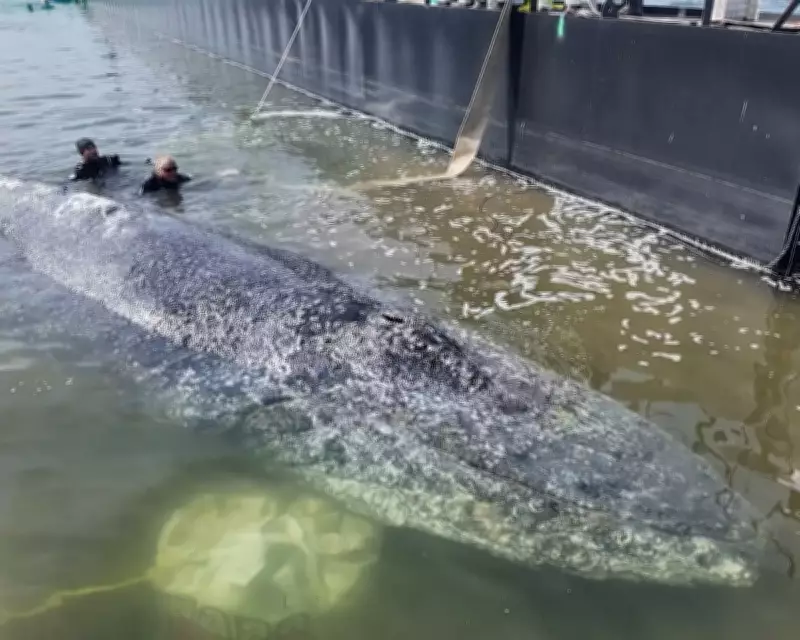
Danish authorities have confirmed that Timmy the whale is dead, two weeks after the beached humpback was transported to the North Sea in a rescue attempt widely criticized as 'pure animal cruelty'.
Confirmation of Death
Denmark’s Environmental Protection Agency reported that a whale was found deceased on Friday near the small island of Anholt in the Kattegat, a strait between Denmark and Sweden. On Saturday, officials confirmed it was Timmy. Jane Hansen, division head at the agency, stated: 'It can now be confirmed that the stranded humpback whale near Anholt is the same whale that was previously stranded in Germany and was the subject of rescue attempts.' She added that a tracking device retrieved from the whale's back confirmed its identity.
The Rescue Attempt
The 10-metre-long calf became a global sensation after being spotted stranded on Timmendorfer beach in Germany nearly two months ago. Initially, German officials deemed the whale beyond saving, but a national outcry prompted two millionaires to fund a rescue costing approximately €1.5 million. The operation involved floating Timmy into a water-filled barge, towed by a tugboat from Wismar Bay to deeper waters off Denmark. Critics, including the International Whaling Commission and experts from the Oceanographic Museum in Stralsund, warned the whale was 'severely compromised' and unlikely to survive. The museum’s director, Burkard Baschek, described the effort as 'pure animal cruelty.'

Release and Aftermath
After release on 2 May, Timmy was seen swimming but a tracker soon failed. Financiers Karin Walter-Mommert and Walter Gunz later distanced themselves from the release, calling for accountability from the ship operators. The whale was found dead about 70 km south of the release site.
Expert Reflections
Amy Dickham, a wildlife conservation professor at Oxford, questioned the use of funds, noting that 'issues that impact much greater numbers of whales, such as collisions with vessels and entanglements with fishing gear' deserve more attention. Danish authorities urge the public to stay away from the carcass due to potential disease risks, with no plans for removal or necropsy at this time.