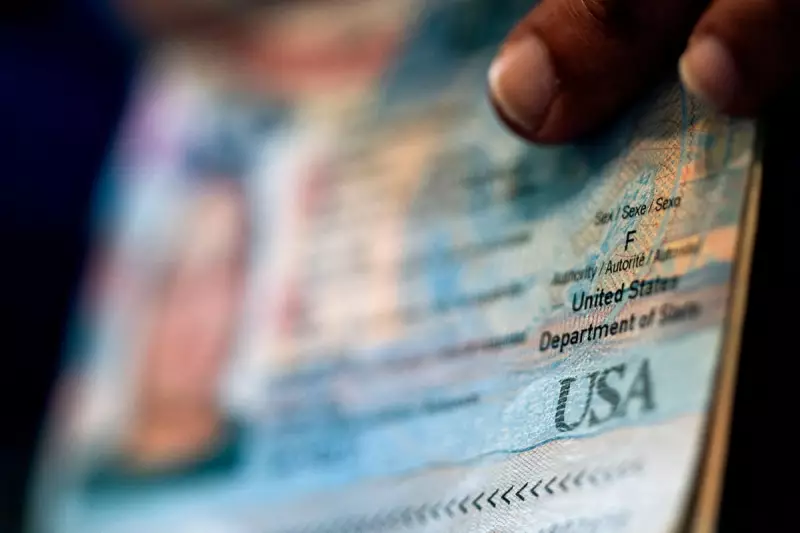
The United States Supreme Court has delivered a significant victory to Donald Trump's administration, permitting the enforcement of a controversial policy that prevents transgender and non-binary individuals from selecting passport gender markers that reflect their identity.
Conservative Majority Rules on Emergency Docket
In a decision handed down on Thursday, the high court's conservative majority sided with the Trump administration, allowing them to implement the policy while legal challenges continue through lower courts. This ruling effectively halts a previous court order that required the government to maintain access to male, female, or X gender markers on new or renewed passports.
The legal battle stems from an executive order issued by President Trump in January, which declared that the United States would officially "recognize two sexes, male and female" based solely on birth certificates and biological classification. This policy represented a dramatic shift from previous administrations' approaches to gender identification in official documents.

Real-World Consequences for Transgender Travellers
The implications of this decision extend far beyond bureaucratic paperwork. Transgender actor Hunter Schafer revealed in February that her new passport had been issued with a male gender marker, despite having female markers on her driver's licence and previous passports for years.
Plaintiffs in the case argue that passports displaying sex markers inconsistent with a person's gender identity can lead to harassment and even violence for transgender individuals. Legal representatives stated in court documents: "By classifying people based on sex assigned at birth and exclusively issuing sex markers on passports based on that sex classification, the State Department deprives plaintiffs of a usable identification document and the ability to travel safely."
Historical Context and Legal Battles
The history of gender markers on US passports dates back to the mid-1970s, with the federal government beginning to allow changes with medical documentation in the early 1990s. A significant policy shift occurred in 2021 under President Joe Biden, when documentation requirements were removed and non-binary people gained the option to choose an X gender marker following years of litigation.
This progress was interrupted when a judge blocked the Trump administration's policy in June after a lawsuit brought by non-binary and transgender individuals, some of whom expressed fear about submitting passport applications under the new restrictions. Although an appeals court maintained the judge's order, Solicitor General D John Sauer successfully petitioned the Supreme Court to intervene.
Sauer referenced the court's recent ruling upholding bans on transition-related healthcare for transgender minors and argued that Congress granted the president control over passports, which intersects with authority over foreign affairs. He contended that a system allowing self-identification would be less conducive to accurate identification.
The Supreme Court's decision represents the latest development in an ongoing legal and cultural battle over transgender rights in the United States, with significant implications for how gender identity is recognised in official documentation and international travel.