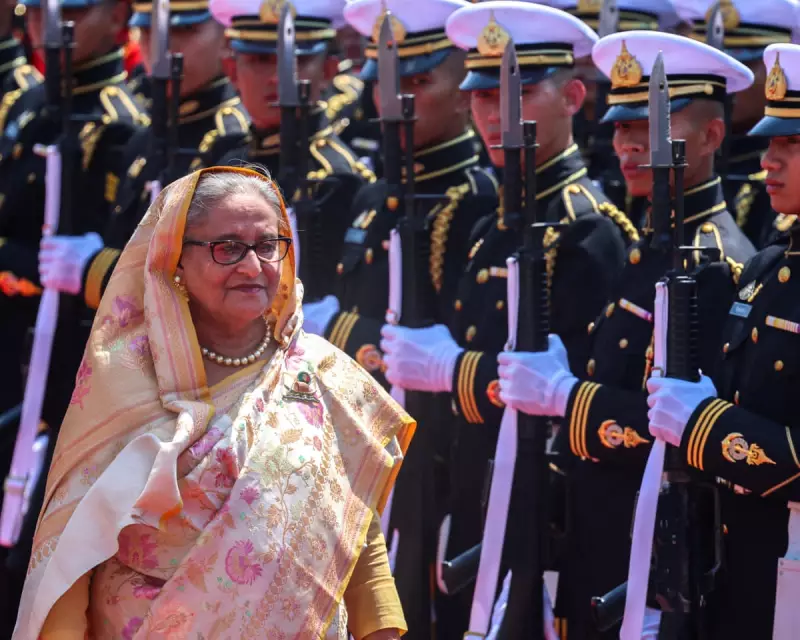
In a landmark ruling that has gripped Bangladesh, the country's deposed prime minister, Sheikh Hasina, has been found guilty of crimes against humanity by a special court in Dhaka. The verdict was delivered in absentia, as Hasina has been living in exile in neighbouring India since fleeing the nation last year.
The Verdict and Charges
A three-judge bench at the international crimes tribunal convicted the former leader for her role in a deadly state-led crackdown on anti-government protesters. The uprising, which began as a student movement, escalated into a nationwide pro-democracy demonstration now known as the 'July revolution'.
Justice Golam Mortuza Mozumder, reading the verdict to a packed courtroom, stated that the 'accused prime minister committed crimes against humanity by her order to use drones, helicopters and lethal weapons'. The specific charges she was found guilty of include:

- Murder
- Extermination
- Torture
- Other inhumane acts
Hasina had consistently pleaded not guilty, labelling the judicial process a 'politically motivated charade'.
Exile and Aftermath
The months-long trial proceeded without the defendant present. Hasina sought refuge in India in August last year following the mass protests, and the Indian government has since ignored requests for her extradition to face justice.
Ahead of the verdict, Dhaka was placed under heightened security, with police, army, and paramilitary forces cordoning off the tribunal area. The city's police issued a 'shoot-on-sight' order for anyone found hurling crude bombs or setting vehicles alight, a measure prompted by a small explosive thrown near the court on the morning of the ruling.
A Defiant Message and a Nation's Reckoning
In a pre-recorded audio message released before the judgment, a defiant Hasina declared, 'Let them announce whatever verdict they want. It doesn't matter to me. Allah gave me this life, and only he can end it. I will still serve my people.'
The prosecution of Hasina was a central pledge of the interim government, led by Nobel laureate Mohammad Yunus, who was appointed by protest leaders last year. The case was built by chief prosecutor Mohammad Tajul Islam.
The crackdown overseen by Hasina's government is estimated by the UN human rights office to have led to the deaths of up to 1,400 people, marking the worst political violence in Bangladesh since its 1971 war of independence. Her 15-year tenure was widely criticised by human rights organisations and the UN for allegations of corruption, torture, and enforced disappearances.