
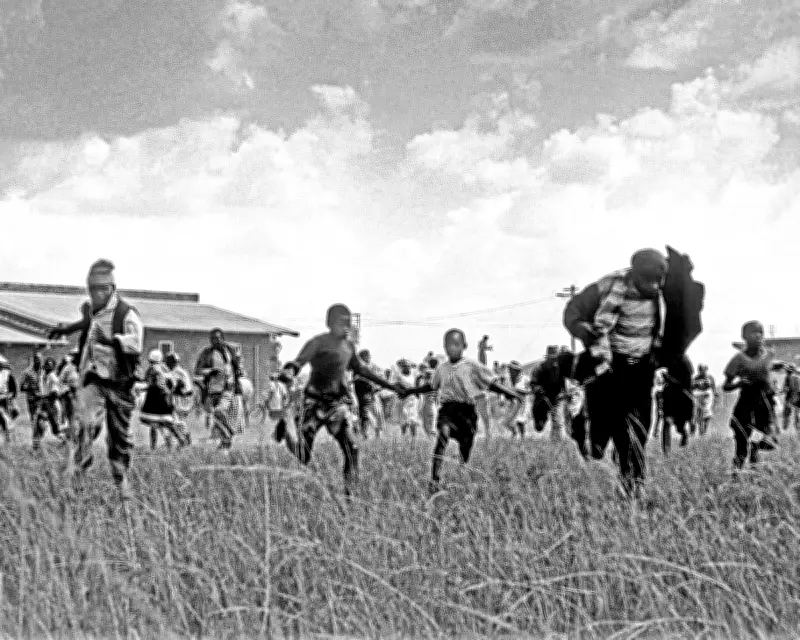
Three survivors of the 1960 Sharpeville massacre have filed a lawsuit against the South African government seeking compensation for the apartheid-era shooting that left at least 91 people dead and 238 injured. The case, filed on Thursday, is part of a wave of litigation demanding justice for apartheid-era crimes.
Survivors seek compensation for 1961 massacre
Abraham Mofokeng, now 86, was a 20-year-old factory worker when he joined the protest against pass laws on 21 March 1960. The laws forced "Black, Indian and Coloured" South Africans to carry documents at all times specifying where they were allowed to be. Mofokeng was among thousands gathered peacefully outside the police station in Sharpeville, about 40 miles south of Johannesburg in the Vaal Triangle.
"The weather was very nice, the sun was out. You could not have suspected that the day would go so horribly," Mofokeng said. As the crowd sang, police opened fire without warning. Mofokeng fled as a bullet grazed his right foot, ripping his shoe off. He jumped over a woman who fell before him and kept running. Only later did he realise he had been shot in the back; a bullet remains lodged in his spine.
Legal battle against apartheid-era indemnity law
In July 1961, the white minority regime passed a law indemnifying the government for actions taken "in good faith for the prevention or suppression of internal disorder". The law, made effective retrospectively from the massacre date, remains in force. The claimants' legal team argues the law is unconstitutional.
The three test claimants are seeking about 500,000 rand (£23,000) each, said Daniel Leader, a partner with UK law firm Leigh Day, which is advising the South African legal team led by Lawyers For Human Rights. Mofokeng was previously awarded 30,000 rand as a one-off payment after the Truth and Reconciliation Commission concluded in 2003, which had recommended annual reparations of around 20,000 rand for six years.
Families still suffering from loss
Paulina Mathinye, now 71, was five when her father Samson was killed. "Every time he came back from work, I would be so happy to see him that I would run to him, and then he would pick me up," she said. Her mother struggled to raise five children on a domestic worker's wages, and Mathinye had to leave education at 17 to find work.
"Some of my friends are teachers, some of them are nurses, and I'm staying in the same house that my father did," Mathinye said. Vincent Thamae, a PAC member who supports the victims, said compensation should include "all the land that they lost, the economy that they were taken out of and even how they have been treated in the new democracy".
In January 2025, 25 survivors and relatives of apartheid state violence sued the government for failing to prosecute cases referred by the Truth and Reconciliation Commission. Spokespeople for South Africa's justice department did not respond to a request for comment on the Sharpeville case.




