In a significant development for corporate accountability and environmental policy, a United States Senate committee has expanded its investigation to include Ford Motor Company. This move follows controversial comments made by President Donald Trump during a factory tour earlier this month.
Senate Committee Targets Automaker Over Lobbying Allegations
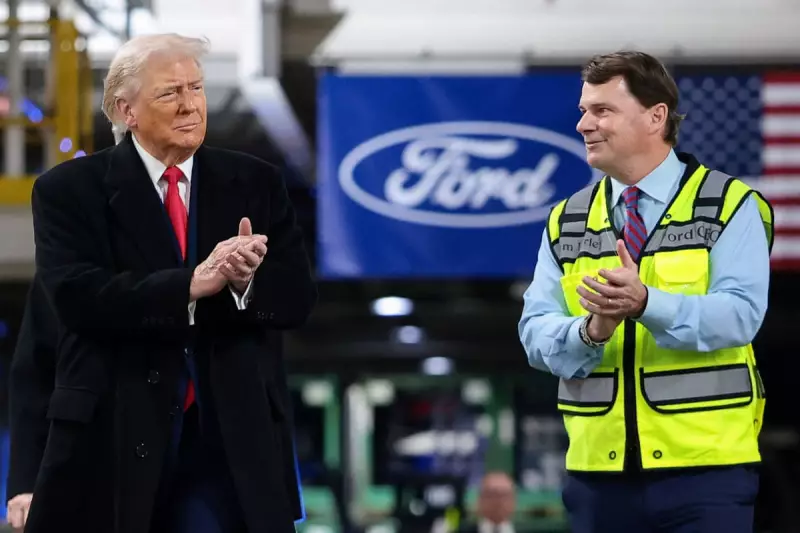
The Senate Environment and Public Works Committee, chaired by Rhode Island Senator Sheldon Whitehouse, has formally requested clarification from Ford regarding President Trump's claims. During a visit to a Ford production centre in Dearborn, Michigan on 13 January 2026, Trump was recorded on a live microphone discussing his interactions with Ford's chief executive, Jim Farley.
The president stated that Farley frequently contacts him about environmental regulations, with Trump quoting the CEO as asking: "Can we get rid of this environmental piece of garbage?" While Trump did not specify which particular rules Farley allegedly wanted rescinded, the comments have raised serious questions about corporate influence on environmental policy.

Formal Investigation Launched
Senator Whitehouse sent a detailed letter to Ford's CEO on Thursday morning, seeking clarification about the president's suggestions that the automotive giant played "a significant role in advocating for the repeal of long-settled rules and regulations meant to protect human health and the environment."
This development represents an expansion of the committee's existing investigation, which originally launched in September targeting two dozen oil companies, thinktanks, law firms and trade associations. The investigation focuses on how these entities may have influenced the White House to initiate repeal of the 2009 endangerment finding.
The Endangerment Finding Controversy
The 2009 endangerment finding represents a cornerstone of US climate regulation, establishing that greenhouse gas accumulation in the atmosphere endangers public health and welfare. This determination provides the Environmental Protection Agency with authority to limit heat-trapping pollution from vehicles, power plants and industrial sources.
The EPA, under Administrator Zeldin, has announced plans to rescind this bedrock determination in July, a move that has generated substantial concern among scientists, environmental advocates and public health experts. Senator Whitehouse has been particularly vocal in his criticism, stating: "The only interests that will benefit from such a corrupt rollback of the endangerment finding, upheld twice by the supreme court, are polluters and their enablers."
Ford's Environmental Position
Ford Motor Company has maintained a complex position on environmental regulations. The company has publicly supported some emissions-reduction measures, including pledging to eliminate its own planet-heating pollution and backing the Paris Climate Agreement. However, the automotive giant has simultaneously opposed certain climate rules.
When the Trump administration rolled back fuel economy standards last month, Farley praised the decision, describing it as "President Trump's leadership in aligning fuel economy standards with market realities." Ford continues its membership in trade groups like the Alliance of Automobile Manufacturers, which has consistently opposed EPA regulations.
Political and Environmental Implications
Senator Whitehouse has framed the investigation as a matter of democratic accountability, telling the Guardian: "Straight from Trump's own mouth, we hear him boasting about working hand in glove with industry to unleash unchecked pollution on our communities." He further warned that "American families will pay the price with dirtier air, higher health costs, and a climate-change-fueled economic collapse."
The repeal process is expected to be finalised soon, though the White House review could extend the timeline. Administrator Zeldin indicated to E&E News on Friday that while the repeal is advancing, the review process requires additional time.
The Guardian has contacted Ford Motor Company for comment regarding the Senate investigation and the president's remarks. This developing story represents a critical intersection of corporate influence, environmental policy and political accountability in contemporary American governance.