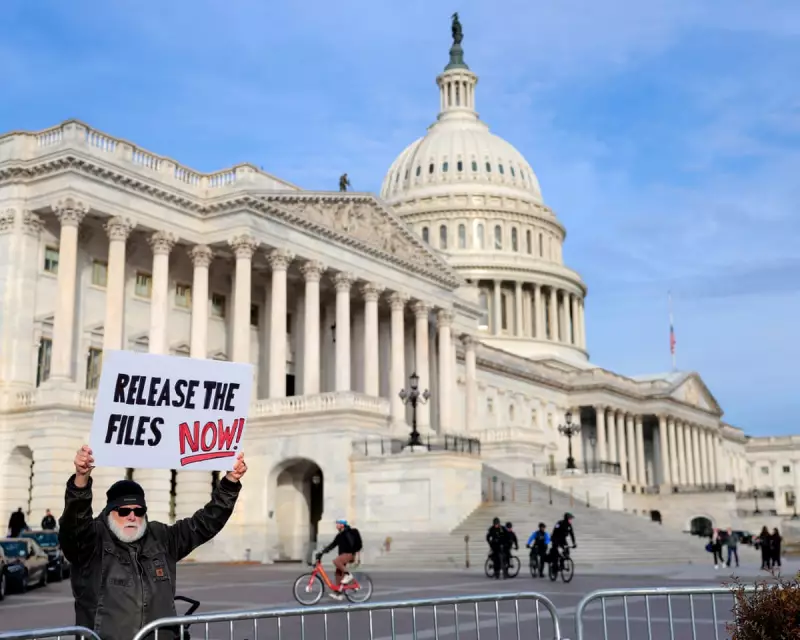
In a significant bipartisan move, the United States Senate has given swift approval to legislation that will compel the release of investigative files related to the late financier and convicted sex offender Jeffrey Epstein. This development follows a near-unanimous vote in the House of Representatives and represents a notable reversal by former President Donald Trump and his Republican allies.
Overwhelming Legislative Support
The Senate acted through unanimous consent on Tuesday 18th November, a procedural mechanism that requires approval from every senator but avoids a formal roll call vote, thereby expediting the process. This came just hours after the House of Representatives overwhelmingly approved the identical bill with a staggering 427-1 tally, demonstrating rare cross-party agreement on the contentious matter.
Chuck Schumer, the top Senate Democrat, emphasised the urgency of the situation in a floor speech before the vote. "The American people have waited long enough. Jeffrey Epstein's victims have waited long enough," Schumer declared. "Let the truth come out. Let transparency reign."

Trump's Political Reversal
The legislation now proceeds to Donald Trump for his signature, with the president having indicated on Monday that he would approve the measure. This represents a significant pivot for Trump, who had for months dismissed the controversy surrounding the government's handling of the Epstein case as a "Democrat hoax." Over the weekend, however, he signalled his support for the House bill and committed to signing it once it reached his desk.
The administration's reversal ended months of efforts to forestall the bipartisan initiative concerning a scandal that has persistently followed the president since his return to the White House.
Reactions and Sole Opposition
Following the bill's passage in the House, Democrats joined survivors of Epstein and their advocates, who were seated in the gallery, in breaking into applause. The solitary dissenting vote came from Republican representative Clay Higgins of Louisiana, who expressed concerns that the measure might publicly reveal identifying details of witnesses, potential suspects, and others involved in the investigation.
The legislation's advancement coincides with several other significant political developments involving the Trump administration:
- Trump appeared to dismiss the 2018 murder of Washington Post columnist Jamal Khashoggi during Saudi Crown Prince Mohammed bin Salman's White House visit, describing the journalist as "extremely controversial" and remarking that "things happen."
- A federal judge rejected "racially gerrymandered" maps in Texas that would have created five additional Republican districts, declaring they cannot be used for the 2025 elections.
- Trump faced criticism for referring to a female Bloomberg News correspondent as "piggy" during an confrontation aboard Air Force One.
- The administration reassigned many powers of the US Department of Education to other federal departments, prompting accusations from Democrats of "slashing resources" for schools and students.
Additional developments included expanded federal immigration operations in North Carolina and new findings about PFAS "forever chemicals" being applied to California farmland.