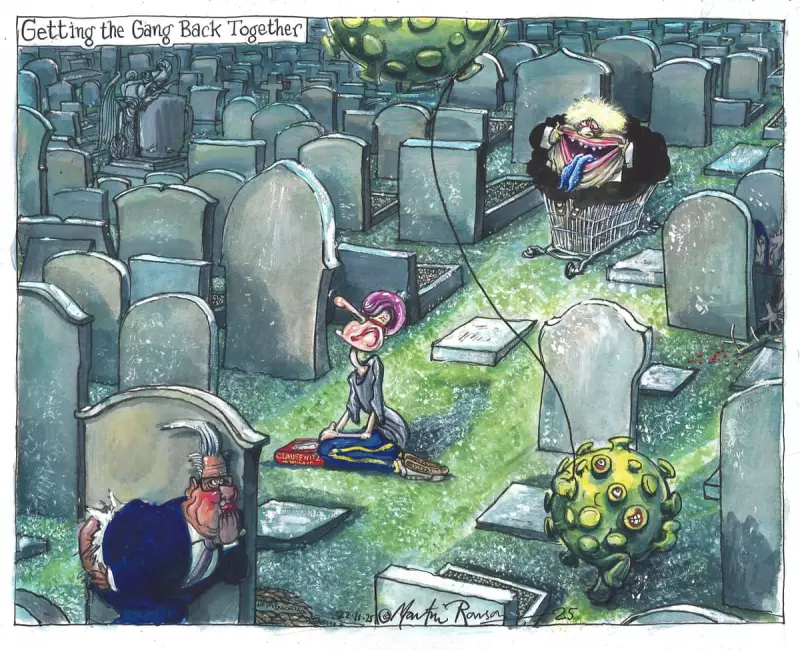
Acclaimed political cartoonist Martin Rowson has delivered a devastating visual verdict on the UK's handling of the COVID-19 pandemic through his latest work responding to the official inquiry findings. The cartoon, published in The Guardian, captures the profound systemic failures that characterised Britain's response to the global health crisis.
The Cartoon's Damning Depiction
Rowson's artwork serves as a stark visual summary of the COVID-19 inquiry's most troubling revelations. The cartoonist employs his signature satirical style to highlight what many perceive as the government's inadequate preparation, delayed responses, and chaotic decision-making processes throughout the pandemic.
The illustration powerfully conveys the human cost of these failures, juxtaposing political figures with imagery representing the devastating impact on families, healthcare workers, and vulnerable communities across the United Kingdom. Rowson particularly focuses on the disproportionate effect the pandemic had on elderly care homes and frontline medical staff.

Key Failures Highlighted
Several critical aspects of the UK's pandemic response come under Rowson's scrutiny. The artwork references the initial delayed lockdown implementation, the chronic shortages of personal protective equipment for healthcare workers, and the controversial test-and-trace system that cost billions while delivering questionable results.
The cartoon also addresses the Partygate scandal, where government officials were found to have breached their own lockdown rules while the public endured strict isolation measures. This hypocrisy forms a central theme in Rowson's critique, emphasising the erosion of public trust in political leadership during a national emergency.
Broader Implications for Public Health Policy
Beyond the immediate pandemic response, Rowson's work raises important questions about the state of Britain's public health infrastructure and emergency preparedness. The cartoon suggests that years of underfunding and neglect left the National Health Service particularly vulnerable when the crisis hit.
The timing of the cartoon's publication coincides with ongoing analysis of the official COVID-19 inquiry report, which has documented numerous instances where different approaches might have saved lives. Rowson's visual commentary adds an emotional dimension to these clinical findings, making the inquiry's conclusions more accessible to the general public.
As the United Kingdom continues to process the lessons from the pandemic, works like Rowson's cartoon play a crucial role in ensuring that the hard-won insights from this difficult period are not forgotten or ignored by those in power.